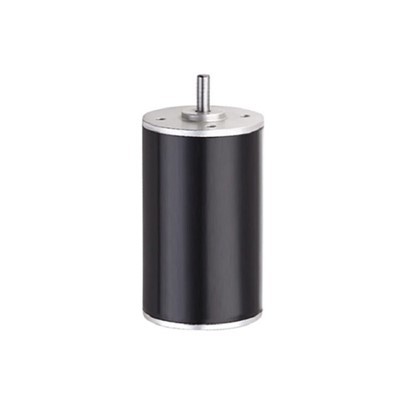
As a provider of Switched Reluctance Motors (SRMs), I’ve witnessed firsthand the significant impact of the saturation effect on the operation of these motors. In this blog, I’ll delve into how the saturation effect influences the performance, efficiency, and design considerations of SRMs. Switched Reluctance Motor
Understanding the Saturation Effect in SRMs
The saturation effect in SRMs is closely related to the magnetic properties of the motor’s core. When an SRM operates, an electrical current is passed through the stator windings, creating a magnetic field. This magnetic field interacts with the rotor, causing it to move due to the principle of magnetic reluctance. However, as the current in the stator windings increases, the magnetic flux density in the core also increases. At a certain point, the core reaches a state of saturation, where the magnetic material can no longer support an increase in magnetic flux density with an increase in current.
This saturation effect has several implications for the operation of SRMs. Firstly, it affects the torque – current relationship. In an ideal, non – saturated SRM, the torque is proportional to the square of the current. However, when saturation occurs, this relationship becomes non – linear. As the current increases beyond the saturation point, the increase in torque is not as significant as expected, and the motor’s performance can deviate from the theoretical model.
Impact on Torque Production
The saturation effect has a direct impact on the torque production of SRMs. In the initial stages of operation, when the current is relatively low, the magnetic circuit is unsaturated, and the torque increases linearly with the square of the current. But as the current rises, the magnetic core starts to saturate. Once saturation sets in, the reluctance of the magnetic path increases significantly. This means that more current is required to produce a small increase in torque.
This non – linear torque – current characteristic can pose challenges in applications where precise torque control is required. For example, in electric vehicles, accurate torque control is essential for smooth acceleration and deceleration. The saturation effect can make it difficult to achieve the desired torque output, leading to jerky movements or inefficient operation.
Efficiency Considerations
The saturation effect also has a profound impact on the efficiency of SRMs. When the motor operates in the saturated region, the increase in current does not result in a proportional increase in torque. This means that more electrical energy is being consumed to produce the same amount of mechanical work. As a result, the efficiency of the motor decreases.
In addition, the saturation effect can lead to increased losses in the motor. The increased magnetic flux density in the saturated core causes higher eddy current and hysteresis losses. These losses not only reduce the overall efficiency of the motor but also generate heat, which can further degrade the performance and reliability of the motor.
Design Considerations
When designing SRMs, engineers must take the saturation effect into account. One approach is to optimize the magnetic circuit design to delay the onset of saturation. This can be achieved by using high – quality magnetic materials with a high saturation flux density. For example, some advanced SRMs use laminated silicon steel cores, which have a relatively high saturation point and low core losses.
Another design consideration is the control strategy. Since the torque – current relationship becomes non – linear in the saturated region, traditional control methods may not be effective. Advanced control algorithms, such as field – oriented control or direct torque control, can be used to compensate for the non – linearity caused by saturation. These algorithms can adjust the current and voltage applied to the motor in real – time to achieve the desired torque output.
Thermal Management
The saturation effect can also have implications for thermal management in SRMs. As mentioned earlier, the increased losses in the saturated core generate heat. If this heat is not dissipated effectively, it can lead to overheating of the motor, which can damage the insulation of the windings and reduce the motor’s lifespan.
To address this issue, proper thermal management systems need to be designed. This can include the use of heat sinks, fans, or liquid cooling systems. The thermal management system should be able to remove the heat generated by the motor efficiently, ensuring that the motor operates within a safe temperature range.
Practical Applications and Challenges
In practical applications, the saturation effect can present several challenges. For example, in industrial applications where SRMs are used for conveyor systems or robotic arms, the non – linear torque – current characteristic can make it difficult to achieve precise speed and position control. In addition, the reduced efficiency due to saturation can lead to higher energy costs.
However, with the right design and control strategies, these challenges can be overcome. For example, by using advanced control algorithms and high – quality magnetic materials, SRMs can be made more efficient and reliable, even in the presence of the saturation effect.
Conclusion
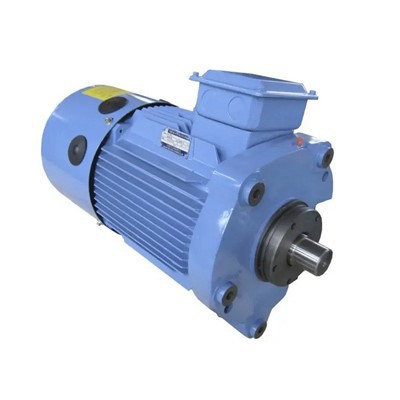
In conclusion, the saturation effect has a significant impact on the operation of Switched Reluctance Motors. It affects the torque production, efficiency, design, and thermal management of these motors. As a provider of SRMs, we understand the importance of addressing the saturation effect in our products. We are committed to using the latest technologies and design principles to optimize the performance of our SRMs and minimize the negative effects of saturation.
Brushless Motor If you are interested in learning more about our Switched Reluctance Motors or have any specific requirements for your application, we encourage you to contact us for a detailed discussion. Our team of experts is ready to assist you in selecting the right motor for your needs and providing comprehensive technical support.
References
- Miller, T. J. E. (1993). Switched Reluctance Motors and Their Control. Magna Physics Publishing.
- Rahman, M. F., & Albanna, M. A. (2005). Modeling, analysis, and control of switched reluctance motors. CRC Press.
- Krishnan, R. (2001). Switched Reluctance Motor Drives: Modeling, Simulation, Analysis, Design, and Applications. CRC Press.
Zibo Auric Mechanical and Electrical Technology Co., Ltd.
As one of the leading switched reluctance motor manufacturers and suppliers in China, we warmly welcome you to buy advanced switched reluctance motor for sale here from our factory. All customized motors are with high quality and competitive price.
Address: B419, High-tech Entrepreneurship Park, High-tech Zone, Zibo City
E-mail: cui@auricmotor.com
WebSite: https://www.auricmotor.com/
