As a supplier of Precision Centerless Grinders, I’ve witnessed firsthand the transformative impact that an optimized grinding process can have on a manufacturing operation. In this blog, I’m going to share some insights on how to optimize the grinding process of a Precision Centerless Grinder, drawing from my years of experience in the industry. Precision Centerless Grinder
Understanding the Basics of Precision Centerless Grinding
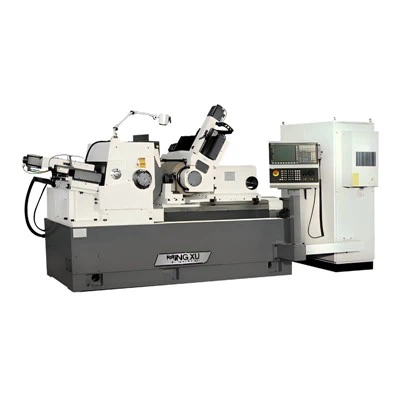
Before delving into optimization strategies, it’s essential to understand the fundamental principles of precision centerless grinding. Centerless grinding is a machining process that uses abrasive wheels to remove material from a workpiece without the need for a center or chuck to hold it in place. This method is particularly well – suited for high – volume production of cylindrical parts, offering high precision and surface finish.
The three main components of a centerless grinder are the grinding wheel, the regulating wheel, and the work rest blade. The grinding wheel performs the actual cutting action, while the regulating wheel controls the rotation and feed rate of the workpiece. The work rest blade supports the workpiece during the grinding process.
Optimizing the Grinding Wheel
The grinding wheel is the heart of the centerless grinding process. Selecting the right grinding wheel is crucial for achieving optimal results. The choice of grinding wheel depends on several factors, including the material of the workpiece, the required surface finish, and the grinding operation.
- Grain Type: Different grain types are suitable for different materials. For example, aluminum oxide is commonly used for grinding steels, while silicon carbide is better for grinding non – ferrous metals and ceramics.
- Grain Size: The grain size affects the surface finish and material removal rate. Coarser grains are used for rough grinding to remove material quickly, while finer grains are used for finishing operations to achieve a smooth surface.
- Bond Type: The bond holds the abrasive grains together. Different bond types have different properties, such as hardness and friability. Vitrified bonds are commonly used for precision grinding due to their high dimensional stability.
Regular dressing and truing of the grinding wheel are also essential for maintaining its performance. Dressing removes the dulled grains and exposes new, sharp grains, while truing corrects the shape of the wheel. This helps to ensure consistent grinding results and extends the life of the wheel.
Adjusting the Regulating Wheel
The regulating wheel plays a crucial role in controlling the speed and feed rate of the workpiece. By adjusting the angle and speed of the regulating wheel, you can control the rotational speed and axial feed of the workpiece.
- Angle Adjustment: The angle of the regulating wheel affects the direction and speed of the workpiece. A steeper angle will increase the axial feed rate, while a shallower angle will slow it down.
- Speed Control: The speed of the regulating wheel determines the rotational speed of the workpiece. By adjusting the speed, you can optimize the material removal rate and surface finish.
It’s important to note that the regulating wheel should be dressed regularly to maintain its surface condition and ensure accurate control of the workpiece.
Proper Workpiece Support
The work rest blade provides support for the workpiece during the grinding process. Ensuring proper workpiece support is crucial for achieving high – precision grinding results.
- Blade Material and Design: The work rest blade should be made of a hard and wear – resistant material, such as carbide. The design of the blade should be appropriate for the shape and size of the workpiece.
- Positioning: The work rest blade should be positioned correctly to support the workpiece at the right height and angle. This helps to prevent the workpiece from vibrating or deflecting during grinding, which can lead to poor surface finish and dimensional inaccuracies.
Coolant Management
Coolant plays a vital role in the centerless grinding process. It helps to reduce heat generated during grinding, flush away chips, and improve the surface finish of the workpiece.
- Coolant Selection: The choice of coolant depends on the material of the workpiece and the grinding operation. Water – based coolants are commonly used for general grinding applications, while oil – based coolants are preferred for grinding materials that require better lubrication.
- Coolant Flow and Pressure: Proper coolant flow and pressure are essential for effective cooling and chip removal. The coolant should be directed at the grinding zone to ensure maximum cooling and lubrication.
Process Monitoring and Quality Control
Continuous monitoring of the grinding process is essential for optimizing performance and ensuring product quality.
- In – process Measurement: Using in – process measurement devices, such as gauges and sensors, can help to monitor the dimensions and surface finish of the workpiece during grinding. This allows for real – time adjustments to the grinding process to ensure that the desired specifications are met.
- Statistical Process Control (SPC): Implementing SPC techniques can help to analyze the data collected during the grinding process and identify trends and variations. This enables proactive measures to be taken to prevent quality issues and improve process efficiency.
Operator Training and Skill Development
The skills and knowledge of the operators play a significant role in optimizing the grinding process. Providing comprehensive training to operators on the operation and maintenance of the Precision Centerless Grinder is essential.
- Technical Training: Operators should be trained on the principles of centerless grinding, the operation of the grinder, and the use of measuring instruments.
- Problem – Solving Skills: Training should also focus on developing problem – solving skills so that operators can quickly identify and resolve issues that may arise during the grinding process.
Conclusion

Optimizing the grinding process of a Precision Centerless Grinder requires a comprehensive approach that takes into account various factors, including the selection of the right grinding wheel, adjustment of the regulating wheel, proper workpiece support, coolant management, process monitoring, and operator training. By implementing these strategies, manufacturers can achieve higher precision, better surface finish, and increased productivity.
Hydraulic Surface Grinder If you’re interested in learning more about how our Precision Centerless Grinders can optimize your grinding process, or if you’re considering purchasing a new grinder for your manufacturing operation, I encourage you to reach out to us. Our team of experts is ready to discuss your specific needs and provide you with the best solutions.
References
- Malkin, S., & Guo, C. (2008). Grinding technology: Theory and applications of machining with abrasives. Wiley.
- Trent, E. M., & Wright, P. K. (2000). Metal cutting. Butterworth – Heinemann.
- Shaw, M. C. (2005). Metal cutting principles. Oxford University Press.
Wuxi Mingxu Machinery Equipment Co., Ltd.
As one of the most professional precision centerless grinder manufacturers and suppliers in China, we’re featured by quality products and good price. Please rest assured to buy the best precision centerless grinder for sale here from our factory. Also, custom service is available.
Address: No. 5-5 Jinke Wealth Plaza, Changjiang North Road, Xinwu District, Wuxi City, Jiangsu Province
E-mail: yingyingmxjd@163.com
WebSite: https://www.mingxu-china.com/
