If you’re running a clinic, a busy dental lab, or even a small mobile repair shop, you know handpieces aren’t just tools—they’re the heart of your daily work. I’ve been selling high-quality handpieces for over 10 years now, and one question pops up every single time a new customer chats with me: “How often do I actually need to maintain these things so they don’t die on me mid-shift?” It’s such a fair question, honestly. You don’t want to be scrambling for a last-minute replacement when your 10 best dentists are booked back-to-back, right? And you also don’t want to waste money on maintenance you don’t need. Handpieces

Let’s start with the basics—no fancy jargon, promise. Handpieces come in two main types: high-speed (the ones that zoom around at 300,000 RPM for drills and restorations) and low-speed (slower, used for polishing, trimming, or prosthetic work). Their maintenance needs aren’t the same, which is where a lot of people mess up. I’ve seen clinics that service their low-speed units every three months and their high-speed ones once a year, which is backwards. High-speed is way more delicate—all those tiny bearings, the constant spin, and exposure to water, saliva, and debris? They take a beating.
So, let’s break it down by usage first, because that’s the biggest factor. A handpiece that’s used 8 hours a day, 5 days a week in a busy city clinic is going to need way more TLC than one that’s sitting in a drawer at a small town practice that only uses it a few hours a week. For high-speed handpieces: if you’re in a busy setting, I recommend a quick “post-use” clean and lube every single time you take one out of the autoclave. Then, a full, professional service every 3 months. If you’re a smaller practice that only uses a couple times a week, that full service can stretch to every 6 months, but don’t skip the post-use step. That quick wipe-down with a compatible cleaner and a light lube after every sterilization prevents gunk from building up in the bearings, which is the #1 cause of handpiece failure.
Low-speed handpieces are sturdier, but still not indestructible. They handle more torque, so their gears and drive shafts take a different kind of wear. For busy practices, I’d suggest a full service every 6 months, and a quick lube check-in every month. For light use, that full service can go to 9 months, but again—skip the shortcuts here, especially if you’re using prophy angles or contra angles with it. Those disposable attachments add up, but the reusable low-speed parts? They need regular lubrication to keep from seizing up.
Now, let’s talk about the mistakes I see most often. A lot of people use regular household lube or cleaning products on handpieces, and that’s a huge no-no. Handpiece manufacturers make specific lubricants and cleaners that are designed for the tiny gaps and bearings—using the wrong stuff can actually damage the seals, letting moisture or debris get in. I’ve had customers bring in a handpiece that seized up because they used WD-40 once, and it destroyed the bearings beyond repair. Lesson learned, right? Also, don’t ignore the warning signs. If your high-speed handpiece starts making a weird grinding noise, or it doesn’t spin as fast as it used to, or it feels wobbly—don’t wait for your next scheduled service. Bring it in right away. Catching a small issue early is way cheaper than replacing the whole unit.
Another thing: autoclaving affects maintenance too. A lot of people think sterilizing will kill everything, but if you don’t properly prep the handpiece before autoclaving, you’re baking debris into the parts. That’s why that post-use clean is so important. You have to flush the internal water and air lines, wipe the outside, and apply lube before it goes in the autoclave. If you skip that, the heat and pressure will turn any leftover saliva or debris into a sticky residue that clogs up the bearings over time. I’ve even seen handpieces that would’ve lasted years fail in 6 months because of bad autoclave prep.
Wait, what about brand-new handpieces? I get asked that sometimes. Do you need to maintain a brand-new unit before first use? The short answer is: check the manufacturer’s instructions, but most new handpieces come with a pre-lubed bearing, but it’s still a good idea to do a quick lube cycle before your first run. It helps the bearings seat properly, which makes the unit smoother right out the gate. And for refurbished handpieces, which a lot of people look at to save money? Same rule applies—follow the maintenance schedule, because even reconditioned ones need regular care.
I also want to touch on how maintenance saves you money in the long run. Let’s do a quick math check: a full service for a high-speed handpiece is usually around $50-$70. If you skip that, you might have to replace a handpiece every 12 months, which can cost $300-$500 each. That’s a huge difference. I’ve had customers who switched from skipping services to doing it on schedule save hundreds a year. Plus, less downtime—no more mid-shift handpiece deaths, which means you can see more patients and keep your schedule running smoothly.
Now, how do you actually keep track of all this? It’s easy to forget when you’re swamped with patient appointments. I tell my customers to keep a simple log—write down the date you service each handpiece, the type of service, and any issues you noticed. Or, if you use our handpieces, a lot of them have built-in timers or even companion apps that send you a reminder when it’s time for a service. No more guessing, no more missed appointments.
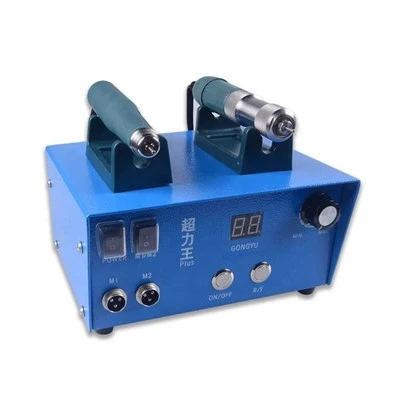
At the end of the day, there’s no one-size-fits-all answer, but the general rule is: busy use = more frequent maintenance, light use = a little less, but don’t cut corners. If you’re still not sure what schedule works for your practice, or you’re looking for high-quality handpieces that hold up well with regular maintenance, feel free to reach out. We can walk you through the best routine for your specific needs, no pressure, just real advice from someone who’s been in the game for years. Whether you need replacement parts, compatible lubricants, or a full service on your current units, we’ve got you covered. Hit us up to chat more about what works for your practice, no weird links or hoops to jump through—just a straight conversation.
Nail Drill Machine References
- American Dental Association. (2021). Guidelines for Maintenance and Sterilization of Dental Handpieces.
- World Health Organization. (2019). Infection Prevention and Control in Dental Settings.
- Dental Equipment and Materials Association. (2022). Best Practices for High-Speed Handpiece Maintenance.
Yongkang Zorin Industry Technology Co., Ltd.
Yongkang Zorin Industry Technology Co., Ltd. is one of the most professional handpieces manufacturers and suppliers in China, also supports customized service. Please feel free to buy bulk premium handpieces in stock here and get quotation from our factory. For price consultation, contact us.
Address: No. 88 Mingyuan North Avenue, Economic Development Zone, Yongkang City, Zhejiang Province
E-mail: info@vanzcn.com
WebSite: https://www.zorindrill.com/
