When I first started working as a hardware parts supplier, I’d get at least three emails a week from regular customers—small repair shops, indie tech creators, even a handful of DIY gamers asking the same question: “Can I pop the lid on a sealed power supply unit to fix that buzzing or weird whine?” Hardware Parts

At first, I’d answer the same way every time: “Don’t do it. It’s a fire hazard.” But over the last eight years sourcing, testing, and selling power supplies (PSUs) for everything from entry-level home PCs to industrial-grade server rigs, I’ve had to dive way deeper into why that answer is true—and also when, under very specific, controlled circumstances, it might not be the worst idea. The thing is, most people asking this don’t realize a sealed PSU isn’t just a box with a circuit board inside. It’s a carefully engineered, temperature-regulated, shielded component built for 24/7 reliability in tight spaces. Break that seal, and you’re not just voiding a warranty—you’re messing with safety features that took hundreds of engineers years to perfect.
Let’s start with the basics of what makes a PSU sealed, and why that seal exists in the first place. When we source PSUs, we check every batch for that hermetic or semi-hermetic casing—most consumer and industrial PSUs come with a welded, glued, or tightly snapped casing that’s never meant to be opened in the field. The seal’s first job is to block dust, moisture, and tiny debris from getting inside. Even a single grain of sand or a speck of lint can short out a power resistor, or cause a tiny spark that ignites the electrolytic capacitors if they overheat. But that’s just the start. Inside every PSU is a mix of high-voltage and low-voltage circuits separated by strict electrical isolation standards. The sealed casing isn’t just a box—it’s part of that isolation barrier. Break it, and you risk accidental contact with live parts if you’re not wearing the right equipment.
Then there are the thermal and pressure elements. Sealed PSUs are designed to pull air in through a specific fan, or dissipate heat through the casing itself, for parts that run hot. When you open a PSU, you change the internal airflow instantly. That can cause parts like the transformers or the MOSFETs to run 20-30 degrees hotter than they were tested for, leading to premature failure. I once had a customer, a guy who runs a small custom PC shop, open a 550W bronze PSU to fix a buzz he thought was a loose wire. A week later, he sent it back—he’d burned out a $12 capacitor, and the casing warped so bad the fan stopped spinning for 10 seconds under load. That warping was from thermal stress caused by breaking the seal and changing the internal cooling dynamics.
But wait—what if the PSU is old, off warranty, and you’re okay with the risk? I’ve had a few long-time clients do this for non-critical use cases, like testing an old PSU to repurpose it as a power source for a small workshop tool, not a PC. But even then, there are rules. The first and most important rule is: if the PSU is still under warranty, opening the seal voids it immediately. No exceptions. Every reputable PSU manufacturer—Corsair, Seasonic, Super Flower, all the brands I carry in my inventory—prints that on the label right above the model number, in bold text.
Next, never open a PSU that’s still connected to power. Even if you’ve unplugged it for days, the electrolytic capacitors inside hold a charge that can kill you. I learned this early on when I was testing a used 1000W PSU for a bulk order. I thought I’d drained it by unplugging it for 24 hours, but when I touched the positive terminal with a multimeter, it registered 320V—enough to cause severe injury or even death. Always discharge capacitors with a high-resistance resistor (1M ohm, 5W) before touching any internal parts.
Then there’s the actual process of opening it: don’t use a screwdriver that can slip and scratch a circuit board. Use plastic or nylon pry tools to avoid static discharge, which can fry tiny, unnoticeable components that cause failure later. Most importantly, if you’re opening the PSU to fix a problem, be realistic about what you can fix. 9 times out of 10, a buzzing or whining PSU isn’t caused by a loose screw—it’s caused by a failing capacitor, a worn fan bearing, or a design flaw. Replacing a fan is possible, but even that requires matching the fan’s voltage and speed exactly; using the wrong fan can overheat the unit in days.
Here’s the part most DIYers don’t know: manufacturers test every PSU for safety with the seal intact. They don’t test open PSUs. UL, CE, and FCC certifications— the standards that make a PSU legal to sell in most countries—only apply to the sealed unit. Once you open it, that certification is gone. If a fault occurs in an open PSU, insurance won’t cover any damage to your hardware, and some building codes won’t allow open PSUs in residential or commercial spaces. I had a customer in Chicago try to use an open PSU to power a home greenhouse’s grow lights; when it shorted and started a small fire, his insurance denied the claim because the PSU was modified.
Now, that said, there are rare, low-risk scenarios where opening a sealed PSU makes sense, but only if you’re an experienced electronics technician. For example, if you have an old, dead PSU that’s not worth money or part of a critical system, and you want to harvest specific components for a project—like that 12V transformer for a small robot, not powering a PC. Even then, exercise extreme caution: wear insulated gloves, work in a non-conductive space, and never expose the high-voltage parts if you plan to reuse the unit. For context, the average consumer PSU has a primary side (connected to your wall outlet) that operates at 120V or 240V, and a secondary side that outputs low-voltage power to your PC. The boundary between these two is strictly regulated, and breaking it creates a fire and shock risk.
As a hardware parts supplier, I see way too many customers take unnecessary risks with PSUs because they think it’s a simple fix. Last year, I had a bulk order of 20 750W gold PSUs get returned because the buyer’s tech team opened them to “tighten loose wires.” All of them had damaged circuit boards, and the buyer had to pay extra to have them disposed of properly—plus they missed their launch deadline because they couldn’t get replacements quickly. That’s the kind of cost that comes from not understanding the basic science behind PSU seals.
So, to circle back to the original question: Is it safe to open a sealed power supply unit? The short answer is almost no, for 99% of people. If you’re a hobbyist with no formal electronics training, if the PSU is under warranty, or if it’s powering a critical device (PCs, servers, medical equipment, kitchen appliances), the risk of shock, fire, and permanent damage is not worth it. The long answer is: only if you have specialized training, the PSU is fully discharged, off warranty, and you have a specific, non-critical use case that doesn’t require compliance with electrical safety standards. Even then, proceed with extreme caution, and always prioritize your own safety over a quick fix.
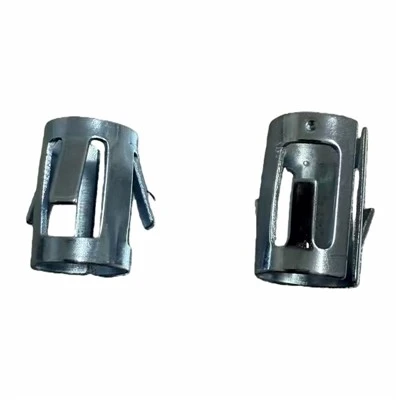
If you’re dealing with a problematic PSU for your hardware setup, or you need genuine, tested replacement PSU parts for your repair or build project, my team and I can help. We source only certified, fully sealed power supplies from reputable manufacturers, and our inventory includes options for every use case, from entry-level home PCs to industrial machinery. Whether you need a bulk order for a business or a single unit for a small repair, we can work with you to find a safe, reliable solution that fits your needs without the risk of modifying sealed components.
Stamping Parts References
- Underwriters Laboratories (UL) Standard 60950-1: Information technology equipment – Safety – Part 1: General requirements
- International Electrotechnical Commission (IEC) Standard 62368-1: Audio/video, information and communication technology equipment – Part 1: Safety requirements
- Seasonic Power Supply Design & Testing Guidelines: Sealed Enclosure Safety and Thermal Regulation, 2022
- Electronic Industries Alliance (EIA) Standard 588: Discharge Procedures for Capacitors in Power Supplies, 2019
Cixi Yicheng Auto Parts Factory
As one of the most professional hardware parts manufacturers and suppliers in China, we have world-leading production equipment and strong manufacturing capabilities. Please rest assured to buy high quality hardware parts made in China here from our factory. Welcome to contact us for custom service and OEM&ODM service.
Address: No.758, Zhangxinbei Road, Xiaolin Town, Cixi City, Ningbo City, Zhejiang Province
E-mail: 1193784796@qq.com
WebSite: https://www.cixiyc.com/
