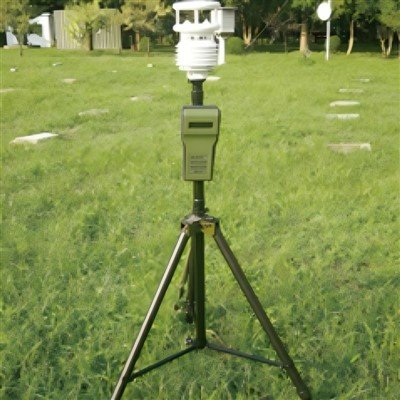
Weather is a complex and dynamic phenomenon that significantly impacts our daily lives, industries, and ecosystems. Among various weather conditions, fog is a particularly challenging one to deal with, especially for aviation, maritime, and road transportation. As a leading supplier of Weather Monitoring Systems, understanding how our systems measure fog density is crucial for providing accurate and reliable weather data to our clients. In this article, I will explore the different methods and technologies used by our Weather Monitoring Systems to measure fog density. Weather Monitoring System
Understanding Fog and Its Density
Fog is essentially a cloud that forms at or near the Earth’s surface. It occurs when the air near the ground cools to its dew point, causing water vapor to condense into tiny water droplets or ice crystals. Fog density refers to the concentration of these water droplets or ice crystals in a given volume of air. Higher fog density means more droplets per unit volume, which reduces visibility and can have serious implications for transportation safety, energy production, and other sectors.
Optical Methods for Measuring Fog Density
One of the most common ways to measure fog density is through optical methods. These methods rely on the interaction between light and the water droplets or ice crystals in the fog. Our Weather Monitoring Systems often use two main types of optical sensors: transmissometers and forward scatter sensors.
Transmissometers
Transmissometers work by measuring the attenuation of light as it passes through a known path length of fog. A light source emits a beam of light across a fixed distance, and a detector on the other end measures the intensity of the received light. The difference in intensity between the emitted and received light is proportional to the amount of light absorbed and scattered by the fog droplets.
The principle behind transmissometers is based on the Beer – Lambert law, which states that the attenuation of light through a medium is exponential with the concentration of the absorbing or scattering particles. By knowing the path length and the attenuation of the light beam, we can calculate the extinction coefficient, which is related to the fog density.
Our transmissometers are designed to be highly accurate and reliable. They are calibrated regularly to ensure that they provide consistent measurements over time. The data collected by transmissometers can be used to calculate visibility, which is a key parameter related to fog density. Visibility is defined as the maximum distance at which an object can be clearly seen, and it is inversely related to fog density.
Forward Scatter Sensors
Forward scatter sensors operate on a different principle. Instead of measuring the total attenuation of a light beam over a long path, they measure the amount of light scattered in the forward direction by the fog droplets. A light source emits a beam of light at a specific angle, and a detector is positioned to collect the scattered light.
The amount of forward – scattered light is proportional to the number and size of the fog droplets. By analyzing the intensity of the scattered light, our forward scatter sensors can estimate the fog density. These sensors have several advantages over transmissometers. They are more compact, easier to install, and require less maintenance. They are also less affected by factors such as wind and turbulence, which can cause errors in transmissometer measurements.
LIDAR Technology for Fog Density Measurement
In addition to optical sensors, we also incorporate LIDAR (Light Detection and Ranging) technology into some of our advanced Weather Monitoring Systems. LIDAR works by emitting short pulses of laser light into the atmosphere and measuring the time it takes for the light to reflect back from the fog droplets or other particles.
The reflected light signal contains information about the distance, size, and concentration of the fog droplets. By analyzing the time – of – flight and the intensity of the returned signal, our LIDAR systems can create a three – dimensional profile of the fog layer, including its density at different altitudes.
LIDAR technology provides a more detailed and comprehensive view of fog conditions compared to traditional optical sensors. It can detect the vertical and horizontal distribution of fog, which is important for applications such as aviation, where pilots need to know the extent of the fog layer above and around the airport.
Combining Multiple Sensors for Accurate Measurement
To ensure the highest level of accuracy and reliability in measuring fog density, our Weather Monitoring Systems often combine multiple types of sensors. For example, we may use a combination of transmissometers, forward scatter sensors, and LIDAR sensors in a single monitoring station.
By integrating data from different sensors, we can cross – validate the measurements and reduce the uncertainty associated with any single sensor. This multi – sensor approach allows us to provide more accurate and detailed fog density information to our clients, which is essential for making informed decisions in various industries.
Calibration and Maintenance of Weather Monitoring Systems
Accurate measurement of fog density depends not only on the quality of the sensors but also on proper calibration and maintenance of the Weather Monitoring Systems. Our team of experts conducts regular calibration procedures to ensure that the sensors are providing accurate and consistent data.
Calibration involves comparing the sensor readings with a known standard. For optical sensors, this may involve using a test aerosol with a known concentration of particles to simulate fog conditions. LIDAR systems require more complex calibration procedures, which involve accounting for factors such as the laser beam characteristics and the detector sensitivity.
In addition to calibration, regular maintenance is essential to keep the sensors in good working condition. This includes cleaning the optical components, checking for any mechanical or electrical faults, and replacing worn – out parts. Our company provides comprehensive maintenance services to ensure that our clients’ Weather Monitoring Systems are operating at peak performance at all times.
Applications of Fog Density Measurement
The accurate measurement of fog density has many important applications in various industries. In the aviation industry, fog density information is crucial for flight operations. Pilots need to know the visibility and fog conditions before taking off or landing. Airport authorities use this information to determine whether to issue fog – related advisories or to close the airport if the visibility is too low.
In the maritime industry, fog can pose a significant risk to navigation. Ships rely on accurate fog density and visibility information to avoid collisions and to navigate safely through fog – covered waters. Our Weather Monitoring Systems can provide real – time fog density data to maritime operators, helping them to make informed decisions and to ensure the safety of their vessels.
The transportation industry also benefits from fog density measurement. Road authorities can use this information to issue weather – related warnings to drivers, adjust traffic flow, and deploy anti – fog measures such as fog lights and road de – icing equipment.
Conclusion
As a Weather Monitoring System supplier, we are committed to providing our clients with the most accurate and reliable fog density measurement solutions. Through the use of advanced optical sensors, LIDAR technology, and a multi – sensor approach, we are able to measure fog density with high precision.

Proper calibration and maintenance of our systems ensure that the data we provide is consistent and trustworthy. The applications of fog density measurement in aviation, maritime, and transportation industries are vast, and our systems play a crucial role in ensuring the safety and efficiency of these sectors.
Weather Station If you are in need of a high – quality Weather Monitoring System for fog density measurement or any other weather – related applications, we would be delighted to discuss your requirements. Contact us to start a procurement discussion and find the best solution for your needs.
References
- Lee, R. L., & Hine, R. (2008). Handbook of Atmospheric Science. CRC Press.
- Kunkel, K. E. (2013). Atmospheric Science: An Introductory Survey. Pearson.
- WMO. (2018). Guide to Meteorological Instruments and Methods of Observation. World Meteorological Organization.
Tianjin Blooming Technology Ltd.
Address: Main Building, No. 10 Wuhua Road, Huayuan Industrial Zone, Binhai High-tech Zone, Tianjin, China
E-mail: sales@blooming-tech.com
WebSite: https://www.blooming-tech.net/
