If you’ve ever walked through a manufacturing floor, a medical operating room, or even a warehouse automating order packing, chances are you’ve crossed paths with one of our manipulators. For years, my team and I have built and supplied these systems—hydraulic, electric, and pneumatic units designed to lift heavy payloads, handle fragile components with precision, and take over repetitive, dangerous tasks that humans shouldn’t do alone. We’ve celebrated their wins: a single manipulator now moves 500-pound auto frames with the consistency of a surgeon’s scalpel, another handles microchips so gently it doesn’t leave a fingerprint. But for all their progress, today’s manipulators still have deep, frustrating limitations that hold our customers back every day, and after a decade of talking to plant managers, lab engineers, and surgical teams, I want to pull back the curtain on what’s really holding this technology back. Manipulator

First, and most obvious, is their inability to adapt to unstructured, real-world environments. Let’s say a manufacturing line switches from assembling one model of a tractor to another that has slightly different bracket sizes, or a hospital needs to reorient a manipulator that’s been used for knee replacement surgery to work on a shoulder. A modern manipulator is brilliant at following a pre-programmed path—but mess with the environment, even in small, planned ways, and it breaks. Last quarter, a small agricultural equipment maker came to us upset because their new line of hay balers had frame parts with slightly warped edges from the foundry, and their existing manipulator, programmed to grip a perfectly straight bracket, would slip 10% of the time when it hit a warped part. Our team tried tweaking the force feedback settings, adding extra proximity sensors, even uploading a new training routine—but it still couldn’t compensate for variables it wasn’t explicitly told to account for. Compare that to a human worker, who can glance at a warped part, adjust their grip mid-lift, and get back to work in two seconds. Current manipulators lack generalizable perception: they’re great at one specific job in one specific spot, but ask them to do that job anywhere else, or adapt to tiny, unplanned changes, and they’re lost.
This limitation ties directly to their second big problem: poor tactile and sensory feedback, especially for delicate manipulation tasks. For years, we’ve prioritized precision in positioning—manipulators can hold a 1,000-pound payload within a millimeter of its target, which is amazing for welding or heavy lifting—but when it comes to feeling what they’re touching, they’re severely underbuilt. Take our medical robotics line, for example. A neurosurgical manipulator we supply works in a brain with 1,400 grams of delicate tissue, and surgeons have to rely on cameras to tell if the tool is pushing too hard or not enough. The manipulator has force sensors at the joints, but they only measure the total force applied to the whole arm, not the exact pressure at the tip of the tool. Last year, a neuro-surgeon we work with told us that she’d had to abort a procedure because the manipulator’s arm was pressing too hard on a blood vessel—something the camera couldn’t catch fast enough. For heavy lifting, this gap might not matter much, but for tasks that require a light, consistent touch, it’s a showstopper. We’ve tried adding high-resolution tactile sensors to the grippers, but they’re bulky, expensive, and the wiring often gets damaged in industrial environments, so most customers skip them. Even the best sensors on the market today can only give a basic pressure reading, not the fine-grained data a human finger gets from feeling texture, shape, or even the slight give of soft tissue. That’s why so many delicate tasks—handling packaged food, assembling electronic components, even sorting recyclables—still require human workers, even with the manipulators we sell.
Third, there’s the issue of limited reach and payload flexibility. We build manipulators to specific specifications: a 5-meter reach for large auto bodies, a 10-kilogram payload for small electronics. But for many customers, one size doesn’t fit all. A warehouse manager might need a manipulator that can both lift 50-kilogram pallets from the floor and reach 8 meters up to stock shelves, but today’s manipulators are either too small, too weak, or too slow to do both. The alternative? Buy two separate units, which adds cost, takes up floor space, and requires extra programming. Even collaborative manipulators (the ones designed to work safely alongside humans) top out at around 10 kilograms of payload, which is barely enough for most small assembly tasks. We’ve seen customers in the logistics space try to repurpose heavy industrial manipulators for small parcel sorting, but they’re too fast, too powerful, and don’t have the dexterity to handle the small, irregular shapes of packages. It’s a tradeoff engineers have been stuck on for decades: make a manipulator powerful and it’s clunky and slow; make it precise and it can’t lift much. There’s no middle ground that works for all use cases.
Then there’s the elephant in the room: cost and accessibility, especially for small and medium-sized businesses (SMBs). We supply manipulators to large aerospace companies and big auto makers with million-dollar budgets, and they can justify the price of a high-end unit. But a small custom furniture maker or a local food processing plant? A single manipulator can cost anywhere from $50,000 to $200,000, not including installation, programming, or annual maintenance. Last year, a small family-owned metal stamping shop came to us saying they needed a manipulator to load and unload their presses, but the cost was 10% of their entire annual revenue. They ended up sticking with two part-time workers, even though those workers get injured almost every month from lifting heavy metal parts. It’s not just the upfront cost, either. Most manipulators require specialized technicians to program and repair them—your average plant maintenance worker doesn’t have the skills to troubleshoot a hydraulic leak or re-calibrate a force sensor. For SMBs, that adds recurring costs that make the technology out of reach. We’ve tried building entry-level manipulators for small businesses, but they often sacrifice precision and reliability, so they end up causing more downtime than they solve.
Another underdiscussed limitation is energy efficiency, especially for long-duration tasks. Industrial manipulators run on electricity or hydraulics, but even the most efficient models waste a lot of energy moving their heavy arms, supporting their own weight during every lift. A recent study from a robotics research lab found that the average industrial manipulator uses 10 to 20 times more energy than a human worker to do the same task, because it has to move its entire structure even when the payload is small. For factories running two shifts a day, that adds up to thousands of dollars in extra energy costs every year. We’ve been testing lightweight, carbon-fiber manipulator designs to cut down on energy use, but carbon fiber is more expensive, and the material can have vibration issues that affect precision. It’s a tradeoff that hasn’t been solved yet, and it’s a big deal for customers looking to reduce their carbon footprint, as well as their utility bills.
Last, but far from least, is the challenge of integration with existing systems. Most factories and warehouses have been running for decades, with old control systems, conveyor belts, and inventory software. Adding a new manipulator means not just buying the unit, but redesigning parts of the entire production line, rewriting software, and training workers to use it. A large retail logistics company we work with tried to add 50 manipulators to a new fulfillment center last year, but they spent three times as much on integration as they did on the robots themselves. Some older control systems can’t even communicate with modern manipulators, so customers have to replace entire line infrastructure just to add one unit. For many companies, that’s a barrier that takes years to overcome, even when they know manipulators would solve their biggest problems.
Now, I don’t say all this to bash our industry—my team is in the trenches building these systems every day, and we’re constantly working to improve them. We’ve made huge strides in the last five years, especially with collaborative manipulators that can work safely next to humans without heavy safety cages. But these limitations aren’t small tweaks that can be fixed with a software update. They’re fundamental gaps in how we design, build, and deploy manipulators that require new materials, new sensors, and new approaches to AI and programming.
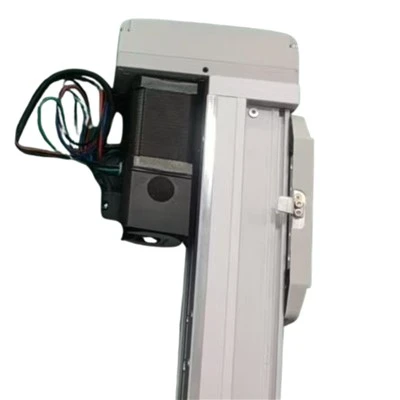
If you’re a plant manager, a lab engineer, or a business owner who’s been frustrated by the limits of your current manipulators, my team and I are here to help you figure out what’s possible. We don’t sell one-size-fits-all solutions; we work with our customers to assess their specific challenges, whether that’s adapting to unstructured parts, improving delicate handling, or integrating with old systems. We can walk you through the tradeoffs, help you find a solution that fits your budget, and support you from installation to long-term maintenance. To learn more about how we can tailor a manipulator system to your needs and discuss your procurement plans, feel free to reach out to our team to connect for a detailed consultation. We look forward to helping you solve your toughest operational challenges.
Enclosed Integrated Lead Screw Linear Module References
- World Robotics Report 2023: Industrial Manipulator Installation, International Federation of Robotics.
- Tactile Sensor Technology for Robotic Manipulation: A Review, IEEE Transactions on Robotics, Vol. 38, No. 3, 2022.
- Energy Efficiency of Industrial Robotic Manipulators: A Comparative Analysis, Journal of Manufacturing Systems, Vol. 60, 2021.
- Collaborative Manipulator Adoption Barriers for Small and Medium Enterprises, International Journal of Production Economics, Vol. 254, 2022.
- Perception Limitations in Unstructured Manipulation Tasks: A Survey, Robotics and Autonomous Systems, Vol. 155, 2022.
Yangning (Xiamen) Intelligent Technology Co., Ltd.
With abundant experience, we are one of the most professional manipulator manufacturers in China. As we have world-leading production equipment and strong manufacturing capabilities, we warmly welcome you to buy bulk advanced manipulator from our factory. Customized orders are welcome.
Address: Room 307-2, No. 15 Duiying Road, Software Park Phase III, Torch Hi-Tech Zone, Xiamen, Fujian, China
E-mail: mia@ynautos.com
WebSite: https://www.ynautos.com/
