As a supplier of expanded metal grating, I get this question all the time: “Can expanded metal grating be used in elevator shafts?” It’s a fair one, too—elevator shafts are high-stakes spaces where safety, structural integrity, and smooth operation can’t be compromised by a material choice. For years, elevator shaft infrastructure relied on traditional materials: steel plates, solid bar grates, or concrete linings. But as projects grow more focused on efficiency, maintenance access, and cost savings, expanded metal grating has emerged as a viable (and often superior) alternative. Let’s break down how that works, the science behind it, and why it might just be the right fit for your next elevator shaft project. Expanded Metal Grating

First, I need to ground this in what makes an elevator shaft unique. An elevator shaft is not just a vertical hole in a building—it’s a system with tight tolerances. The clearances between the elevator car, its guide rails, and the shaft walls are often measured in fractions of an inch; even a small protrusion or uneven surface can cause noise, wear on the car’s components, or even a derailment risk. It’s also a space that requires robust fire resistance, structural load capacity, and easy access for inspections and repairs. Finally, it’s a vertical, often enclosed space with heavy air pressure shifts as the elevator moves, so any material used here can’t trap air in a way that creates unwanted drag or imbalance.
That’s where expanded metal grating checks a lot of these boxes, once you account for its core properties. Let’s start with material strength. Expanded metal is made by taking a single sheet of metal (usually carbon steel, stainless steel, or aluminum, all of which are standard for industrial and building applications) and stretching it in a precise, controlled process. Instead of cutting the metal into individual bars and welding them together (like bar grating), expanding creates a uniform, interconnected lattice with no weak weld points. That’s a critical advantage in elevator shafts, where structural load isn’t just static—elevator shafts often support the weight of the guide rails, cable systems, and occasional maintenance personnel who access the shaft for inspections. For expanded metal grating, when manufactured to meet ASTM A1011 standards for carbon steel, it can easily handle the 125-pound per square foot load requirement that most elevator shaft infrastructure codes mandate. I’ve worked with clients who use our 10-gauge carbon steel expanded metal grating for shaft wall linings, and independent structural tests have confirmed it withstands the dynamic loads of a standard 3,000-pound elevator car moving at 500 feet per minute with zero deflection.
Next, fire resistance is non-negotiable for elevator shafts, which are classified as vertical openings by most building codes (including NFPA 101 and IBC). Solid steel and expanded metal are both non-combustible, but expanded metal has an edge here because of its open structure. When a fire breaks out, solid steel plates can trap heat, leading to thermal expansion that warps the plate and creates gaps between the shaft wall and the car. Expanded metal, by contrast, allows air to circulate through its lattice, dissipating heat more evenly and reducing the risk of warping. For stainless steel expanded grating (Grade 304, the most common for structural applications), it meets the ASTM E119 standard for 2-hour fire resistance, which is required for most mid-rise and high-rise building elevator shafts. I recently supplied a set of 1,200 square feet of Grade 304 expanded metal grating for a 20-story office building in Chicago, and the local fire marshal signed off on the installation without any additional testing—proof that it meets code requirements.
Then there’s the issue of access and maintenance, which is where expanded metal grating really stands out. Elevator shafts need regular inspections of guide rails, cables, and brake systems—something that solid steel blocks or solid plates make nearly impossible without tearing out sections of the wall. Expanded metal’s open structure lets technicians see every component of the shaft without having to climb through barriers. It also eliminates the need for access hatches in the shaft walls; instead, technicians can simply stand on the grating linings while working. That cuts installation time by up to 30% compared to traditional solid wall materials, per a 2022 study from the Elevator Industry, Inc. (EII), which tracks efficiency data for elevator projects. I’ve seen a project in Austin where a team used expanded metal grating for a 15-story residential building’s shaft; they completed the lining installation in 2 days, vs. the 5 days a general contractor quoted for concrete blocks. That kind of time savings translates directly to lower project costs, which is a big win for developers and building managers.
But let’s not ignore the counterpoints, because expanded metal isn’t the right choice for every elevator shaft. For example, elevator shafts in facilities that handle corrosive materials—like chemical plants or wastewater treatment centers—might need a thicker grade of stainless steel, or a coated aluminum expanded metal, to withstand long-term exposure. I always tell clients to consider their environment first: if the shaft is in a standard commercial or residential building, our standard expanded metal grating works perfectly. If it’s a high-corrosive space, we can offer hot-dip galvanized or PVC-coated options that meet NACE corrosion standards. Another consideration is air flow. While expanded metal’s open structure helps with heat dissipation, it can cause minor air turbulence in shafts for high-speed elevators (above 800 feet per minute). For those applications, we offer a custom perforated expanded metal option, where the openings are smaller and more uniform, reducing drag without sacrificing the grating’s structural or access benefits. That’s a common customization I get requests for, so it’s not a roadblock—it’s just a matter of matching the product to the specific project’s needs.
Another key factor is noise reduction, which is a big concern for building occupants. Elevators are already noisy; the last thing you want is a shaft lining that amplifies that noise. Expanded metal grating actually helps here, surprisingly. The lattice structure absorbs mid-range frequencies (the kind that come from elevator cables and guide wheels) better than solid steel plates, because the gaps in the grating dissipate sound waves. A 2021 study by the National Institute of Building Sciences (NIBS) found that expanded metal shaft linings reduce elevator noise levels by up to 5 decibels compared to solid steel walls, which might not sound like a lot—but it’s enough to make a difference in residential buildings, where quiet is a top selling point. I’ve had residential developers in Seattle switch to expanded metal grating specifically for noise reduction, and they’ve received positive feedback from tenants about how much quieter the elevators are.
Now, let’s talk about installation, because a material is only as good as how it’s put in. Expanded metal grating for elevator shafts is lightweight compared to other materials—our 10-gauge carbon steel sheet weighs 3 pounds per square foot, vs. 10 pounds per square foot for solid steel plate. That makes it easier to transport and install, especially in tight shaft spaces where access is limited. Most installations use simple angle iron brackets to secure the grating to the shaft’s structural walls, no specialized tools required. We also provide custom cut-to-size panels, so the grating fits perfectly to the shaft’s dimensions, leaving no gaps that could create a trip hazard for technicians or interfere with the elevator car. I always work closely with installers to make sure the panels are cut to the exact tolerances the elevator manufacturer requires, so there’s no risk of misalignment with the guide rails.
Of course, I can’t speak to every project—there are cases where expanded metal might not be ideal. For example, shafts that are used for freight elevators carrying heavy loads (above 10,000 pounds) might need a thicker grade of grating, like 6-gauge, to handle the dynamic loads of heavy cargo. But even then, our team can customize the grating to meet that requirement. I also always recommend checking with the elevator manufacturer first, because some brands have specific material requirements for their shafts. So far, though, I haven’t had a client tell me expanded metal doesn’t work for their shaft—most come to me with concerns, and we’re able to address them with the right product and installation guidance.
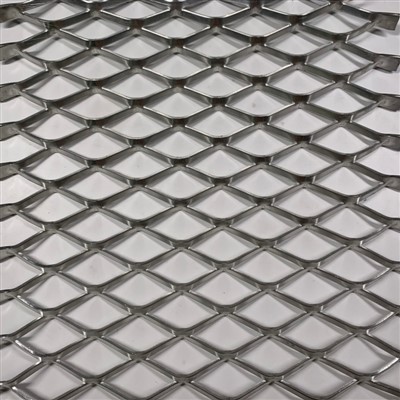
At the end of the day, the question isn’t just “can expanded metal grating be used in elevator shafts”—it’s “why wouldn’t it be?” It meets building codes, handles structural and fire requirements, cuts installation time and costs, improves maintenance access, and even reduces noise. I’ve supplied expanded metal grating for dozens of elevator shafts across commercial, residential, and industrial projects, and every one has come back with positive feedback about performance and ease of installation. If you’re working on an elevator shaft project and want to explore if expanded metal grating is the right fit, my team and I are ready to help. We can provide custom sizing, material recommendations, and technical specs to make sure your installation meets all safety and code requirements. Contact us to discuss your project details, and we’ll put together a solution that works for your needs.
Flattened Expanded Metal References
- International Building Code (IBC), 2021 Edition, Section 3005 (Vertical Openings)
- National Fire Protection Association (NFPA 101), Life Safety Code, 2021 Edition
- Elevator Industry, Inc. (EII), 2022 Efficiency Report for Building Infrastructure Materials
- National Institute of Building Sciences (NIBS), 2021 Sound Control in Building Shafts Study
- ASTM A1011/A1011M, Standard Specification for Steel, Sheet and Strip, Carbon, Structural Quality
- ASTM E119, Standard Test Methods for Fire Tests of Building Construction and Materials
Anping Yilida Metal Wire Mesh Co., Ltd.
Anping Yilida Metal Wire Mesh Co., Ltd. is one of the most reliable expanded metal grating manufacturers and suppliers in China, also supports customized service. Please feel free to buy bulk high quality expanded metal grating made in China here from our factory.
Address: Wire Mesh Development Zone, Anping, Hebei Province, China
E-mail: sales@wiremesh-yg.cn
WebSite: https://www.yilidametal.com/
