If you’ve ever stood next to a busy construction site as a concrete mixer rumbles to a stop, you’ve probably noticed that truck chugging for miles before it even drops a single batch of concrete. As someone who’s been supplying transit mixers to concrete producers across the Midwest for 12 years, I get asked this question all the time: “What fuel do those big trucks even run on?” It’s not a trivial question, either—choosing the right fuel impacts everything from a producer’s bottom line to air quality in local neighborhoods, and even the reliability of a mixer that’s hauling hundreds of pounds of perishable concrete to a job. Let’s break this down like I do when I’m walking a new client through our mixer specs at their yard. Transit Mixer
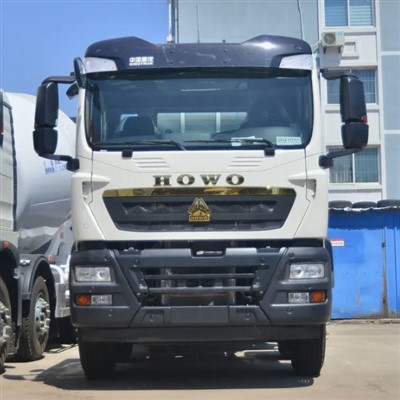
First, let’s start with the workhorse that’s dominated transit mixers for nearly 70 years: diesel fuel. If you’ve been to a construction site, odds are every mixer there runs on diesel, and for good reason. Transit mixers have two huge fuel loads to manage: not just the diesel that powers the truck’s engine to get from plant to site, but also the fuel that turns that big 10-yard or 12-yard rotating drum. That drum has to spin nonstop for the entire trip—concrete starts curing in as little as 90 minutes, so stopping the drum means wasting an entire load. Diesel engines, especially the large, high-torque ones made for heavy-duty trucks, are built to handle that constant load. They produce enough low-end torque to haul a fully loaded mixer (which can weigh up to 66,000 pounds when full) up steep job site access roads, and they’re far more efficient at running that auxiliary drum system than smaller engines or electric motors used to be.
When I sold my first set of mixers back in 2011, almost every new order had a diesel engine. Back then, diesel was cheap, and emission standards weren’t as strict as they are now. Fast forward to 2024, and diesel is still the most common fuel for transit mixers, but it’s not the same diesel we used 10 years ago. The Environmental Protection Agency (EPA)’s 2010 and 2021 heavy-duty engine standards have forced diesel manufacturers to make huge changes. Today’s diesel for transit mixers is ultra-low-sulfur diesel (ULSD), with sulfur levels capped at 15 parts per million, compared to the 500 parts per million we used before 2006. That sulfur reduction means lower emissions of particulate matter (soot) and nitrogen oxides (NOx), which are the main contributors to smog and poor air quality near construction zones. Most modern diesel mixers also have after-treatment systems: diesel particulate filters (DPFs) that trap soot, selective catalytic reduction (SCR) systems that cut NOx, and diesel exhaust fluid (DEF) that works with those systems to keep emissions in check. I always tell clients that even though ULSD is a bit more expensive than old-school diesel, the fuel savings over time (diesel engines get 6-8 mpg for mixers, way better than gas-powered trucks of the same size) and the ability to pass local emission tests make it the smart call for most operations. That said, diesel isn’t the only option on the table anymore.
Over the last 5 years, we’ve seen a steady rise in propane autogas as a secondary fuel for transit mixers, especially for smaller operations or producers in areas with really strict air quality rules. Propane autogas is a byproduct of natural gas processing and crude oil refining, and it’s stored as a liquid under low pressure in large tanks mounted on the mixer’s frame. The big draw for propane is that it burns much cleaner than diesel—emissions of particulate matter, NOx, and even greenhouse gases are up to 20% lower than ULSD, according to the Propane Education & Research Council (PERC), and propane mixers don’t need the complicated DPF or SCR systems that add weight and maintenance costs to diesel mixers. I’ve sold about 40 propane mixers in the last two years, mostly to producers in California and Texas, where local air districts offer tax breaks for clean-fuel vehicles. The catch with propane is that it has less energy density than diesel—you only get about 27,000 British thermal units (BTUs) per pound of propane, compared to 35,000 BTUs per pound of diesel. That means propane mixers get 4-6 mpg, which is 1-2 mpg less than diesel, so fuel costs add up faster for producers that put 500+ miles a day on their mixers. We also have to make sure the mixer’s fuel tank is sized right—propane tanks are bigger than diesel tanks for the same range, so they take up more space on the frame, which can be a problem for mixers that have to haul extra tools or smaller loads.
Then there’s the new kid on the block that a lot of my tech-savvy clients have been asking about: electric transit mixers. For a long time, electric mixers were just prototypes that could only go 20 miles on a charge, enough to get from the concrete plant to a local job and back, but not enough for long hauls. But over the last three years, battery technology has improved so much that we’re now offering two all-electric mixer models that our engineering team developed with a local battery maker. These mixers run on lithium-iron-phosphate (LFP) batteries, which are cheaper, more durable, and less prone to fire risk than old lithium-ion batteries, and they can go up to 150 miles on a full charge—more than enough for the average concrete producer, which hauls an average of 80 miles a day. The biggest benefit of electric mixers is that they have zero tailpipe emissions, so they qualify for federal tax credits up to $40,000 per vehicle, plus state incentives in places like New York and Illinois that cover another $15,000. They’re also way quieter than diesel or propane mixers, which is a huge plus for job sites near schools, hospitals, or residential areas where noise pollution is a big complaint. The downside? They have a higher upfront cost—about $150,000 more than a comparable diesel mixer—and charging takes time. We recommend installing 220V fast chargers at the concrete plant, which can fully charge a mixer in 4 hours, but if a producer needs to top up mid-day, it means scheduling the mixer’s downtime instead of fueling up in 10 minutes at a gas station. I had a client in Chicago test one of our electric mixers last quarter, and he told me the biggest surprise was how much lower his maintenance costs were—no oil changes, no DEF filters, no DPF replacements. He saved about $1,200 a month on maintenance compared to his diesel mixers, which offset the higher fuel and charging costs.
Natural gas is another fuel that’s been around for a while, but it’s been slower to catch on for transit mixers than for garbage trucks or school buses. Compressed natural gas (CNG) and liquefied natural gas (LNG) both work, with emissions even lower than propane, but the fuel infrastructure is way less widespread. There are only about 1,500 CNG fueling stations in the U.S., compared to over 120,000 diesel stations, so producers would have to build their own fueling station if they run mixers outside of major metro areas. That’s why I only recommend natural gas mixers for big producers with a central yard and routes that stick within a 50-mile radius of the yard. It’s a good option for long-term sustainability, but for most of my clients, it’s just not practical right now.
Now, I get asked all the time: “Which fuel is the best for my operation?” The truth is, there’s no one-size-fits-all answer. If you’re a small concrete producer in a rural area of Ohio that hauls 100 miles a day to farm construction jobs, diesel is still your best bet. You can fuel up at any truck stop, your maintenance costs are predictable, and you won’t have to worry about range or fuel infrastructure. But if you’re a large producer in Southern California that has a fleet of 50 mixers operating in urban areas, an electric or propane mixer will save you money on emissions compliance and qualify for tax incentives. Last year, I worked with a client in Los Angeles who switched half his fleet to propane mixers and saved over $75,000 in emission penalties alone, because he was meeting local air district requirements without having to retrofit his old diesel mixers.
I also want to mention a trend I’ve seen over the last year: a lot of producers are opting for “dual-fuel” mixers, which run on a mix of diesel and natural gas or propane. These mixers start on diesel, then switch to the cleaner fuel once they get on the highway, cutting emissions without sacrificing range or reliability. It’s a middle ground that works well for producers that want to reduce their carbon footprint but aren’t ready to fully switch to electric or propane. I’ve sold 12 dual-fuel mixers so far this year, and every single one of those clients has told me they plan to add more once the infrastructure or incentives make more sense.
As a supplier, my job isn’t to push one fuel over another—it’s to help my clients pick the fuel that fits their specific needs. I’ve seen too many producers make the mistake of switching to a new fuel just because it’s trendy, only to end up stuck with mixers that can’t fuel up on long hauls or break down because the maintenance isn’t covered by their mechanic. That’s why when a client calls me with questions about transit mixer fuels, I start by asking them three things: How many miles do you drive a day? Where are your job sites located? What’s your top priority—fuel cost, emissions, or upfront cost?
For example, a client in Detroit reached out to me last month, saying he was tired of paying high diesel prices and wanted to go electric. We walked through his routes: he hauled an average of 70 miles a day, mostly to job sites within a 20-mile radius of his plant, and his top priority was reducing operating costs. We ended up recommending two of our electric mixers, plus a small on-site charging station. He’s already saved $2,000 a month on fuel and maintenance compared to his old diesel mixers, and he qualified for $50,000 in federal and state tax credits. Another client in Texas, who hauls 120 miles a day to rural road construction jobs, went with a propane mixer because he has a small fueling station at his yard and qualifies for a state clean fuel tax break. He’s saving about $0.30 per gallon compared to diesel, which adds up to $1,500 a month in fuel savings for his fleet of 5 mixers.
As construction continues to grow across the country, and emission standards get stricter every year, the options for transit mixer fuels will only keep expanding. We’re already testing hydrogen fuel cell mixers in our lab, which would have even longer range than electric and zero tailpipe emissions, but the infrastructure for hydrogen fueling is still years away from being widespread. For now, though, diesel remains the workhorse, with electric and propane taking a growing share of the market for clients that can benefit from their lower emissions and operating costs.
If you’re in the market for transit mixers and want to figure out which fuel is right for your operation, I’m here to help. I’ve worked with producers of all sizes, from 2-mixer operations to fleets of 50, and I can walk you through our current models, the incentives available in your area, and the long-term costs of each option. Don’t waste money on mixers that don’t fit your needs—reach out today to talk through your specific requirements, and we can find the perfect solution for your concrete business.
Concrete Mixer References
EPA. (2021). Heavy-Duty Engine and Vehicle Standards and Highway Diesel Fuel Sulfur Control Requirements. U.S. Environmental Protection Agency.
Propane Education & Research Council. (2023). Autogas for Heavy-Duty Trucks and Equipment. PERC.
National Ready Mixed Concrete Association. (2024). Transit Mixer Fleet Trends and Fuel Usage Report. NRMCA.
Shandong Fuxin Automobile Technology Co., Ltd.
We’re well-known as one of the leading transit mixer manufacturers and suppliers in China, featured by quality products and good price. Please rest assured to buy advanced transit mixer made in China here from our factory. Contact us for more details.
Address: West of Nanshou Road, Beihai Road, Weifang City, Shandong Province
E-mail: allenzhaofuxin@gmail.com
WebSite: https://www.fuxinautomobile.com/
