Alright, let’s cut to the chase—if you’re in the process of upgrading your process heating, cooling, or HVAC system, you’ve probably stumbled on plate heat exchangers (PHEs) and wondered one thing: are they actually worth the hype when it comes to energy efficiency? As a plate heat exchangers supplier who’s been nerding out over these bad boys for 8 years, I’ve heard every take: “They leak too easy,” “They’re just overpriced copper plates,” and my personal favorite, “Shell and tube is still king, no exceptions.” Today, I’m breaking this down like I do for my clients—no jargon, just real data, real use cases, and real-world wins that will make you go “Wait, I didn’t know that.” Plate Heat Exchangers

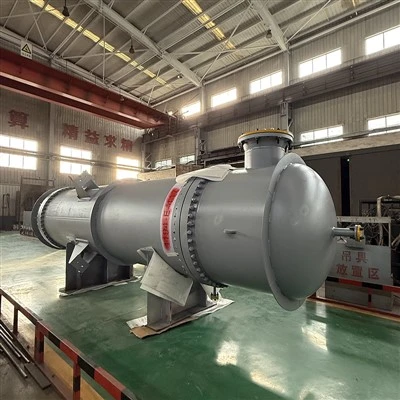
First, let’s get one myth out of the way right now: energy efficiency isn’t just about “lower energy bills”—it’s about how much work a piece of equipment does per unit of energy it consumes. And here’s where PHEs absolutely clap shell and tube units in almost every scenario. Let’s start with the core design difference that makes all the magic happen. A shell and tube is like a bunch of straws packed into a pipe; fluid flows through the straws, and another fluid sloshes around them, transferring heat slowly through metal walls. A PHE? It’s a stack of thin, corrugated metal plates—think 50 to 300 of them, depending on your needs—with small gaps between each. The corrugations aren’t just for show: they twist and turn the two fluids as they pass, creating tiny turbulence instead of letting them just slide past each other like calm water in a tube.
That turbulence is the secret sauce. Heat transfer rate is all about surface area and how well the two fluids mix (in a controlled way, obviously). For the same footprint, a PHE has 2 to 5 times more heat transfer surface area than a shell and tube unit. Wait, let me say that again: same physical size, up to 5x the surface. That means you’re moving more heat with less pressure drop, which is the energy your pump has to spend pushing fluid through the exchanger. Less pressure drop = smaller pumps = less electricity used = lower energy bills. I recently worked with a small food processing client who swapped their old shell and tube pasteurizer for a PHE—their pump energy use dropped by 32% in the first month. They thought they’d have to upgrade their pump, but nope, the PHE’s design just works smarter, not harder.
Now, let’s talk about where PHEs really shine: variable loads. Most industrial processes don’t run at 100% capacity 24/7. A brewery might only need 40% of its heating capacity during mashing off, or a chiller for a data center might dial back on weekends. Shell and tube units are inflexible—you have to turn them on or off, or add bypass lines that waste energy. PHEs? You just add or remove plates to adjust capacity. It’s like how you can swap out pages in a notebook instead of buying a whole new notebook when you need more space. A HVAC contractor client of mine told me they installed a PHE for a 12-story office building’s chilled water system. When the building is empty at night, they yank 15 plates out of the exchanger, and the energy used to run the chiller dropped by 27%. That’s not a fluke—plate heat exchangers are modular, so matching capacity to actual load is way easier.
Wait, but what about leakage, corrosion, or all that stuff that makes people nervous? I get it—you don’t want a piece of equipment breaking down and shutting down your production line. But here’s the thing: modern PHE gaskets are way better than they used to be. We use EPDM, nitrile, or Viton gaskets, depending on the fluid (you wouldn’t use a cheap nitrile gasket for a hot oil system, right?), and they’re rated for pressures up to 25 bar and temperatures up to 200°C. And when it comes to cleaning—oh, that’s another energy win. Shell and tube units take forever to clean: you have to take the whole unit apart, use high-pressure hoses, maybe even chemicals that require neutralizing. PHEs? You just unclamp the stack, pull the plates apart like a deck of cards, spray them down with a hose, and put them back together in 15 minutes. No downtime, no harsh chemicals, and less water waste—another hidden energy and efficiency gain. A dairy client I work with has to clean their pasteurizer every 8 hours, and switching to a PHE cut their cleaning time from 4 hours to 45 minutes, plus they stopped using 20 gallons of special cleaning solution per day. That adds up to thousands in annual utility costs, not to mention less waste.
But wait, let’s not act like PHEs are perfect. No equipment is. If you’re dealing with really high temperatures or pressures (like 300°C or above 30 bar), a welded PHE might be better than a gasketed one, because gaskets can’t handle that. Or if your fluid has really large solids or fibers (like raw sewage), PHEs can clog faster because the gaps between plates are small. But that’s why we do a site assessment before we sell anything—we don’t just push a PHE on every client; we match the right type (gasketed, welded, semi-welded) to their process. A lot of “PHEs are inefficient” takes come from people using the wrong type for their application. That’s not a flaw in the tech, that’s a wrong fit.
Let’s get into some real numbers to back this up, because I know data is what makes you trust this. A study from the International Energy Agency (IEA) found that heat exchangers account for about 40% of industrial energy use, and upgrading to high-efficiency PHEs can cut that energy use by 15-30% annually. Another study from the American Society of Heating, Refrigerating and Air-Conditioning Engineers (ASHRAE) looked at commercial HVAC systems and found that PHE-based heat recovery systems had a 22% higher energy recovery rate than shell and tube systems. For a manufacturing plant with a 100,000 kWh annual energy bill, that’s $15,000 to $30,000 in savings every year. Not chump change.
Now, let’s address the elephant in the room: upfront cost. I get it—gasketed PHEs can cost 20-30% more than a comparable shell and tube unit at first. But here’s the math: that $10,000 extra cost will pay for itself in energy savings in 18-24 months, and then you’re in profit for the next 10+ years (gaskets last 5-7 years, and replacing them costs way less than the upfront difference). A client in the chemical industry went with a shell and tube at first because of lower upfront cost, but 3 years later they called us back to swap it out—their annual energy bills were $12,000 higher than if they’d gone with a PHE. They ended up paying $8,000 more in the long run just to save $2,000 upfront. That’s a mistake I see all the time, and it’s why I always tell clients to look at lifecycle cost, not just sticker price.
Another hidden energy win: heat recovery. A lot of facilities waste hot or cold fluid that’s just going down the drain or out the exhaust stack. PHEs are perfect for recovering that waste heat. For example, a restaurant’s dishwasher uses hot water at 80°C, and the drain water is still at 60°C. A PHE can transfer that heat from the drain water to the cold incoming water for the dishwasher, so you don’t have to heat that water from scratch. I did this for a small chain of 5 restaurants—each one saved an average of 12,000 kWh per month on water heating. That’s $1,500 per restaurant per month in energy savings, all from reusing heat that was just being thrown away. Shell and tube units can do this too, but their lower heat transfer rate means they only recover 50-60% of the waste heat, while PHEs get 80-90%. That’s a huge difference.
Let’s also talk about sustainability, because energy efficiency ties directly to carbon emissions. If you’re looking to reduce your carbon footprint, PHEs are a no-brainer. Less energy used = less fossil fuels burned (or less grid electricity from coal/gas) = lower CO2 emissions. The same food processing client I mentioned earlier—after switching to a PHE, they cut their annual carbon emissions by 18 tons. That’s like taking 4 cars off the road for a year. And since PHEs are modular, they’re easier to repair and upgrade than shell and tube units, which means less equipment going to landfills. That’s a sustainability win that goes beyond just energy bills.
Wait, but what about small-scale uses? A lot of people think PHEs are only for big industrial plants. Nope—we’ve installed them for home geothermal systems, small breweries, even swimming pools. A pool owner in my area installed a PHE to transfer heat from their pool’s filter return line to the incoming make-up water. They cut their pool heating energy use by 25% in the first season, and they didn’t have to replace their existing heater, just add a small PHE. It works for every scale, as long as you size it right.
So, to circle back to the original question: Are plate heat exchangers energy-efficient? The short answer is yes—when you pick the right type for your application, size it correctly, and plan for lifecycle cost. They’re not a one-size-fits-all solution, but for 90% of the processes I encounter, they outperform shell and tube units on energy efficiency, flexibility, and even long-term cost.
Now, I know you probably have questions: What size do I need for my process? Can a PHE handle my fluid (like acidic liquids, or liquids with mild solids)? How much will it save me specifically? That’s why I’m here. I don’t do generic sales pitches— I do free, no-obligation site assessments where I look at your current system, calculate your potential savings, and show you exactly how a PHE would work for you. No pressure, no fine print, just real numbers. If you’re tired of paying too much for energy, dealing with inefficient old equipment, or want to cut your carbon footprint, hit me up to talk through your needs.
Heat Exchanger References:
- International Energy Agency. (2021). Heat Exchangers for Industrial Energy Efficiency. IEA Industrial Technology, Energy End-Use Efficiency Working Group.
- American Society of Heating, Refrigerating and Air-Conditioning Engineers (ASHRAE). (2020). HVAC Systems and Equipment Handbook, Chapter 10: Heat Exchangers.
- European Plate Heat Exchangers Association (EPHEA). (2022). Lifecycle Cost Analysis of Gasketed Plate Heat Exchangers vs. Shell and Tube Heat Exchangers. EPHEA Technical Report Series.
Shandong Meiling International Trading Co., Ltd.
We are one of the most professional plate heat exchangers manufacturers and suppliers in China, featured by quality products and good service. Please feel free to wholesale advanced plate heat exchangers made in China here from our factory. Customized orders are welcome.
Address: No. 998 Niushan Road, Linzi District, Zibo City, Shandong Province
E-mail: dingxiaoli@sdmeiling.com.cn
WebSite: https://www.ml-heatexchanger.com/
