Hey everyone, it’s Li from the China Standard Plug Pin supply team here. First off, I get this question at least a dozen times a week: “Can I use a CN standard plug pin for industrial apps?” And honestly, it’s such a valid question—especially when I’m talking to small factory owners, electricians, or even other suppliers who’re used to generic parts for consumer gear. Let me break this down straight, no jargon, no fluff, just what I’ve learned from 6 years of working with these pins and hearing exactly what folks in industrial fields need. Cn Standard Plug Pin
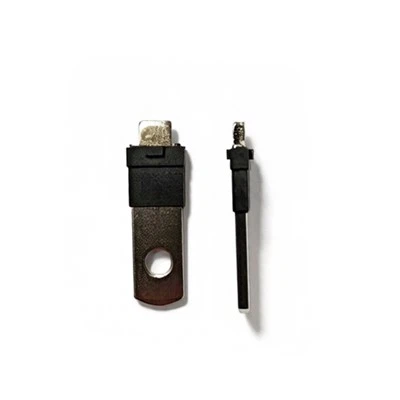
First, let’s get one thing clear: CN standard plug pins aren’t just for your kitchen blender or phone charger. The CN standard (that’s the Chinese national standard, GB, but everyone calls it CN standard in the trade to keep it simple) actually has two main categories for these pins, and one of them is built with industrial use in mind. I see a lot of people mix up the consumer-grade 10A/250V pins you get in every electronics store, and the heavy-duty 16A/250V or even higher-amperage pins we make for industrial setups. That’s the first big divide. Let’s start with the basics of what makes a pin “industrial.” Industrial apps aren’t like plugging in a toaster—you’ve got constant vibration, dust, fluctuating voltages, sometimes exposure to moisture or harsh chemicals, and gear that runs 12+ hours a day, 7 days a week. If a pin can’t handle that, you’re looking at downtime, burnt wires, or even safety hazards, which no factory owner wants to deal with.
Now, let’s talk about the good stuff first. Our industrial-grade CN standard plug pins are engineered specifically for that. The metal core? We use tinned copper, not the bare brass you see in consumer pins. Tinned copper resists corrosion way better—think about a factory floor with metal shavings, or a outdoor industrial shed where humidity is high. Bare brass will start pitting in 6 months, and that causes bad connections or overheating. We also adjust the gauge: for consumer 10A pins, it’s usually 0.5mm copper, but for industrial, we go up to 0.8mm for 16A, and even 1.0mm for 20A+ pins. That extra thickness means they carry more current without heating up, which is non-negotiable for motors, welding equipment, or conveyor belt controls—stuff that pulls a lot of amps consistently.
Then there’s the contact tension. Consumer pins are made to snap in once, then you pull them out, not get wiggled hundreds of times a day. Industrial pins have a calibrated spring-loaded contact that keeps consistent pressure even when the plug is tugged, or there’s vibration from a nearby machine. I had a client last year who runs a packaging plant—they were using generic consumer pins for their conveyor motors, and they kept coming loose because the conveyor shook. They switched to our industrial CN pins, and that issue vanished immediately. They said they hadn’t had a loose plug in 8 months, whereas before they’d replace 2-3 a week. That’s the stuff that makes industrial pins worth it, right?
But wait—here’s the catch you have to watch for. Not all CN standard plug pins are created equal for industrial use. A lot of cheap suppliers (not us, obviously) will take consumer pins, stamp them with a GB logo, and call them industrial. I see these all over Alibaba and local hardware markets. They cut corners on the copper, skip the tin plating, use flimsy plastic insulators that crack under high heat, and don’t have the proper safety certifications. The GB standard actually has a specific mark for industrial use—if you don’t see that mark, it’s a consumer pin, plain and simple. Using that for industrial work is a recipe for disaster.
Let me give you an example of what went wrong for a client of mine a while back. He owned a small metal stamping shop, and he bought 50 pins from a random supplier to run his new stamping press. Those pins were consumer-grade, he just liked the CN shape. Within 3 months, 3 of the plugs overheated, melted the plastic around the pin, and almost caught fire. He told me later he was lucky his fire suppression system kicked in, but his press was down for 2 days, costing him thousands in lost orders. That’s why I always stress: don’t grab a CN pin just because it fits the hole or matches the socket shape. Check the rating, check the plating, check the certification.
Now, let’s talk about common industrial apps where CN standard pins work great, and where they actually are the right choice. First, any factory in China that uses standard CN sockets—most small to medium factories here have standardized on CN sockets for their internal equipment, right? If you’re running a small assembly line, or a portable power tool, or even outdoor LED lighting for a construction site, industrial CN pins are perfect. They’re cheaper than custom European or American pins, they’re widely available, and they meet all the GB safety standards for industrial use. I’ve also shipped these pins to factories in Southeast Asia, Africa, and even parts of Europe where there’s demand for cost-effective, standardized industrial electrical parts.
Another big one: renewable energy setups. A lot of small solar farms in China use CN standard pins for their panel connections, because they’re durable, weather-resistant, and can handle outdoor conditions year-round. We’ve had clients use our industrial CN pins for wind turbine control boxes too—they hold up to salt air near coastal wind farms, which is way more harsh than most industrial indoor environments.
But what about apps where CN standard pins are a bad call? Let’s be honest here, no pin works for everything. If you’re in an industry that needs extreme high amperage—like 50A or more for heavy industrial machinery, or if you’re working in explosive environments, like chemical plants with flammable fumes. CN standard pins aren’t rated for explosion-proof use, and they don’t have the extra insulation or sealed casing that those applications require. Also, if you need a pin that’s compatible with international sockets (like NEMA for North America, Schuko for Europe), CN pins won’t work, because their shape is unique to the Chinese standard. So if you’re exporting your gear to other countries, maybe skip CN pins for the main power connections, but they might still work for internal auxiliary parts if your gear uses CN sockets.
Wait, another thing to mention: compliance. If your factory has safety audits, you can’t use unrated parts. Using industrial-grade CN standard plug pins that meet GB 1002 (that’s the actual national standard number) will pass any Chinese safety inspection, and a lot of international inspections too, as long as you can prove they’re industrial-rated. We provide test certificates with every order, so clients don’t have to worry about failing audits. I had a food processing plant client last year who was being audited by a global food safety group—they had switched to our industrial CN pins, and the auditor even commented that the parts were well-made and met all their requirements. That’s a big win, because food processing has super strict electrical safety rules to prevent cross-contamination or fires from grease buildup.
Let me also address a common myth I hear all the time: “CN pins are only for low-voltage stuff.” Nope, our industrial line goes up to 480V, which is standard for most industrial machinery. The key is just to get the right rating. You wouldn’t use a 10A pin for a 30A motor, right? Same rule here. Always match the pin’s rating to your equipment’s draw. If your machine pulls 20A, get a 20A or 25A industrial CN pin, not a 10A one, no matter how cheap the 10A is.
Now, if you’re someone who’s on the fence—maybe you’ve used CN pins for consumer stuff, and you’re wondering if they can step up for your industrial needs—here’s my quick checklist to make sure you’re making the right call. First, check the rating: is it 16A or higher, with GB 1002 industrial marking? Second, check the plating: is it tinned copper, not bare brass? Third, check the insulator: is it heat-resistant nylon, not cheap plastic that melts at 100C? Fourth, confirm the contact tension: does it feel firm when you push it into a socket, not loose? If all those check out, then yes, CN standard plug pins are totally fine for industrial use. If not, keep shopping, or talk to a reputable supplier like ours to get the right parts.
I also want to mention customization, because a lot of industrial clients have specific needs. We can make CN standard plug pins with longer pins for deep sockets, or with sealed casings for wet environments, or even with different plating for corrosion resistance in salt or chemical environments. Last year we made a batch of pins for a shipyard client that needed pins that could handle saltwater spray, so we used nickel-tin plating and added a rubber seal. That’s the kind of flexibility industrial clients need, and it’s totally possible with CN standard pins, as long as you work with a supplier who can adjust the specs.
Wait, let’s circle back to the original question one more time, to make sure I’m answering it clearly. The short answer is: Yes, you can use CN standard plug pins for industrial applications, but only if they are industrial-rated CN pins, not consumer-grade ones. A lot of people miss that distinction, and that’s where the mistakes happen. I’ve seen so many factories waste money on cheap consumer pins that fail, when they could have gotten industrial CN pins that are more reliable, cheaper long-term, and meet all their needs.
If you’re still unsure—maybe you’re not sure what rating you need, or you want to ask about custom specs, or you need test certificates for an audit—reach out to our team. We work with all kinds of industrial clients: small factories, large manufacturing plants, construction crews, even renewable energy projects. We don’t do hard sells, we just give honest advice. We’ve helped clients switch over from generic parts to our CN pins and cut their electrical part failures by 70% on average, which saves them so much money in downtime and replacement parts.
Just to wrap this up, let’s recap the key points so you don’t forget: 1) Not all CN pins are industrial. 2) Industrial CN pins use tinned copper, higher gauge, and durable insulators. 3) They work great for most general industrial apps, but not for extreme high-amperage or explosion-proof environments. 4) Always check ratings and certifications before buying. 5) A reputable supplier will have test docs and can adjust specs to your needs.
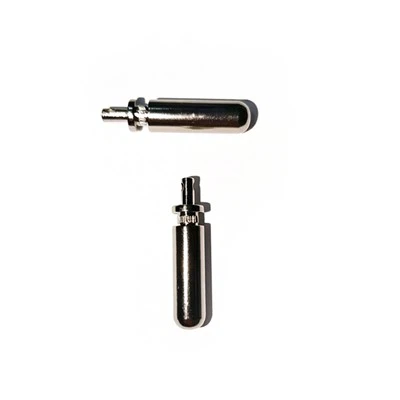
If you’re ready to source industrial CN standard plug pins, or you just have more questions about which parts are right for your setup, get in touch with our procurement team. We’re here to help, no matter if you need 50 pins or 50,000 pins. We don’t push unneeded products, we just give you the parts that will work for your specific industrial needs.
Electrical Brass Switch Socket Part REFERENCES
GB/T 1002-2021, Plain Type Plug and Socket Outlets for Household and Similar Purposes
International Electrotechnical Commission (IEC) 60884-1, Plugs and Socket-Outlets for Household and Similar Purposes – Part 1: General Requirements
Dongguan Fangrun Metal Products Co., Ltd.
We’re well-known as one of the leading cn standard plug pin manufacturers in China, specialized in providing high quality customized products. Please feel free to buy discount cn standard plug pin made in China here from our factory. For quotation and free sample, contact us now.
Address: New Town Industrial Zone,Xiegang Village,Xie Gang Town,Dongguan City
E-mail: 825556703@qq.com
WebSite: https://www.fangrunpin.com/
