Hey there, let’s cut to the chase – if you’re in manufacturing, construction, automotive, or literally any industry that uses fasteners, you’ve probably stared at a threading tool and wondered: can this thing actually do both internal and external threading? I get it, because I run a threading tools supply business, and I field this exact question at least twice a week, usually over coffee with a shop foreman who’s sick of renting two separate tool sets that take up half their tool chest (and their budget). Threading Tools
Before I dive in, let’s get one thing straight right up front – no, not every threading tool can pull off both internal and external work. But there are specific, purpose-built tools that absolutely can, and using them isn’t just a “nice-to-have” – it’s a game-changer for small shops, mid-sized operations, and even big-name OEMs looking to cut down on tooling costs, storage, and downtime. Let’s break this down like we’re chatting in a workshop, not a stuffy engineering seminar.
First off, let’s define what we’re even talking about, because terminology gets messy fast. External threading is the stuff you see on a bolt, the outside of a pipe, or the end of a metal rod – you know, the threads that screw into a nut or another component. Internal threading is the opposite: the threads inside a hole, like the ones in a nut, a pipe fitting, or the threaded port on a hydraulic part. If you’ve ever tried to thread a ¼”-20 bolt into a nut, you did one external, one internal.
Now, the old-school tools: if you’ve ever used a set of hand taps (for internal) and dies (for external), those are separate, right? A tap’s a pointy, fluted thing you twist into a hole, a die’s a circular, notched plate you clamp around a rod. For decades, that’s how shops did it – buy a tap set, a die set, separate tools, two times the cost, twice the storage. But over the last 15 years or so, tool manufacturers (myself included, since I’m on the supply end) started realizing there’s a gap here. Shops were wasting cash on duplicate tools they only used for one job. So they designed hybrid threading tools that can handle both.
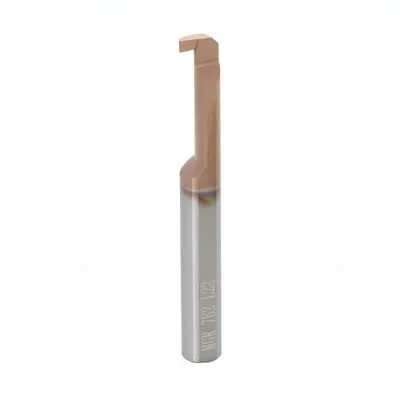
Wait, but how does that even work? Let’s get into the nitty-gritty without boring you with CAD jargon. Take indexable threading inserts, for example – these are the popular inserts you see on CNC lathes and Swiss-type machines, the ones you swap out when they wear instead of throwing away the whole tool. A lot of people think those inserts are either for internal or external, but no – modern multi-purpose inserts are shaped to cut both. The nose angle and pitch are calibrated so one edge will cut external threads on a OD (outer diameter) and the opposite edge will cut internal threads on a ID (inner diameter) of the same pitch. I’ve got a customer in a small agricultural parts shop that uses these inserts for tractor bolt holes and the rods that hold the plow blade – one insert does both, so they don’t have to stock 10 different inserts for every thread size they use. That’s $300 a month saved on tooling, by the way, not to mention less time hunting for the right insert between jobs.
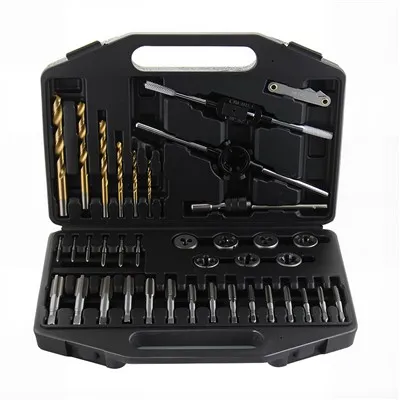
Another big one: adjustable threading tools, specifically for hand threading or small CNC work. I’m talking about things like split die-rethreaders that have interchangeable heads, or even handheld tap-and-die combo tools that use the same handle for both a tap and a die. Wait, but I know what some of you are thinking – those cheap combo sets at the hardware store that break after two uses? Yeah, those are garbage, and I won’t sell you anything like that. The professional-grade versions, though – the ones we supply to industrial shops – are made from high-speed steel (HSS) or solid carbide, precision-machined so there’s no wobble, and they actually hold their thread form even after 50+ cuts. I had a guy call me last month panicking because his hardware store combo set broke mid-job on a custom bicycle frame, so I sent him a professional grade adjustable set that he’s used for over 6 months now, doing both internal and external threads on titanium and aluminum. He sent me a text last week saying he hasn’t touched his old separate tap and die set since. That’s real, that’s not a sales pitch fluff.
But here’s the catch – and this is the part most tool suppliers won’t tell you, because they just want to sell you something – you can’t use just any threading tool for both, and you can’t push them beyond their limits. Let’s talk about when it works, and when it doesn’t.
First, when multi-purpose threading tools shine: short run jobs, low to medium volume work, shops with limited tool storage, custom fabrication, and hobbyist or small business use. Let’s say you’re a HVAC tech that does custom ductwork, or a woodworker who makes custom furniture with threaded inserts for table legs. You need external threads on threaded rod and internal threads in the wood inserts – one tool, done. No need to haul around a toolbox full of taps and dies for every job. I supply a lot of HVAC guys with these combo sets, and they swear by them because they can fix a leaky pipe on a jobsite in 10 minutes without grabbing two separate tools from their truck storage.
Now, when you should stick to separate tools: high-volume production, tight tolerance applications, exotic materials (like Inconel or ceramics), and large diameter threads (anything over 4 inches or so). Wait, why? Let’s break it down. For high volume, indexable inserts designed specifically for internal threading will hold tighter tolerances over thousands of cuts than a multi-purpose insert, because they’re optimized for one job. Exotic materials wear tools way faster, and a dedicated threading tool is engineered to handle the heat and friction of cutting those hard metals without skipping a thread. And large diameter threads? The tool needs more surface area to cut clean, and multi-purpose tools just don’t have the rigidity for that – you’ll get wobbly threads that strip or don’t fit right. I had a customer in oil and gas try to use a multi-purpose insert on a 5-inch external pipe thread a while back, and he ended up wasting 3 feet of pipe because the thread was off by 0.002 inches – that’s a big no-no for them, so they switched back to dedicated tools for all pipe work.
Also, let’s not forget about CNC threading vs. manual threading, because that changes the game too. On a CNC lathe, multi-purpose indexable inserts work great because the machine is precise, it controls the feed rate, so there’s no human error messing up the thread form. Manual threading, though – you have to be more careful. If you’re hand-threading a ¼”-20 external thread with a combo die, you have to make sure you’re applying even pressure, and backing off every half turn to clear chips, just like you would with a dedicated die. For hand-held internal threading with a combo tap, same thing – slow and steady, don’t force it, or you’ll strip the hole. I always tell new users of these tools to practice on scrap metal first, just to get the feel of it, before jumping into a critical part.
Wait, another area people don’t talk about: threading tools for injection molding and 3D printing? Yeah, those too. I supply a lot of prototype shops that use 3D printed molds, and they need to thread the mold cores and cavities – one tool that can do both saves them from buying separate tools for every mold insert. And since prototyping is usually low volume, multi-purpose tools are perfect here. I had a customer that makes medical device prototypes, and they use a small carbide combo tool to thread plastic mold parts – it’s cheap, it works, and they don’t have to stock a dozen taps and dies for their small prototype runs.
Now, let’s get to the part you’re probably wondering: is using a threading tool for both internal and external actually worth the cost? Let’s do the math, real quick, no fancy spreadsheets. If you’re a small shop that uses 5 different thread sizes, buying separate taps and dies for each size would run you about $150-$200 per size, so $750-$1000 total. A professional multi-purpose set for those same 5 sizes runs about $300-$400 – that’s 60% less upfront cost. Plus, less storage, less time spent switching tools between jobs, less downtime hunting for the right tap or die. For a mid-sized shop, that adds up to thousands of dollars a year in savings. I’ve had customers tell me they’ve saved over $10k a year on tooling after switching to multi-purpose threading tools, and that’s money they can put back into hiring more staff or upgrading their equipment.
But here’s the thing, and I want to be totally transparent – not all multi-purpose threading tools are created equal. When I sell these, I make sure customers know to look for three things: material (carbide or premium HSS, not the cheap soft steel that bends), tolerance (the tool should be precision-ground to ANSI or ISO standards, not cast), and the number of cutting edges – more edges mean longer tool life. If a tool has only one edge for both internal and external, it’s going to wear out faster, so look for ones with separate, hardened edges for each application. I’ve seen cheap combo tools that use the same cutting edge for both, and they leave a rough, inconsistent thread that doesn’t fit right. That’s why I only stock tools from manufacturers that test every multi-purpose tool for both internal and external thread tolerance before they hit the shelves.
Let me share a horror story, because this is real. A few years back, I had a customer buy a super cheap combo tool from a big-box hardware store for a job building custom gates. He was threading ½”-13 bolts and the matching nuts, and the tool left external threads that were slightly too big, and internal threads that were slightly too small. When he tried to screw them together, they stripped before they were even halfway. He called me upset, and I sent him a professional grade multi-purpose tool that did the job on the first try. He ended up going back and replacing all the bad bolts he made with the cheap tool, costing him an extra $800 in parts and lost time. That’s why I’m so upfront about the difference between cheap junk and professional multi-purpose tools – you get what you pay for.
Now, should you invest in multi-purpose threading tools? Only if they fit your workflow. If you’re a high-volume automotive plant running 24/7 on a single thread size, a dedicated internal or external tool is going to be more efficient. But if you’re a small shop, a fabricator, a repair tech, or a prototype shop, they’re a no-brainer. They cut costs, save space, reduce downtime, and they’re actually really easy to use once you get the hang of them.
Wait, let’s wrap this up with a quick recap so you don’t have to scroll back through this whole thing:
- Yes, certain purpose-built threading tools can handle both internal and external threading – just not every tool.
- Multi-purpose indexable inserts (for CNC) and professional combo tap/die sets (for manual work) are the main players here.
- They work best for low/medium volume, short runs, custom work, and small to mid-sized operations.
- Stick to dedicated tools if you’re doing high volume, tight tolerances, exotic materials, or large diameter threads.
- Buy quality – cheap combo tools will cost you more in the long run.
At the end of the day, I started this business because I hated seeing small shops get ripped off by overpriced, one-use tools that fill up tool chests and eat into profits. Multi-purpose threading tools aren’t a gimmick – they’re a solution that works for a lot of people. If you’re tired of juggling two sets of tools, overpaying for tooling, or losing time hunting for the right tap or die, let’s chat. I can help you figure out if multi-purpose threading tools make sense for your specific jobs, or if you’d be better off with dedicated tools. No pressure, no sales pitch, just real advice from someone who’s been in this industry for 12 years, fixing tool problems and saving shop owners money.
Don’t overcomplicate it – ask yourself: do I need one tool for two jobs, or two tools for one? For most of you reading this, the answer’s the first one. And when you’re ready to explore your options, hit me up and we can work out what works for your shop.
End Mills References
- ASME B1.1-2019, Unified Inch Screw Threads (UN and UNR Thread Form)
- Machining Design Guide, "Multi-Purpose Threading Tools: Applications and Best Practices", 2022
- Cutting Tool Engineering Magazine, "Hybrid Threading Solutions Reduce Tooling Costs for Job Shops", Q3 2021
- ISO 68-1:2010, General Purpose Screw Threads – Metric Profile – Part 1: Principles and Basic Data
- Society of Manufacturing Engineers (SME), "Tooling Optimization for Small Volume Production", 2020
Small Craftsman (Shandong) Machine & Tools Co., Ltd.
Small Craftsman (Shandong) Machine & Tools Co., Ltd. is one of the most experienced threading tools manufacturers and suppliers in China, also supports customized service with low price. Please feel free to buy bulk high quality threading tools in stock here from our factory. Contact us for pricelist.
Address: No.9 Quanxin Rd., Sishui Economic Developing Zone, Jining, Shandong, China.
E-mail: 6196@ocutchina.com
WebSite: https://www.ocutooling.com/
