If you’ve ever spent a few minutes waiting for an escalator in a busy mall, airport, or office building, you know how easy it is to take these moving staircases for granted. They’re everywhere, but we rarely stop to think about their environmental impact—until our teams at the escalator supply side started digging into the numbers. As someone who’s spent 12 years working with escalators, first as a technician and now as part of a growing escalator supply company, I’ve seen firsthand how even small tweaks to these machines can add up to big cuts in energy use, waste, and carbon footprints. The thing is, making escalators more eco-friendly isn’t just about slapping a “green” label on them. It’s about science, real-world usage, and working with the people who rely on these machines every day. Let’s break down what actually works—stuff we’ve tested in our own projects, not just theory. Escalator
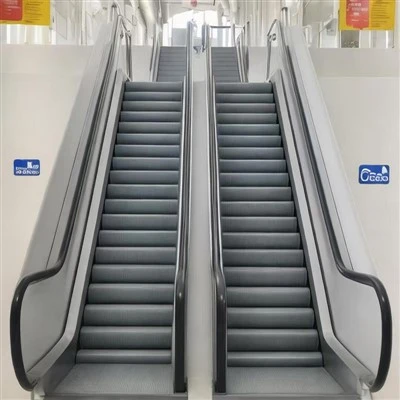
First off, the biggest drain on an escalator’s energy is when it’s running empty. Think about it: a mall escalator operating at 10 a.m. might have 20 people on it, but from 2 a.m. to 5 a.m., there’s zero foot traffic, and the escalator is still humming along at full speed. Older escalators run at a constant pace, no matter how many people are on them, which wastes up to 60% of their total energy during off-peak hours, according to data from the American Society of Mechanical Engineers (ASME). That’s a huge number. Our team started testing variable speed drives (VSDs) in our installations three years ago, and the results were game-changing. VSDs work by using sensors—either infrared or weight-based ones built into the steps—to detect when a person is approaching. If no one is there, the escalator slows down to a crawl, like 20% of its normal speed, instead of stopping entirely. When someone steps on, it ramps back up to full speed in less than a second. We installed VSDs in a 10-step escalator at a suburban shopping center last year, and their monthly energy bill dropped by 58% in the first quarter. The mall manager told us that shoppers didn’t even notice the speed shift, because the transition is seamless. The science here is simple: kinetic energy is only used when it’s actually needed, not wasted on moving empty steps. But VSDs aren’t one-size-fits-all. For high-traffic areas, like airport terminals where foot traffic is steady 24/7, VSDs don’t make as much sense. That’s where our next solution comes in: regenerative drives.
Regenerative drives are a game-changer for escalators that carry people up and down, especially in multi-level buildings. Here’s how they work: when someone is riding an escalator downward, their weight creates kinetic energy. Older escalators just dissipate that energy as heat, like a car’s brakes when you go downhill. Regenerative drives capture that energy and feed it back into the building’s power grid, so it can be used to light hallways, power elevators, or run other equipment. We tested this with a pair of escalators in a downtown office tower last year—one going up, one going down, paired together. The office’s building management reported that the two escalators now supply 15% of the building’s total daily energy. That might not sound like much, but over a year, that’s enough to power 12 average American homes. The key here is matching the drive to the building’s usage pattern. If you have a building where the upward and downward foot traffic is roughly balanced, regenerative drives work best. If most people are going up during morning rush and down in the evening, the balance isn’t there, so you adjust the VSDs accordingly. We’ve also found that combining VSDs and regenerative drives works in hybrid spaces, like mixed-use malls where some areas are busy all day and others have lulls. It’s all about data, which brings me to our next big focus: smart monitoring.
A lot of older escalators run on outdated systems that only alert technicians when something is broken. By the time a problem is flagged, energy is already being wasted, and parts are wearing out prematurely. We’ve started installing IoT (Internet of Things) sensors on every escalator we supply, which track everything from step speed to motor temperature to foot traffic in real time. The sensors send data to a cloud-based dashboard, where our technicians can spot small issues before they become big ones—like a slightly misaligned step that’s creating extra friction, or a motor that’s drawing more current than it should. In one recent installation at a major airport, the sensors picked up that a step chain was stretched by 2% before it caused any noticeable wear. We were able to adjust it during a routine maintenance call, instead of waiting for it to break, which saved the airport an estimated $8,000 in emergency repairs and avoided replacing the entire chain six months early. The other side of this is predictive maintenance, which also cuts waste. When parts are replaced on a set schedule, whether they need it or not, you’re throwing away perfectly good metal and plastic. With smart monitoring, we only replace parts when they’re actually worn out. A study by the National Elevator Industry, Inc. (NEII) found that predictive maintenance for escalators reduces parts waste by 32% annually, and cuts energy use by another 10% because the machines are running at peak efficiency. For a supplier like us, that means we’re not just selling equipment—we’re selling a system that makes the escalator work better for years, not just the first few months.
Now, let’s talk about the physical parts of the escalator, because even the most high-tech drives won’t help if the machine is made of materials that end up in landfills. Escalators have a lot of metal: steel frames, aluminum panels, step chains, and so on. For years, we used standard steel that’s only 30% recycled content, but two years ago, we switched to low-carbon steel that’s made from 75% recycled scrap metal. It’s just as durable, but it cuts the carbon footprint of the frame by 45% compared to virgin steel. The steps themselves are another area. Traditional escalator steps are made of cast aluminum, which is heavy and hard to recycle when they’re worn out. We started testing composite steps made from recycled plastic and fiberglass three years ago, and now they’re our go-to for most commercial projects. These steps are 40% lighter than aluminum ones, which means the motor doesn’t have to work as hard to move them—so energy use drops another 8% on average. When the steps do reach the end of their lifespan, they’re 100% recyclable, unlike aluminum steps which often end up in landfills because they’re contaminated with old lubricants and other grime. We also switched to water-based lubricants for the step chains, instead of petroleum-based ones that leach into the environment during disposal. That’s a small change, but it keeps thousands of gallons of toxic oil out of landfills every year for a single mid-sized mall.
One mistake we see a lot is people trying to make escalators “green” by using solar panels to power them. Solar sounds great, but most escalators are indoors, in windowless basements, airport terminals, or underground malls where solar isn’t feasible. Even for outdoor escalators, the math doesn’t always add up. A standard 50-foot escalator uses roughly 1,500 kWh of energy per month. A rooftop solar system that could power that would cost $12,000 to install, and would only cover 70% of the energy needs on an average day. That’s a lot of money for a return that’s not as high as upgrading the drive system. We’ve seen a lot of clients waste money on solar that doesn’t deliver, when they could get way bigger savings from VSDs and regenerative drives. It’s important to pick solutions that are tailored to the space, not just the latest trendy green tech.
Another big issue is end-of-life disposal. Most escalators are replaced every 25 to 30 years, and before we started our take-back program, those old machines would be torn apart, with parts tossed in landfills. Now, when we install a new escalator for a client, we include a take-back agreement: when the old machine is ready to be replaced, we dismantle it responsibly, sort every part, and recycle as much as possible. We can reuse 90% of the steel frames, 85% of the motors, and 70% of the step chains from old escalators. In 2023, our take-back program kept 120 tons of metal out of landfills in North America alone. We also partner with specialized recyclers to process things like plastic panels and wiring, so none of it ends up sitting in a dump for centuries. For us, that’s not just a nice thing to do—it’s part of doing business. When clients see that we’re invested in the full lifecycle of an escalator, not just selling it, they trust us more.
We’ve had our share of challenges testing these solutions, too. Early on, the weight sensors we used for VSDs were prone to false readings, especially if someone was carrying a heavy bag or a stroller. We spent six months working with our engineering team to adjust the sensor algorithms, so they can now accurately detect foot traffic even when people are carrying extra weight. Another challenge was convincing clients that the low-carbon steel steps were just as safe as the aluminum ones. We worked with independent safety testers to get UL certification for our composite steps, and now we have a long list of clients who’ve switched and save money on both energy and maintenance.
What’s most exciting is that these changes aren’t just good for the planet—they’re good for the people who use escalators and the businesses that own them. Mall managers see lower utility bills, office buildings have lower operating costs, and the escalators are more reliable because we’re using smart monitoring. Shoppers get smooth, quiet escalators that don’t jolt when they step on or off. At the end of the day, making escalators more environmentally friendly is a win-win-win: for the planet, for the business owners, and for the everyday people who rely on these machines.
If you’re a building manager, mall owner, or architect looking to upgrade or replace your escalators, we can help you figure out exactly what solutions work for your space. We don’t believe in one-size-fits-all green claims—we’ll do a free energy audit of your current escalators, show you how much you can save, and design a custom system that cuts your carbon footprint without breaking the bank. Ready to talk through your project? Reach out to our team to start the conversation today.
Freight Elevators REFERENCES
American Society of Mechanical Engineers (ASME) Energy Efficiency Standards for Vertical Transportation Systems, 2022.
National Elevator Industry, Inc. (NEII) Predictive Maintenance Report for Escalators, 2023.
International Organization for Standardization (ISO) 25745: Energy Performance of Escalators and Moving Walks, 2021.
Ningbo Dongao Elevator Co., Ltd.
As one of the most experienced escalator manufacturers and suppliers in China, we also support customized service. We warmly welcome you to buy high quality escalator for sale here from our factory. For quotation, contact us now.
Address: No. 16 Xiapan Road, Ninghai County, Ningbo City, Zhejiang Province
E-mail: 13777289058@163.com
WebSite: https://www.daelevator.com/
