If you’re running a business that relies on plastic spiral protectors for everything from binding office reports to safeguarding industrial cable wraps, you know how frustrating it is to pull a batch of spools off the machine only to find warped edges, inconsistent diameters, or ones that snap before they even hit your customer’s product. As someone who’s spent the last decade building and repairing plastic spiral protector machines—yes, I’m the guy your operations manager calls at 2 a.m. when their line goes down— I’ve seen every avoidable quality issue under the sun. The good news? Most of these problems aren’t because the machine is garbage. They’re because you’re missing small, actionable tweaks that take 10 minutes or less to implement. Let’s break this down, no stuffy engineering jargon, just real, battle-tested tips that actually move the needle on quality. Plastic Spiral Protector Machine
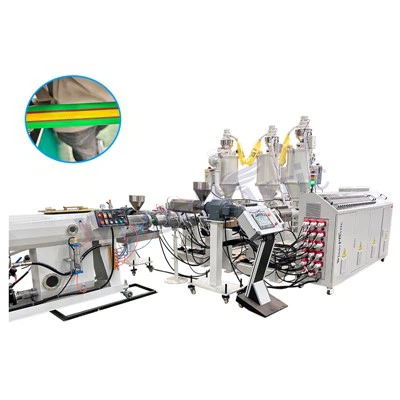
First up: your raw material isn’t just “plastic.” I can’t tell you how many times a customer has come to me saying, “My spiral quality went to crap after I switched suppliers” and it turns out they grabbed a cheaper resin that saved them $0.02 per pound but has inconsistent melt flow rate (MFR). For context, MFR is how easily the plastic melts when heated—if every batch has a wildly different MFR, your machine’s barrel heater can’t get it to the exact viscosity it needs, leading to either too runny (thin, wobbly spirals) or too thick (lumpy, hard to thread). Here’s the fix: stick to virgin resin for critical jobs, and if you have to use regrind (scrap from your own line, not random offcuts from a parts bin), limit it to 15% max. Even better, test every new resin batch with a melt flow indexer before you run full production. I once had a customer mix 50% regrind from old toys into their spiral stock—they ended up with 30% of their product being brittle enough to break when a stapler nicked it. Don’t do that. Also, skip the cheap UV stabilizers if your spirals are going outdoors; they’ll get brittle in 6 months instead of lasting 2 years.
Next: machine setup, and I’m not just talking about turning dials and pressing buttons. A lot of new operators think “set it once and forget it,” but plastic spiral machines need little adjustments every 4–8 hours of run time. The most common culprit for inconsistent diameter is the die head— that round metal part that the molten plastic is squeezed through to form the spiral. If it’s even slightly warped, or if there’s a tiny bit of plastic gunk built up in the die gaps, the spiral will be thicker on one side than the other. I always tell customers to do a full die clean at the start of every shift, and then recheck the die gap with a feeler gauge every 4 hours. Another big one: the cooling bath. If your spirals are coming out soft or warped, your cooling water is too warm, or you’re not agitating the water properly. I’ve seen folks use a 5-gallon bucket of tap water that got warm after an hour—no wonder their spirals would curl like potato chips when you laid them flat. Keep the cooling bath under 15°C (59°F), and add a small recirculation pump so the water isn’t sitting stagnant. One tip I love: throw a few ice packs in the bath if you’re running a long, hot shift—takes 2 minutes, and eliminates a ton of warp.
Then there’s the extrusion speed, and this is where I see so many folks rushing production and killing quality. If you crank the extruder too fast to get more parts per hour, the plastic doesn’t have enough time to melt evenly, and it gets pulled too tight as it exits the die, leading to stretched, weak spirals that snap under pressure. The sweet spot? Adjust the screw speed so the molten plastic exits the die at the same rate as the puller unit (the thing that pulls the formed spiral through the cooling bath). Too fast, you get thin walls; too slow, it piles up and creates lumps. I usually suggest doing a test run: run 10 feet of spiral, measure the diameter at 1-foot intervals, and adjust the speed until every spot is within 0.1mm of your target. It takes 15 minutes, but it saves you from reworking 500 feet of bad product later. Also, don’t ignore the take-up spool. If you’re winding the spirals too tight, they’ll deform as you spool them, and if you’re winding too loose, they’ll get tangled when you ship them. Set the tension so you can pull the spiral slightly without it bouncing back—simple, but game-changing.
Wait, let’s talk about maintenance, because a lot of you skip this and then wonder why your machine is spitting out trash. I’m not talking about a full teardown once a year—do daily, weekly, and monthly checks that take 10, 30, and 60 minutes respectively. Daily: Wipe down the die head, check the heater bands on the barrel (loose bands mean uneven heating, which makes bad plastic), and inspect the puller rollers for scratches or gunk—even a tiny scratch on a roller will leave a mark on every spiral that passes over it. Weekly: Calibrate the temperature sensor (they drift over time, so your machine says it’s 180°C but it’s actually 200°C—way too hot, which breaks down the plastic). Also, lubricate the chain on the puller unit; a dry chain skips, leading to inconsistent speed. Monthly: Do a deep clean of the extruder barrel, remove any old plastic buildup that’s been burning there for months. I once had a customer who never cleaned their barrel—they were running black specks in every spiral for 6 months before they finally let me pull the screw out and show them the 2-year-old burnt plastic caked on it. That cost them thousands in returns. Don’t be that guy.
Oh, and operator training—this is the part most suppliers don’t emphasize enough. I’ve had so many customers call me after they hired a temp to run the line for a week, and suddenly their quality is garbage. New operators don’t know the subtle signs that something’s off: a slight hiss from the die means pressure is too high, a change in the color of the plastic (even a tiny yellow tint) means it’s overheated, a skip in the puller means the chain needs oiling. When I sell a machine, I don’t just drop it off and leave. I train 2–3 key operators on how to spot these signs, adjust small settings, and troubleshoot without calling me every hour. Last quarter, a customer told me that their new operator noticed the die gap was off at 8 a.m. and fixed it, saving them $2,000 in bad product by lunch. That’s the kind of win that training gives you.
Also, let’s not forget about quality checks that actually work, not just grabbing a random spiral every hour. Set a schedule: every 15 minutes, pull 3 spirals, check diameter with a digital caliper, test for flexibility (bend it 180 degrees—if it cracks, it’s bad), and check for warpage. If even one of the three is off, stop the line and adjust. I’ve seen companies skip checks because they’re “too busy” and end up running 2 hours of bad product. Spend 2 minutes every 15 minutes, save hours of rework.
Here’s the thing: I know you’re trying to keep costs low and output high, but cutting corners on these small steps kills quality, which in turn kills your customer trust. A spiral protector that breaks when they’re binding a 50-page report means they won’t come back next time, and they’ll tell 2–3 other businesses about it. On the flip side, consistent, high-quality spirals mean repeat orders, fewer returns, and less time fixing problems.
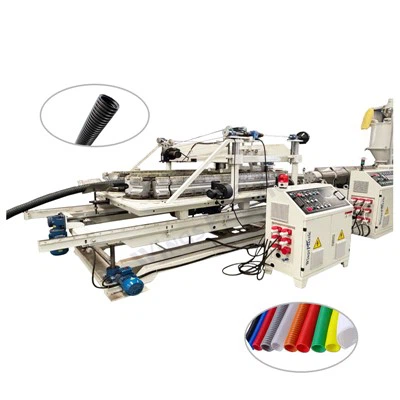
If you’re struggling with plastic spiral quality, whether it’s your current machine or you’re in the market for a new one that’s built to hold consistent settings longer, I’m here to help. Shoot me a line, and we can walk through your specific process, troubleshoot what’s going wrong, or set up a time to chat about upgrading your machine to make better parts. No sales pitches, no pushy stuff, just real advice from someone who’s built these machines for years and worked with hundreds of shops to make their spirals better.
Plastic Corrugated Pipe Machine References:
- Harper, C.A. (2006). Extrusion of Plastics and Rubber. Hanser Gardner Publications.
- Plastic Technology Association. (2021). Quality Control Guidelines for Extruded Plastic Products. PTA Publication Series.
- Davis, J.R. (2002). Handbook of Plastics, Elastomers, and Composites. McGraw-Hill.
- Society of Plastics Engineers. (2019). Extrusion Process Optimization for Thermoplastics. SPE Practical Guides Series.
Qingdao Wings Plastic Technology Co., Ltd.
As one of the most experienced plastic spiral protector machine manufacturers and suppliers in China, we also support customized service. Please feel free to buy durable plastic spiral protector machine made in China here from our factory. For price consultation, contact us.
Address: C02 Of Anshengyi Road, No.2 Fuan Industry Zone,Jiaodong Town, Jiaozhou City, Qingdao City, Shandong Province,China
E-mail: kelly@wingsplastic.com
WebSite: https://www.wingsextruder.com/
