Alright, let’s get real for a sec – if you’ve ever watched a backhoe loader on a job site, you might’ve thought, “That thing’s basically a Swiss Army knife for construction, right?” But here’s the tea: none of that multi-tasking happens without the controls. I’m not some salesbro spitting jargon to trick you; I’m a backhoe loader supplier who’s spent 12+ years listening to guys in the field rant about wonky controls that slow them down. Today, let’s break down exactly what these controls are like, no fluff, no corporate nonsense. Backhoe Loader
First off, let’s get the basics out of the way: when we talk backhoe loader controls, we’re not just talking steering wheel and gas pedal. This machine has two main work areas: the front loader (that big bucket on the front) and the backhoe (the arm with the tiny bucket on the back). You’ve got to control both at the same time, and that’s where it gets tricky – if the controls are garbage, you’re digging a foundation for a house while trying to move pallets of gravel, and you’ll look like a total noob. Let’s start with the operator’s seat, because that’s ground zero.
If you sit in a modern backhoe, the first thing you’ll notice is that everything’s within arm’s reach. No stretching to grab a lever, no squinting at tiny buttons. Old backhoes used to have levers all over the place – like, 10-12 big metal sticks that felt like you were moving a cinder block each time. Those days are mostly gone. Now, most of our models (and honestly, most reputable brands) use what’s called “servo controls” – basically, hydraulically assisted levers that move way lighter. Think of it like power steering for your car, but for the machine’s arms. That’s a game-changer for operators who work 10-hour days; you don’t come home with a sore shoulder from yanking levers.
Wait, but let’s not skip the two main control setups you’ll find out there: ISO and SAE. These are like the two different controllers on a game console, honestly. If you’ve ever played a PlayStation vs. Xbox, you get it. ISO is what most operators prefer these days – it’s more intuitive for people who do both loader and backhoe work. ISO splits the controls: left hand handles the backhoe’s boom, stick, and bucket, right hand handles the loader’s lift, tilt, and your auxiliary functions (we’ll get to that). SAE is the old-school setup, more common on older machines, where left hand controls backhoe swing and crowd, right hand controls lift and tilt. A lot of long-time operators swear by SAE, but I’ll be real – most new hires struggle with it at first. Here’s the thing as a supplier: we don’t force either on you. We let operators test both when they demo a machine. If your crew’s all been on SAE for 20 years, we can set it up to match; if you’ve got a mix of new and old guys, ISO is the way to go to cut down on training time.
Let’s dive deeper into the loader controls first, because that’s what most people use for the first part of a job. The front loader is for moving material – dirt, gravel, pallets, whatever. The two big levers on the right side (or left, depending on setup) – one controls lift (how high the bucket goes), the other controls tilt (how much the bucket dumps or curls in). With servo controls, a tiny nudge of the wrist lifts the bucket 10 feet, not a full-arm yank. Then there are the buttons or thumb toggles on the end of those levers – those are for auxiliary hydraulic functions. Wait, what’s that? Oh, right – a lot of backhoe loaders aren’t just for digging and moving dirt. You can swap the front bucket for a pallet fork, a snow blower, a grapple, even a sweeper. Those auxiliary hydraulics power those attachments, so you need a way to turn them on and off without letting go of the levers. No more reaching across the dash and dropping a pallet of bricks because you lost control – that’s a safety win, plain and simple.
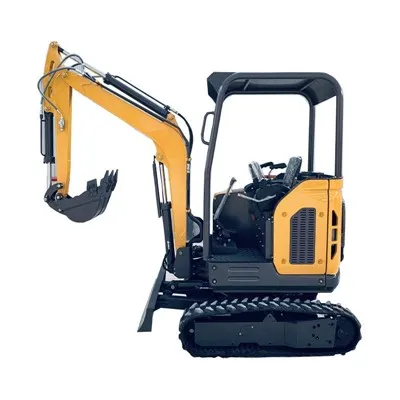
Now the backhoe controls – this is where the magic (and the chaos) happens. The backhoe arm has four parts, right? The boom (the long arm that extends back), the stick (the part that bends down from the boom), the bucket, and the swing (the whole back arm that twists side to side). On ISO, left hand: push forward/back to move the boom up/down, pull left/right to curl the bucket in/out. Right hand: push forward/back to move the stick in/out, pull left/right to swing the backhoe side to side. That makes sense, right? Left hand = boom/bucket, right hand = stick/swing. On SAE, it’s different, but like I said, it’s just muscle memory. The big thing here is the backhoe’s swing function – if the controls are sloppy, you’ll swing that backhoe bucket and whack a fire hydrant instead of digging the hole. All our backhoes have built-in hydraulic locks for the swing when you’re using the loader, but the controls themselves are calibrated so you have precise, not jerky, movements.
Wait, let’s talk about the little controls that no one mentions, but make all the difference. The foot pedals! You have two main foot pedals: one for the loader’s drive (but wait, no – backhoe loaders are usually wheeled, so steering is the wheel, but some have separate pedals for high/low gear, and a brake pedal that’s also hydraulically assisted). Then there’s a third pedal, usually on the left side, for the backhoe’s auxiliary or for activating the quick coupler. Oh, the quick coupler! That’s the thing that lets you swap attachments without getting off the machine. And it’s controlled by either a foot pedal or a button on the lever – no more getting down with a hammer and pins for 10 minutes when you need to switch from a digging bucket to a grapple. That saves so much time on a job site, especially for guys who bounce between tasks all day.
Also, let’s not forget the digital controls that are standard on every modern backhoe these days. No more analog gauges that flip out when it’s hot. You’ve got a small display in the dash that shows how much hydraulic pressure you’re using, how much fuel you’ve got, error codes if something’s off, even a backup camera when you’re using the backhoe. Wait, backup camera on a backhoe? Game changer. If you’re swinging that backhoe around to dump dirt, you don’t have to crane your neck to see if there’s a worker or a stack of pipes behind you. That’s not just a convenience – that’s safety, which is huge for job sites. We work with a lot of small contractors and big construction companies alike, and every single one tells us that safety features built into the controls are non-negotiable now.
Here’s something that most suppliers won’t tell you: the “feel” of the controls is way more important than specs on a sheet. A backhoe loader’s controls should be sensitive enough that you can dig a 6-inch foundation for a fence post without overshooting, but tough enough that they don’t slip when you’re moving 2,000 pounds of gravel. We test every control setup in our own shop – we have veteran operators who’ve been running these machines for 30 years come in and give us feedback, because if it feels off to them, it’ll be off for anyone. Last year, we tweaked the servo pressure a little because a guy from a paving company said he kept accidentally dumping hot asphalt when he nudged the bucket. Small change, but it cut his error rate by like 40% – that’s the kind of stuff we care about as a supplier, not just selling you a machine.
Wait, let’s address the old myth: backhoe controls are the same across all brands. No way. We’ve had customers test other brands and come back saying their controls felt like driving a truck with a loose steering wheel. One guy told us he used a competitor’s backhoe for a day and couldn’t dig a straight trench because the swing control was so unresponsive. Our controls? We calibrate every machine at the factory so that 1 inch of lever movement equals exactly the same movement of the arm, every single time. No guesswork, no surprises when you get to the job site.
What about for new operators? If you’re a kid just starting out, the controls can feel overwhelming at first, but modern setups are way more user-friendly than they used to be. We offer free training with every machine we sell, so your guys can learn the controls without breaking anything. A lot of our competitors charge extra for training, but that’s ridiculous – if you don’t teach your crew to use the controls properly, you’re going to have breakdowns or accidents, and that’s on both of us.
Now, let’s get to the part that matters most for you: what should you look for when choosing a backhoe loader based on controls? First, test the machine. Don’t just take the sales guy’s word for it. Sit in the seat, move the levers, toggle the buttons, press the pedals. Does it feel natural? If you’ve operated other backhoes, does this feel similar enough that you won’t need 2 weeks of training? Second, ask about customization. Can they switch between ISO and SAE if your crew has mixed experience? Can they adjust the sensitivity of the servos if you have a specific type of work (like digging delicate foundations vs. moving heavy rock)? Third, check for safety controls – are there locks for the attachments, does the machine have a neutral safety switch (so it won’t move if the levers are engaged when you start it), is there a backup camera or proximity alerts?
At the end of the day, a backhoe loader is only as good as its controls. You can have the biggest engine, the strongest hydraulics, but if the controls are garbage, you’re wasting time, money, and risking accidents. I’ve seen guys with fancy backhoes sit idle for a day because the controls are so bad they don’t want to run it. That’s the last thing you need on a tight job schedule.
If you’re in the market for a backhoe loader and want something with controls that actually work for your crew, not against them, let’s talk. We can set up a demo at your yard, bring in our test models, let every one of your operators sit in the seat and mess with the controls, no pressure. We’ll answer all your questions, no corporate jargon, no hidden fees. We know job sites are chaotic enough – your controls shouldn’t add to that chaos. Let’s get you a machine that makes your work easier, not harder.
Loader References
- Construction Equipment Association. (2022). Backhoe Loader Operator Safety and Control Best Practices.
- Komatsu Ltd. (2021). Modern Hydraulic Control Systems for Compact Construction Equipment.
- The Machinery Trader. (2023). Operator Feedback: What Drives Backhoe Control Satisfaction.
- Occupational Safety and Health Administration (OSHA). (2022). Heavy Equipment Control and Safety Standards for Construction.
Jining Sunsail Machinery Co., Ltd.
With abundant experience, we are one of the most professional backhoe loader manufacturers and suppliers in China. We warmly welcome you to buy high-grade backhoe loader made in China here from our factory. For price consultation, contact us.
Address: Room 410, Digital Industry Building, Rencheng District, Jining City, Shandong Province,China
E-mail: Sunsail_machinery@163.com
WebSite: https://www.sunsailmachine.com/
