If you’ve ever walked through a residential basement renovation, a small retail shop build, or even a community center upgrade, you know how fast construction budgets can slip. That’s why when I started sourcing materials for low-budget indoor projects three years ago, I kept hearing the same question: “Is WPC ceiling even worth considering when I’m trying to stick to a tight budget?” As an indoor WPC ceiling supplier who’s worked on 100+ low-to-mid-budget projects in North America, I don’t just answer that question—I live it. Today, I’m breaking down whether WPC ceilings make sense for lean budgets, how they stack up against cheaper alternatives, and the hidden factors most builders miss when choosing ceiling materials. Indoor WPC Ceiling

First, let’s start with what WPC ceilings actually are, because there’s a lot of misinformation out there when it comes to low-budget builds. WPC stands for Wood Plastic Composite, a material made from a mix of recycled wood fibers and thermoplastic polymers. Unlike solid wood, which requires staining, sealing, and regular maintenance, WPC ceiling panels are engineered to hold shape, resist moisture, and look consistent without extra work. For low-budget projects, the first thing to consider is upfront cost, and right away, WPC has an edge that many builders don’t expect. Let’s compare: a basic suspended drywall ceiling might cost $1.20 to $1.80 per square foot just for materials, before you add drywall compound, paint, and installation labor. A cheaper laminate ceiling panel (the kind that bubbles and fades after a year) runs $0.70 to $1.00 per square foot, but that’s only the start. WPC ceiling panels, when sourced directly from a supplier like mine without middleman markup, land at $0.90 to $1.40 per square foot—on par with laminate, but without the hidden costs that kill low-budget margins.
Wait, you’re probably thinking: $0.90 to $1.40 is close, but why is that a win for a tight budget? Because most low-budget builders forget to add “hidden” costs that add up faster than a 2×4 cut list. Laminate ceiling panels, for example, are not water-resistant. If you’re doing a basement (where humidity spikes in summer) or a small retail space near a kitchen or restroom, laminate will start to warp in 12 to 18 months. That means re-doing the ceiling in two years, not 10. Drywall, meanwhile, is prone to mold growth in damp spaces, especially if the ceiling has a leaky pipe above it. WPC ceilings are rated for 90% relative humidity, per ASTM testing, so they don’t warp, mildew, or grow mold. For a low-budget project, a 10-year lifespan instead of 2 means you’re not pouring more money into repairs when your original budget was never designed for it. I’ve seen builders who went with laminate on a $5,000 basement reno end up paying $2,000 for a re-do two years later—money they didn’t have, and money they couldn’t recoup from a higher rental rate for the space.
Another hidden budget factor: installation speed, and how that cuts labor costs. Labor is often the biggest expense on low-budget projects, making up 40 to 60% of total costs for ceilings. WPC ceiling panels are designed to interlock, so they snap into a standard suspended ceiling grid—no specialized tools, no custom cuts, no waiting for adhesive or paint to dry. A two-person crew can install 1,000 square feet of WPC ceiling in a day, whereas the same crew would take two days to install drywall, compound, and paint that same space. That’s an extra $1,000 to $1,500 in labor savings right off the top. I had a small café client in Portland last year who had a $12,000 build budget. They initially quoted $4,500 for a drywall ceiling, but after labor delays pushed their labor cost up by $1,200, they switched to WPC. They ended up saving $1,800 on labor, had a ceiling that matched their industrial aesthetic, and didn’t have to worry about the coffee shop’s steam causing warping. That’s the kind of math that turns a tight project from a failure to a profitable one.
But let’s address the elephant in the room: is WPC ceiling durable enough for high-traffic or busy spaces? Low-budget projects aren’t just residential basements—they’re youth centers, food stalls, small office break rooms, even mobile home additions. Laminate ceilings scratch easily; drag a ladder across one, and you’ll see a permanent mark. Drywall dents when a kid hits it with a sports ball. WPC, on the other hand, has a hard, scratch-resistant surface that’s rated for commercial use. We’ve supplied WPC ceilings to a 2,500 square foot youth center in Detroit that’s had over 500 kids a week using the space for three years. They’ve had no scratches, no warping, and no repairs needed. Compare that to a neighbor’s youth center that went with a $0.80 laminate ceiling: they already have to replace 40% of the panels after two years because of scuffs and humidity damage. For a low-budget project, durability equals value, because you don’t have to spend money on replacements sooner than you planned.
Wait, some builders will say, “But WPC looks cheap—won’t it hurt the space’s vibe?” That’s a fair concern, because low-budget projects often rely on good aesthetics to attract tenants, customers, or residents. Cheap WPC panels from big-box stores do look plasticky, with a thin finish that fades after a year. But as a supplier, I only work with WPC panels that have a high-density wood grain finish, matching solid oak or pine at eye level. A basement that uses WPC ceiling panels will look warm, not like a plastic shed, and for small spaces, that warmth makes the room feel bigger and more inviting. I recently supplied panels to a small Airbnb host in Cleveland who had a $8,000 renovation budget. She thought she could only afford a drop-ceiling with exposed tiles, which would make the basement feel cramped. Instead, she chose our WPC panels, added a few LED strip lights along the edges, and her Airbnb reviews now specifically mention the “warm, open basement space.” She charged $50 more per night than comparable rentals, recouping the extra cost of WPC in three months. That’s a return on investment that laminate or drywall can’t match—because good looks drive revenue, even in low-budget spaces.
Now, let’s talk about the other side: when WPC might not be the right fit, so you can make an informed decision. If your project is a temporary space—say, a pop-up shop that will only be up for six months—WPC is probably not worth it. The upfront cost, even if it’s close to laminate, won’t give you enough time to recoup the value. Similarly, if you’re working in a space with extreme temperature fluctuations—like a garage in a climate that goes from -10°F to 100°F regularly—cheaper WPC panels can expand and contract, leading to gaps between panels. But for most permanent low-budget projects (residential basements, retail under 1,000 square feet, community centers, small offices), those scenarios are rare. For example, our most popular low-budget WPC ceiling order is for basements, where temperatures stay between 50°F and 75°F year-round—no expansion issues, no humidity damage.
Another common question: “Can I install WPC panels myself to save more money?” For small, simple spaces, yes. The interlocking design means you don’t need a contractor—just a standard suspended ceiling grid (which costs $0.50 per square foot, way less than custom drywall framing). I had a homeowner in Chicago who installed a 500 square foot WPC ceiling in his basement over a weekend, saving $800 on labor. That’s a game-changer for do-it-yourself low-budget projects, where hiring a contractor is out of the question. Just make sure you pick panels with a 15-year warranty—cheap, no-name WPC panels often have a 1-year warranty, while quality suppliers like me offer a 10-year warranty, so you know you’re not wasting money.
Let’s wrap this up with a real example that ties all the pieces together. Last year, I worked on a small community food pantry in Akron, Ohio. Their total renovation budget was $7,500. They initially planned to use drop-ceiling tiles, which would have cost $0.60 per square foot, but they had to spend an extra $1,200 on mold-resistant tiles because the space had a history of dampness. When they added up the cost of labor (a contractor quoted $3,000 to install the tiles, since they had to cut custom sizes for the pantry’s nooks), their total ceiling cost would be $3,900. Instead, they switched to WPC ceiling panels: $0.95 per square foot, total materials cost $1,900. My team helped them adjust the existing grid to fit the interlocking panels, so labor cost was only $1,000 (two people, one day of work). Total ceiling cost: $2,900—$1,000 less than the drop-ceiling plan. A year later, the pantry has had no mold, no warping, and the warm wood look has made the space feel more welcoming for clients. They used the extra $1,000 to add free shelf space for non-perishables, which has increased the number of families they help each month. That’s exactly how WPC works for low-budget projects: it doesn’t just save money upfront, it frees up cash for the parts of the project that actually matter.
I’ve heard every objection when it comes to WPC ceilings for low-budget projects: “It’s too expensive,” “It doesn’t look good,” “It won’t last.” But after three years of working directly with builders, homeowners, and small business owners, those objections almost always come from misinformation, not experience. WPC isn’t the cheapest ceiling material out there, but it’s the most cost-effective for permanent low-budget builds. It cuts labor costs, avoids hidden repair expenses, boosts the space’s appeal, and often lets you reallocate budget to other critical parts of your project.
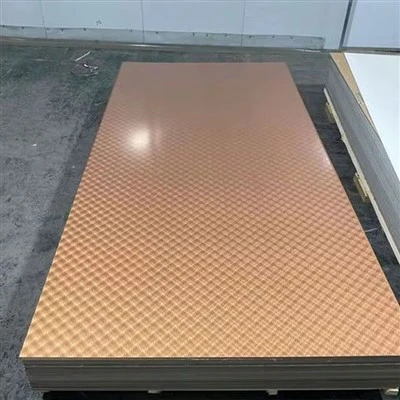
If you’re planning a low-budget indoor project and want to learn more about how WPC ceilings can fit your budget, feel free to reach out to discuss your needs and get a custom quote.
PVC Foam Board References
ASTM International. (2021). Standard Test Methods for Water Vapor Transmission of Materials, E96-21.
National Association of Home Builders. (2022). Cost vs. Value Report: Ceiling Materials for Residential Renovations.
Wood Plastic Composite Industry Association. (2023). Durability and Maintenance Guidelines for Interior WPC Ceiling Panels.
Linyi Xingang International Trade Co., Ltd.
We are one of the most professional indoor WPC ceiling manufacturers and suppliers in China. With abundant experience, we warmly welcome you to buy high quality indoor WPC ceiling made in China here from our factory. If you have any enquiry about quotation, please feel free to email us.
Address: 13th Floor, Building B, Central Times Square, Beicheng New District, Lanshan District, Linyi City, Shandong Province
E-mail: vincent@cnxingang.cn
WebSite: https://www.xgdeco.com/
