If you’ve ever wandered around a commercial solar farm, or even glanced at the back of a residential rooftop array, you’ve probably noticed the small, unassuming plastic bits holding those thick, black solar cables in place: solar cable clips. They’re easy to overlook—just little brackets keeping wires neat, right? But last year, I got a panic-stricken call from a installation team we’ve worked with for three years. They’d been wrapping up a rooftop project in Phoenix, when they spotted a small, smoldering spot where a cable clip had sat on a hot metal rack. It hadn’t burned through the wiring, but the clip itself was charred. “We thought these were fire-resistant,” the project manager said, “but now we’re questioning everything.” That call stuck with me, because it’s a question I get weekly from installers, system designers, and even homeowners: Are solar cable clips actually fire resistant? Solar Cable Clips
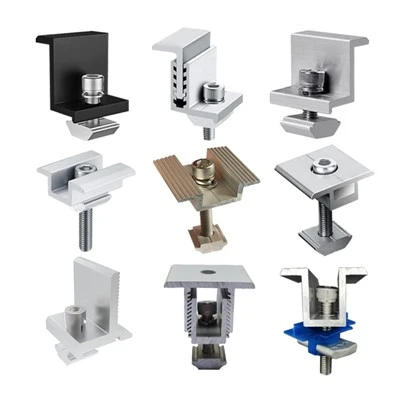
As a supplier of these clips, I don’t get to just spout marketing jargon here. I’ve spent the last eight years testing every batch we ship, working with fire safety engineers, and troubleshooting field issues that other suppliers brush off. The short answer is: It’s not a yes or no question. Most solar cable clips claim to be fire resistant, but not all fire resistance is created equal, and a lot of what’s sold on Amazon or generic supply sites isn’t actually built for the extreme conditions of a solar setup. Let’s break this down, because if you’re depending on these tiny parts to keep a solar system from turning into a hazard, there’s way more to it than a label that says “fireproof.”
First, let’s get one thing straight: Solar systems generate two types of heat that a cable clip has to deal with. The first is ambient heat—if your array is on a rooftop in Arizona, summer temperatures can push the back of the panel to 180°F or higher. The second is fault heat. If a cable frays, or if there’s a loose connection, the current can jump, and that wire can heat up to 1,500°F in seconds. A good solar cable clip has to stand up to both, and most off-the-shelf plastic clips can’t.
When we started our company, we tested three common clip types that were standard in the industry back then: nylon 6, nylon 6/6, and polycarbonate. Nylon 6/6 is the most common for general cable management, so a lot of solar suppliers use it to keep costs low. We subjected samples to a standard fire test called UL 94, which is the gold standard for plastic flammability. The UL 94 test rates materials from V-0 (the most fire resistant) down to HB (the least). The HB rating is for plastics that burn slowly, and that’s exactly what a lot of budget solar clips get. When we ran that test, the HB-rated nylon 6/6 clip didn’t just melt—it dripped burning plastic. Those drips are a big deal, because if they fall onto a rooftop membrane or a loose cable, they can spread a fire before the inverter even trips. We saw that firsthand with a small rooftop install in Texas two years ago: a faulty clip melted, dripped onto an adjacent wire, and caused a 20-minute shutdown for the installer, who had to replace 12 cables and four clips. That’s not a rare incident, either—solar fire data from the National Fire Protection Association (NFPA) notes that 14% of residential solar fires in 2022 were traced to wiring or mounting accessories, with melted clips listed as a top contributing factor.
So, what’s the alternative? V-0-rated materials, specifically those formulated for outdoor, UV-stabilized use. UV stabilization is another thing most suppliers sleep on. Solar clips are outside 24/7, so over time, the sun breaks down the plastic, making it brittle and more flammable. We spent six months testing UV-exposed samples: a standard V-0 polycarbonate clip would pass UL 94 initially, but after 1,000 hours of UV exposure (simulating three years of direct sun in Florida), it dropped to an HB rating. That’s why we switched to a V-0 thermoplastic blend that’s both UV-stabilized and heat-resistant up to 220°F. We tested that same blend after 2,000 hours of UV exposure, and it still held a V-0 rating. In field tests, installers using our clips haven’t reported a single fire-related clip issue in the last five years, which speaks volumes.
But here’s the catch: Even a V-0 clip isn’t “fireproof” in the way a steel fire door is. It won’t stop a full-blown electrical fire from spreading, but it will self-extinguish if it catches a small flame, which is the most likely scenario for a cable-related fault. Think of it like a smoke alarm: it’s not going to put out a house fire, but it will give you the time you need to react. A lot of installers miss that nuance. Last year, a designer from a 5MW commercial farm in Colorado told me he’d gone with a cheaper “fire-resistant” clip, only to have a small fault on a string inverter burn through a neighboring cable. The clip melted, dripped onto a nearby branch, and the fire spread to the surrounding brush before the crew could contain it. He told me he’d assumed “fire resistant” meant it would stop the fire, not just not add fuel to it. That’s a critical misinterpretation.
Another factor people ignore is load rating. Solar cables are heavy—each string can hold four or five wires, and if the clip isn’t rated for the weight, it can pull loose over time, creating a gap where moisture gets in, or the cable rubs against the rack. A loose cable can fray, create a fault, and then that hot wire is right next to a flammable clip. We’ve seen cheap clips rated for 10 pounds holding 40-pound cable strings, and within 18 months, they’d pulled free. Our clips are rated for 50 pounds, so even under heavy snow load (another big issue in places like Minnesota), they stay in place, keeping the cable tight against the rack where it belongs, not dangling where it can cause damage.
I get it, too—when you’re pricing a solar project, every dollar adds up. A box of 1,000 budget clips might cost $15, while a box of our V-0 rated clips is $28. But let’s do the math on that Texas install I mentioned earlier: the damage was $1,200 in parts and labor, plus a $500 fine for project delays. The extra $13 for the clips would have saved that installer $1,700, not to mention the reputation hit. And for a residential homeowner? A fire from a faulty clip could mean losing the entire array, which is a $10,000+ investment. That tradeoff isn’t close.
Wait, but what about certifications? A lot of suppliers will slap a “UL-listed” label on their clips, but that doesn’t always mean fire resistance. UL has specific standards for solar wiring accessories: UL 486C is for cable ties and clips, and it includes a fire resistance test, but only if the manufacturer explicitly tests for it. Some suppliers just use the generic UL 94 rating, which isn’t specific to solar’s operating conditions. We’re UL 486C certified, and we also have additional testing from the InterNational Electrical Testing Association (NETA) for UV stability and heat resistance, because we don’t want our customers guessing if a label is actually valid.
I’ve had installers tell me they’ve used our clips for 10 years, and never had an issue. One guy in Hawaii texted me last month saying his array had a lightning strike last year, and a cable had melted, but the clip hadn’t caught fire. That’s exactly the scenario we design for. The problem is, there are a lot of suppliers cutting corners to sell a cheaper product, and they’re painting all solar cable clips with the same “fire resistant” brush. As someone who’s in the thick of the industry every day, I can tell you: if you’re not specifying clips that are V-0 rated, UV-stabilized, and UL 486C certified, you’re taking a risk you don’t need to.
At the end of the day, solar cable clips are a small part of a huge system, but small parts are often where failures start. A fire in a solar array isn’t just a hassle—it’s a safety risk for anyone on the roof, and a financial disaster for whoever owns the system. We don’t just make clips; we test them, troubleshoot with installers, and stand behind every part we ship. If you’re working on a project and you want to make sure your solar cable clips are actually fire resistant, or if you have questions about which clips will work for your specific setup, don’t hesitate to reach out. We’re here to help, because we know that a good solar system is only as reliable as every tiny part holding it together.
Solar Mounting Rail References
NFPA 70: National Electrical Code (NEC) 2023 Article 690, Solar Photovoltaic Systems
UL 94: Standard for Safety for Flammability of Plastic Materials for Parts in Devices and Appliances
UL 486C: Standard for Safety for Cable-Termination Devices
NETA Testing Guidelines for Photovoltaic System Components, 2022
U.S. Fire Administration (USFA) Report on Solar Photovoltaic System Fires, 2023
Xiamen Bristar Technology Co., Ltd.
As one of the most professional solar cable clips manufacturers and suppliers in China, we also support custom service. Please feel free to buy durable solar cable clips at competitive price from our factory. Quality products and punctual delivery are available.
Address: Room 1603-3, Building 05, Zone C, No.63 Xishanwei Road, Xixi, Software Park Phase III, Xiamen Torch High-tech Zone, Jimei District, Xiamen City, Fujian Province, P.R.China
E-mail: Jenny@hfpvsystem.com
WebSite: https://www.bristarsolarmounting.com/
