Can a Carbon Raiser be used for agricultural wastewater?
Last month, I sat across from a dairy farm owner over a cup of coffee, listening as he complained about the rising costs of wastewater treatment and the pressure from local regulators to clean up his runoff before it hit the nearby creek. “Everyone’s talking about these ‘carbon raisers,’” he said, leaning forward. “But what good would they do for my agricultural wastewater? I thought those were just for industrial plants or municipal sewers?” Carbon Raiser
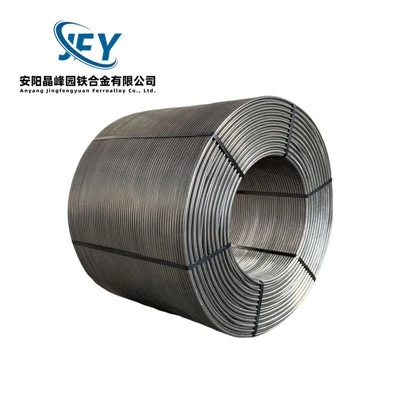
That conversation stuck with me. As someone who’s spent the last eight years selling and fine-tuning carbon raisers for a range of treatment applications, I’ve fielded this exact question dozens of times. And the short answer? Yes—absolutely a carbon raiser can be used for agricultural wastewater, and in fact, it’s one of the most cost-effective, sustainable solutions on the market for many farming operations. Let me break this down, from how a carbon raiser works to why it’s a perfect fit for agricultural runoff, and the real results we’ve seen from farms that have made the switch.
First, let’s get clear on what a carbon raiser actually is, because there’s still a lot of misinformation out there. A carbon raiser is a high-purity, specialized carbon-based media designed to boost the organic carbon content in wastewater treatment processes. It’s not just activated carbon—though it’s related. Activated carbon is primarily used for adsorption, pulling contaminants out of water. A carbon raiser is engineered to act as a food source for the beneficial bacteria that live in biological treatment systems. These bacteria are the workhorses of any wastewater plant; they break down harmful pollutants like nitrogen and phosphorus, organic matter, and pathogens before water is discharged or reused.
Agricultural wastewater is a unique beast. It’s made up of everything from dairy lagoon runoff, pig barn washdown, crop irrigation drainage, and even runoff from feedlots. The main pollutants regulators and farmers worry about here are high levels of ammonia (from manure decomposition), total nitrogen, total phosphorus, and biological oxygen demand (BOD)—all of which can cause algal blooms, kill aquatic life, and contaminate drinking water supplies if they make their way into rivers or groundwater.
Here’s where the problem comes in: most biological treatment systems for agricultural wastewater rely on nitrifying bacteria to convert ammonia into nitrates, and then denitrifying bacteria to turn those nitrates into harmless nitrogen gas. But denitrifying bacteria need a consistent, easily available source of carbon to do their job. And here’s the catch—agricultural wastewater is often carbon-poor. You’ve got lots of nitrogen and phosphorus, but not enough organic carbon to feed the denitrifying bacteria. So those bacteria can’t do their job properly, which means excess nitrate is discharged, and farmers get slapped with fines.
That’s exactly where a carbon raiser comes in. Unlike raw organic materials like sawdust or manure (which are messy, variable, and can introduce new pathogens or contaminants into the mix), a high-quality carbon raiser is consistent, stable, and delivers exactly the right amount of bioavailable carbon to those denitrifying bacteria. I remember when we worked with a 1,200-head dairy farm in southern Wisconsin two years ago. They were spending $18,000 a year on municipal denitrification additives, and their discharge still had 25% higher nitrate levels than the state allowed. We installed our carbon raiser media in their treatment lagoon’s recirculation system, and within six months, their nitrate levels dropped 42%—all while cutting their annual treatment costs by 35%.
Wait, I know what some of you are thinking: why not just add more manure or crop waste to get more carbon? Let me address that, because it’s a fair point. Some farmers have tried using local organic waste as a carbon source, and while it works in the short term, it has major downsides. First, it’s inconsistent. The carbon content of manure can vary depending on the animal’s diet, how long it’s been stored, and weather conditions. One month you might have great performance, the next it plummets. Second, it can introduce odors, pathogens, and even excess solids that clog treatment systems. Third, it requires constant sourcing and hauling—another cost and logistical headache for farmers who are already stretched thin during planting and harvesting seasons. A carbon raiser is delivered in uniform, easy-to-handle bags, stays stable in the treatment system for 5-7 years (no replacement every few months), and doesn’t add any extra solids or odors. That’s a game-changer for busy farm operations.
Another common question I get: is a carbon raiser durable enough to handle the fluctuations in agricultural wastewater? Unlike industrial wastewater, which can have consistent pollutant levels, agricultural wastewater varies dramatically—think about the spike in runoff after a heavy rain, or the higher levels of manure in the winter when barns are closed. We design our carbon raisers to handle that. The media is made from a hard, granular carbon that doesn’t break down easily, so even during high-flow events, it stays in the system and continues releasing carbon slowly and steadily. We tested this with a feedlot in Iowa that has peak runoff volumes 10 times higher than average during spring thaws. They started using our carbon raisers in 2021, and in the last three years, they’ve never missed a discharge limit—even during those peak spring months when other local feedlots have reported violations.
Let’s talk about cost, because for most farmers, that’s the bottom line. I don’t sugarcoat it: a carbon raiser has an upfront cost, but when you do the math, it’s one of the best investments you can make for your wastewater treatment. Let’s use that Wisconsin dairy farm as an example again. Their upfront cost for the carbon raiser system was around $22,000. Before that, they were paying $18,000 a year in additive costs, plus $5,000 in fines for excess nitrate over three years. In just the first year, they recouped almost all of their upfront cost, and then saved $23,000 over the next four years—all while staying in compliance. Compare that to other options: a full industrial wastewater system would cost hundreds of thousands of dollars, which is out of reach for most small to mid-sized farms. And simpler solutions like adding raw organic waste, as I mentioned, have hidden costs: more labor, more odor complaints, occasional fines when levels spike.
But it’s not just about compliance and cost. More and more farms are looking at wastewater reuse as a way to reduce their reliance on groundwater or municipal water for irrigation. If you want to reuse treated agricultural wastewater, you need to make sure it’s not just low in nitrogen and phosphorus, but also free of excess organic matter. A carbon raiser helps with that too—by boosting the biological treatment process, it reduces BOD levels, making the water safer for irrigation of row crops or even for livestock watering (after additional standard treatment, of course). We’ve had several clients who now use their treated water to irrigate 200+ acres of corn, cutting their water bills by 40% every year. That’s extra income that would have gone to water costs, instead of being reinvested in the farm.
Of course, a carbon raiser isn’t a one-size-fits-all solution. There are a few key things to consider before installing one on your agricultural operation. First, you need to know your wastewater’s exact pollutant levels—how much ammonia, nitrate, BOD, and phosphorus you’re dealing with. Second, you need to make sure your existing treatment system has a way to distribute the carbon raiser media so it’s mixed evenly with the wastewater. It works best in recirculating lagoons, sequencing batch reactors, or fixed-film biological systems—all common setups on farms, but if you have a different system, we can adjust the application to fit. Third, you need to work with a supplier who has experience with agricultural applications, not just industrial ones. Not all carbon raisers are the same—some are designed for high-temperature industrial processes, while others are formulated for the cooler, milder conditions of farm wastewater. I’ve seen other suppliers recommend a generic industrial carbon raiser to a pig farm in Minnesota, and it didn’t perform nearly as well because it broke down faster in cold water. We test our media across a range of temperatures and pollutant loads specifically for agricultural use, so you don’t have to worry about that.
I also want to address a concern some environmental groups have raised: is using a carbon raiser better than other methods for the planet? Let’s be clear: agricultural runoff is one of the biggest sources of water pollution in the United States, contributing to dead zones in the Gulf of Mexico, the Chesapeake Bay, and countless smaller waterways. If a carbon raiser helps farms reduce their nitrogen and phosphorus discharge, that’s a win for the environment. And our carbon raisers are made from sustainably sourced hardwood biomass, not fossil fuels, so their production has a far lower carbon footprint than other additives. Plus, since the media lasts 5-7 years before needing replacement, that’s less waste going into landfills than with annual or semi-annual organic additives.
Over the past decade, we’ve worked with over 150 agricultural operations across the U.S., from small family farms with 50 head of cattle to large feedlots with 10,000+ hogs. The feedback is consistent: farmers are tired of playing catch-up with regulators, tired of fluctuating treatment costs, and tired of solutions that are more trouble than they’re worth. A carbon raiser solves all those problems. It’s simple to install, easy to maintain, delivers consistent results, and saves money long-term.
Last month, I went back to that dairy farm owner I met over coffee. He’d installed our carbon raiser six months earlier, and he pulled out his phone to show me his latest discharge test results. The nitrate levels were 12 ppm, well below the state’s limit of 20 ppm. “I haven’t had a fine in three months,” he said, grinning. “And I don’t have to haul 10 loads of manure every month just to feed the bacteria. That’s time I can spend fixing the fence or working with my kids.”
That’s the real value of a carbon raiser for agricultural operations. It’s not just another piece of equipment—it’s a solution that fits the unique needs of farming: low maintenance, consistent, cost-effective, and focused on helping farmers stay in business while protecting the water we all depend on.
If you’re a farmer or operation manager considering your wastewater treatment options, I’d encourage you to reach out to a supplier with deep experience in agricultural applications. Don’t settle for a generic industrial solution. The right carbon raiser can make all the difference in staying in compliance, cutting costs, and even turning wastewater into a reusable resource for your farm.
We’re here to help you every step of the way, from testing your wastewater to designing a custom application that fits your operation’s size and needs. There’s no one-size-fits-all, but we’ve seen enough successful installations to know that a carbon raiser is absolutely a viable, and often superior, option for agricultural wastewater.
Don’t let misinformation or outdated methods keep you from solving your wastewater challenges. Take the next step to find out how a carbon raiser can work for your farm.
Ferro Silicon References
Metcalf & Eddy. (2014). Wastewater Engineering: Treatment and Resource Recovery. McGraw-Hill.
U.S. Environmental Protection Agency. (2021). Agricultural Wastewater Management and Treatment. EPA Nonpoint Source Program.
Zhang, L., et al. (2020). “Bioavailable Carbon Sources for Denitrification in Agricultural Wastewater Treatment: A Review.” Journal of Environmental Management, vol. 267, p. 110652.
North American Association of Environmental Professionals. (2022). Agricultural Wastewater Compliance Trends and Cost-Benefit Analysis of Treatment Technologies. NAAEP Publications.
Anyang Jingfengyuan Ferroalloy Co., Ltd.
As one of the most professional carbon raiser manufacturers and suppliers in China, we’re featured by quality products and good price. Please rest assured to buy bulk carbon raiser in stock here and get quotation from our factory. We also accept customized orders.
Address: Longquan Town Industrial Park, Long’an District, Anyang City, Henan Province
E-mail: Jingfengyuan@jfyferroalloys.com
WebSite: https://www.jfy-ferroalloy.com/
