Hey everyone, if you’ve ever worked with pad mounted transformers (PMTs)—whether you’re an electrician, a facilities manager, or someone just starting to spec power gear—you’ve probably heard folks toss around terms like “insulation class” and not totally nailed what it means. As a PMT supplier, I get it: this stuff can feel like another piece of power jargon that’s easy to gloss over… but it’s actually super critical for keeping your gear running, avoiding costly failures, and even making your budget stretch. Let’s break this down like we’re chatting over a coffee, no stuffy lab talk allowed. Pad Mounted Transformer

First, let’s start with the basics: insulation class isn’t some random rating we make up to sell more transformers. It’s a standard set by places like the IEEE (Institute of Electrical and Electronics Engineers) and IEC (International Electrotechnical Commission) that tells you how hot a transformer’s insulating materials can get safely over their lifetime without breaking down. Your transformer’s insulation is like its waterproof jacket—push it too far in heat, and it frays, rips, and stops working when you need it most.
Wait, let’s clarify the heat part, because that’s where most people mix things up. Transformers generate heat when they turn high-voltage power from the grid down to the 120/240V your office or home uses. That heat comes from two main places: copper losses (resistance in the windings) and iron losses (magnetic stuff in the core). The ambient temperature around the transformer matters too—if it’s sitting in a hot parking lot all summer, that base heat is way higher than if it’s in a cool basement. Insulation class accounts for all that, and gives a maximum “hot spot” temp the insulation can handle before its lifespan starts to plummet.
For PMTs, the most common insulation classes you’ll see are Class A, Class B, Class F, and Class H. Let’s go through each, because none of these are created equal. Class A is the old-school one, right? It tops out at 105°C hot spot. That’s the stuff you might find in smaller, older transformers, but we barely use it for modern pad mounts now—unless it’s a tiny unit for a backyard shed. Why? It degrades fast if temp creeps just 10°C over that mark: every 10°C above the class rating cuts insulation lifespan in half. So Class A’s average life is around 20 years, go to 115°C, and you’re looking at 10 years max. Not ideal for a pad mount that’s supposed to last 25+ years.
Next up, Class B: 130°C hot spot. This was a big step up, common in PMTs 20 years ago. It uses materials like mica, fiberglass, and epoxy resin, and handles hotter ambient temps than Class A. But again, we’ve moved on from Class B for most commercial or industrial pad mounts now. Why? Class F and H offer way better heat resistance without a huge price jump, which makes them a no-brainer for most jobs these days.
Class F is 155°C hot spot. This is the sweet spot a lot of our customers go to when they don’t want to overspend but need reliability. The insulation materials here are still affordable (no fancy exotic stuff) but hold up way better to heat than Class B. Let’s do that lifespan math again: go 10°C over 155°C, and your insulation life drops to about half—so 10,000 operating hours, which is still years of solid use. For a pad mount sitting outside in Phoenix, where summer temps hit 45°C, that extra 25°C (from Class B’s 130 to Class F’s 155) makes a huge difference in how long the transformer lasts.
Then there’s Class H, 180°C hot spot. This is the heavy hitter, used for really harsh environments—like industrial pads next to factories with constant heat, or coastal areas where salt air might accelerate degradation, or places with high load factors (meaning the transformer’s running at near-capacity 24/7). Class H uses things like silicone rubber or high-temperature epoxy, so it can handle way more heat stress. The catch? It’s a bit more expensive than Class F, but for the right application, it’s worth every penny—we’ve had customers tell us their Class H transformers are still running strong after 10 years, while their old Class F units needed replacement after 7.
Now, let’s talk about how insulation class actually plays into a real-world pad mount, because that’s what matters to you. If you’re spec’ing a pad mount for a residential subdivision in a mild climate, Class F is probably perfect. It’s durable enough for the load, doesn’t break the bank, and will hit that 25-year mark easy. If you’re doing a commercial building in Florida, where the transformer sits outside in 100°F (38°C) air all summer, or a warehouse that runs 24/7 for 10 hours a day, Class H might be the way to go to avoid overheating and premature failure.
A common mistake I see customers make is mixing up “insulation class” with “voltage rating.” They’ll ask for a Class H 15kV transformer, and that’s not right—15kV is how much power it can handle, Class H is the heat rating. Two totally separate things. Don’t get that wrong, because a voltage rating is about electrical strength, insulation class is about thermal strength.
Another myth: more expensive insulation class always means better. No, it depends on your use case. If you buy Class H for a small residential pad in Minnesota, where winter temps are cold and load is light, you’re paying for something you don’t need. It’s like buying a pickup truck for a grocery run—works, but overkill and more costly. The key is matching the insulation class to your specific operating conditions: ambient temp, load, environment (coastal, dusty, etc.).
Wait, let’s throw in a real example from our shop. Last year, a customer called us panicking because their Class B PMT kept tripping on hot alerts during summer. They were in Houston, where 90°F days are standard, and their transformer was running at 80% load. We swapped it for a Class F unit, and their hot alerts stopped completely. That’s exactly why insulation class matters—ignoring it led to unnecessary downtime and service calls.
Now, why does this matter to me as a PMT supplier? Because we don’t just sell boxes—we sell solutions that last. We don’t push the most expensive insulation class on every customer, we ask questions: “What’s the ambient temp at your site?” “How much load is this transformer going to carry?” “Where is it located—coastal, industrial, residential?” Then we recommend the right insulation class for their needs, not just what makes a bigger sale. That’s why a lot of our repeat customers come back—we get that their bottom line matters, too.
Let’s also clear up something else: the “temperature rise” you see on transformer specs is tied directly to insulation class. Temperature rise is how much the transformer’s hot spot temp is above the ambient temp. For Class F, the standard rise is 80°C; for Class H, it’s 100°C. So if your ambient is 40°C, a Class F unit will run at 120°C, which is well under its 155°C limit, and a Class H will run at 140°C, way under its 180°C limit. That’s a good way to check if the transformer you’re looking at is correctly spec’d for your site.
What about failures? Most transformer failures aren’t from voltage issues—they’re from heat-related insulation breakdown. When insulation gets too hot, it starts to crack, absorb moisture, and lose its insulating properties. That leads to arcing, short circuits, and catastrophic failure, which can shut down power for days, cost thousands in repairs, and even be a safety hazard. Picking the right insulation class is one of the cheapest, easiest ways to prevent that.
Another thing: insulation class also affects compliance. Most local electrical codes (like NFPA 70 in the US) require transformers to meet specific thermal ratings based on their location and use. If you skip the right insulation class, you might not pass inspections, which is a whole other headache no one wants.
Let’s wrap this up with what you should actually do next. First, when you’re looking at pad mounted transformers, don’t just look at the voltage and kVA (power) rating—ask about insulation class. Second, be honest with your supplier about your site conditions. If it’s a hot, industrial area, don’t downplay the heat. Third, don’t overbuy, but don’t under-spec either.
If you’re in the market for a pad mounted transformer and want to make sure you’re getting the right insulation class for your needs, we can help. We’ll walk through your site specs, load requirements, and environment, and recommend the perfect unit that balances reliability and cost. No sales pitch, no jargon—just straight talk about what works for you.
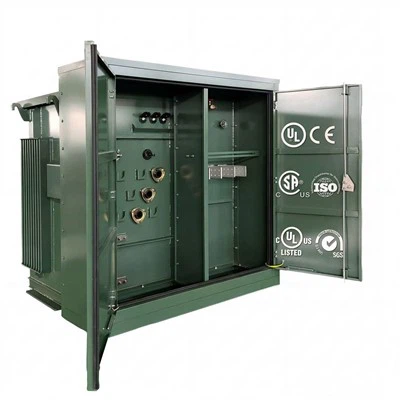
Feel free to reach out for a conversation about your project, and we’ll make sure you get the right insulation class for your pad mounted transformer.
Pad Mounted Transformer References:
- Institute of Electrical and Electronics Engineers (IEEE). Standard for Transformers – Power, Distribution, and Rectifier Transformers. IEEE Std C57.12.00-2020
- International Electrotechnical Commission (IEC). Power Transformers – Part 1: General Requirements. IEC 60076-1:2018
- National Electrical Manufacturers Association (NEMA). Standard for Pad-Mounted Transformers. NEMA TR 1-2022
Jiangsu Yuantong Electric Co., Ltd.
As one of the most experienced pad mounted transformer manufacturers and suppliers in China, we also support customized service. Please rest assured to wholesale bulk high quality pad mounted transformer in stock here from our factory. Contact us for more details.
Address: No. 202, Qiaogang Road, Xicheng Subdistrict, Hai’an City
E-mail: Trey@jsytelectric.com
WebSite: https://www.jsytelectric.com/
