Hey there! As a supplier of bread and toast forming lines, I often get asked about temperature control in these setups. In this blog, I’m gonna break down what temperature control is all about in a bread and toast forming line, why it matters, and how we as suppliers manage it to ensure top – notch products. Bread and Toast Forming Line
What is Temperature Control in a Bread and Toast Forming Line?
First off, let’s define what temperature control means in the context of a bread and toast forming line. Imagine a production process where you’re taking raw dough and turning it into delicious, perfectly – formed bread and toast. Temperature control is the art and science of maintaining the right temperatures at every single step of this process.
In the bread and toast world, temperature can make or break your product. From the moment the dough is mixed to when it comes out of the oven as a golden – brown loaf, each stage requires specific temperature conditions.
Mixing Stage
At the beginning, when we’re mixing the dough, the temperature of the ingredients and the mixer itself play a big role. Yeast, which is a crucial ingredient in bread – making, is very sensitive to temperature. If the dough is too cold during mixing, the yeast will be sluggish, and the dough won’t rise properly. On the other hand, if it’s too warm, the yeast will work too fast, and the dough might over – ferment, leading to a sour taste and an uneven texture.
We usually aim to keep the dough temperature around 24 – 26°C (75 – 79°F) during the mixing process. To achieve this, we might use water at a specific temperature or cool the mixer if necessary. For example, in hot summer months, the ambient temperature can heat up the mixer, so we use chilled water to counteract that and keep the dough at the right temperature.
Fermentation Stage
After mixing, the dough goes through fermentation. This is when the yeast eats the sugars in the dough and produces carbon dioxide, which makes the dough rise. Temperature is super important here. A lower temperature, around 18 – 22°C (64 – 72°F), will result in a slow fermentation process. This slow fermentation allows the dough to develop more complex flavors. It’s like a slow – cooked meal; the longer it cooks, the better it tastes.
On the flip side, a higher temperature, say around 28 – 32°C (82 – 90°F), will speed up the fermentation. This can be useful if you’re in a hurry to produce bread, but it might sacrifice some of the flavor development. As a supplier, we design our fermentation chambers to maintain a consistent temperature, and we can also offer different temperature settings based on our customers’ needs.
Proofing Stage
Proofing is like the final boost for the dough before it goes into the oven. It’s a short period of rising where the dough puffs up to its final shape. The ideal temperature for proofing is around 35 – 38°C (95 – 100°F) with a high humidity level. This warm and moist environment encourages the dough to rise quickly and evenly.
We use specialized proofing cabinets that can control both temperature and humidity. These cabinets are equipped with sensors that constantly monitor the conditions inside and adjust the settings as needed. For instance, if the temperature starts to drop, the system will kick in and heat it up to the desired level.
Baking Stage
The baking stage is where the magic happens. The temperature here determines how the bread or toast turns out. For bread, a typical baking temperature ranges from 200 – 250°C (392 – 482°F). A lower temperature will result in a softer crust and a more evenly – baked interior. A higher temperature, on the other hand, will give you a crispy, golden – brown crust faster, but you need to be careful not to burn the outside while the inside is still raw.
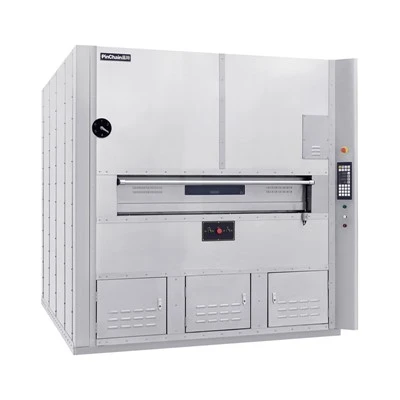
In a toast – making line, the temperature is usually set a bit higher, around 220 – 270°C (428 – 518°F), to quickly dry out the bread and give it that toasty flavor. Our ovens are designed to distribute heat evenly, so every slice of bread or toast gets the same treatment. We use advanced heating elements and air circulation systems to achieve this.
Why Temperature Control is Crucial
Now that we know what temperature control is, let’s talk about why it’s so important.
Product Quality
The most obvious reason is product quality. If the temperature isn’t right at any stage of the process, the bread or toast won’t taste or look good. Uneven temperature can lead to uneven rising, which means some parts of the bread might be dense while others are airy. In the case of toast, inconsistent temperature can result in some slices being too light and others being burnt.
Shelf Life
Proper temperature control also affects the shelf life of the product. Bread that is fermented and baked at the right temperatures will have a longer shelf life. The right fermentation conditions help develop a strong gluten structure in the dough, which keeps the bread fresh for longer. And a well – baked crust acts as a barrier, preventing moisture from escaping and keeping the bread soft.
Efficiency
From a business perspective, temperature control is all about efficiency. If you have a well – controlled bread and toast forming line, you can produce more consistent products in less time. You won’t have to waste time and resources on re – baking or discarding faulty products. This means higher productivity and lower costs in the long run.
How We Manage Temperature Control as a Supplier
As a bread and toast forming line supplier, we take temperature control very seriously. We use state – of – the – art technology to ensure that our equipment can maintain the right temperatures at all times.
Advanced Sensors
Our fermentation chambers, proofing cabinets, and ovens are equipped with high – quality sensors. These sensors can detect even the slightest changes in temperature and send signals to the control system. For example, if the temperature in the oven goes up by a few degrees, the sensors will notice it immediately, and the control system will adjust the heating elements accordingly.
Customizable Settings
We understand that different customers might have different requirements. That’s why our equipment comes with customizable temperature settings. Whether you’re a small bakery that wants to focus on artisanal bread with slow fermentation or a large – scale production facility that needs to churn out toast quickly, we can set up our equipment to meet your specific needs.
Regular Maintenance and Support
We also provide regular maintenance and support to our customers. Our technicians are trained to calibrate the temperature sensors and make sure that the equipment is working properly. We offer troubleshooting services, so if there’s ever an issue with temperature control, we can help our customers fix it right away.
Conclusion
So, there you have it – a breakdown of what temperature control is in a bread and toast forming line. It’s a complex but fascinating part of the bread – making process that has a huge impact on the final product. As a supplier, we’re always looking for ways to improve our temperature control technology and make sure that our customers can produce the best – quality bread and toast.
Freezer If you’re in the market for a bread and toast forming line and want to learn more about how our temperature control systems can benefit your business, don’t hesitate to reach out to us. We’re here to answer all your questions and help you find the perfect solution for your production needs.
References
- "The Bread Baker’s Apprentice" by Peter Reinhart
- "Professional Baking" by Wayne Gisslen
- Industry reports on bakery equipment and temperature control
Guangdong Pinchain Machinery Co., Ltd.
As one of the most professional bread and toast forming line manufacturers and suppliers in China, we have world-leading production equipment and strong manufacturing capabilities. Please feel free to wholesale advanced bread and toast forming line made in China here from our factory.
Address: Room 302, Building 9, CIMC High tech Intelligent Manufacturing Center, No.3 Chanxing 1st Road, Xianyong Village, Chencun Town, Shunde District, Foshan City, Guangdong Province
E-mail: kowa@bakingmachinery.com
WebSite: https://www.bakingsmachinery.com/
