If you’ve ever stood on a production floor—whether wiring harnesses for automotive electronics, aerospace avionics, or medical device assemblies—you’ve likely faced the same frustration: a one-size-fits-all intelligent wire processing machine (IWPM) that works for 90% of your operations, but falls short on the 10% of custom jobs that make your business unique. Last quarter, a customer of mine— a small-batch aerospace wiring shop—reached out in a panic. They had just landed a contract for new satellite communication harnesses, which required not just stripping and crimping 36 AWG wires thinner than human hair, but also a custom length tolerance of ±0.05mm and a proprietary crimp profile that would cause their off-the-shelf IWPM to jam 20% of the time. Their existing machine could do general tasks, but it couldn’t adapt. This is the core question I get asked every week as an IWPM supplier: Can these machines actually be customized to fit specific requirements, or are they locked into rigid, pre-programmed workflows? Intelligent Wire Processing Machine

The short answer is a resounding yes—but it’s not a plug-and-play process. It’s a collaborative, engineering-driven journey that balances the advanced technology these machines are built on with the unique pain points of your operation. Let’s break this down, because the days of generic wire processing equipment that sacrifices precision for volume are long gone, and modern IWPM customization is tailored to solve real, specific problems, not just check boxes.
First, I need to ground this in what an IWPM actually does, because the customization only makes sense when you understand the building blocks. These machines don’t just cut wires—they integrate multiple interconnected systems: feed mechanisms that pull wire from spools, stripping heads that remove insulation without nicking the conductor, crimpers that apply terminals or splices, testing units that verify continuity and resistance, and software that orchestrates every step. Each of these systems can be modified, upgraded, or rebuilt to meet specific needs, and that’s where customization lives.
Let’s go back to that aerospace customer, because it’s not an isolated case. Their primary challenge was handling ultra-fine wires that standard feed systems couldn’t grip without stretching. Standard IWPM feeders use rubber rollers that apply consistent pressure, but 36 AWG wires are so thin that even minor pressure variations can deform the conductor, ruining the entire harness. Our engineering team worked with their team for three weeks to design a micro-grip feed system—smaller, hardened steel rollers with micro-textured grooves that distribute pressure evenly across the tiny wire surface, eliminating deformation. That wasn’t a software tweak; it was a mechanical modification specifically engineered for their wire gauge.
But customization isn’t just mechanical. Software is the other huge piece of the puzzle. Another client, a medical device manufacturer, needed IWPMs that could produce batches of 50 to 5,000 custom harnesses in a single run, with zero cross-contamination between batches. Their standard machine’s software was programmed to reset between runs, but it couldn’t retain individual batch settings (like crimp force, stripping depth, and test parameters) and automatically adjust for each new job. We built a custom module for their IWPM software that stores up to 500 user-specific job profiles, complete with traceability tags for every individual harness. This wasn’t a generic software add-on; it was coded to meet FDA traceability requirements for medical devices, which meant adding timestamping, lot number logging, and a built-in audit trail that could be pulled for regulatory inspections. That’s the kind of customization that solves a specific, regulated industry problem.
A common misconception I hear is that customization is only for large corporations with massive engineering budgets. That’s not true either. Last year, a small automotive parts shop with 12 employees came to us needing an IWPM that could process both standard 18 AWG primary wires and custom 2/0 AWG power cables for electric vehicle (EV) prototype testing. Their off-the-shelf machine could only handle up to 4/0 AWG, but it required a manual tool change that slowed their prototype production to a crawl. Instead of selling them a new, overpriced machine designed for mass production, we modified their existing IWPM’s crimp head and feed mechanism with a quick-change adapter that lets them switch between small and large gauge wires in under 90 seconds, without any tools. The total cost was a fraction of a new machine, and it was built exactly for their dual-purpose prototype work. That’s customization for small businesses, too.
Of course, it’s not all smooth sailing. There are limits to what we can customize, and transparent communication between supplier and customer is key to avoiding misaligned expectations. For example, if a customer asks for an IWPM that can process 50 different wire gauges ranging from 10 AWG to 40 AWG at 10,000 wires per hour, we have to be honest about trade-offs. A machine that can handle both ultra-thin and ultra-thick wires will have to compromise on speed, because the feed and crimp systems can’t adjust pressure and size as quickly as a machine built for a narrow gauge range. We also have to consider reliability: every custom modification adds a component that needs maintenance, so we never design a custom feature that would make the machine more prone to downtime. For example, when we built the micro-grip feed system for the aerospace customer, we used the same hardened steel material as all our standard feed components, so replacement parts are still readily available, and maintenance techs can service it without specialized training.
Another area where customization shines is integration with existing factory systems. Many of our customers already have ERP (enterprise resource planning) or MES (manufacturing execution system) software that tracks production orders, inventory, and quality data. A generic IWPM might have basic connectivity, but a custom IWPM can be programmed to pull real-time order data directly from their MES, adjust settings automatically, and send quality test results back to the system without manual input. One customer in the industrial automation space used this to cut their order processing time by 30% and reduce data entry errors by 95%. That’s not just a nice add-on—it’s a productivity boost that comes from tailoring the machine to fit their specific factory workflow, not the other way around.
Let’s also talk about the long-term value of a customized IWPM, especially compared to buying a generic machine and trying to make it work with add-ons. I’ve seen customers waste thousands of dollars trying to modify an off-the-shelf machine on their own—buying third-party crimp heads, coding untested software, and sacrificing reliability for custom features. A properly customized IWPM is built from the start to meet your needs, so it’s more efficient, more reliable, and less likely to cause production delays. For example, the automotive prototype shop that needed the quick-change adapter estimated they would have spent $15,000 modifying their generic machine over two years, with frequent downtime from jams and misgrips. Our custom modification cost them $4,000, and they haven’t had a downtime issue related to the wire processing system in 18 months.
So, how does the customization process actually work, step by step, for a customer considering this? It’s not a one-way conversation. First, we do a site visit (or a virtual deep dive if a site visit isn’t possible) to understand every part of their workflow: what wire gauges they use, production volume, tolerance requirements, regulatory needs, and even the layout of their factory floor (some customers need smaller machines to fit in existing space, so we can shrink the footprint while retaining functionality). Next, our engineering team creates a custom proposal that outlines exactly what modifications will be made, timelines, costs, and expected outcomes. Once the proposal is approved, we build a prototype of the custom features, test it in our factory with your specific wire materials, and adjust as needed before shipping. Finally, we provide on-site training for your team and ongoing maintenance support, just like we do for our standard machines.
I know some potential customers worry that customization will mean longer lead times or higher costs, but that’s not always the case. For small-to-medium modifications, like adding a quick-change adapter or a custom job profile module, lead times are often only 1-2 weeks longer than a standard machine, and costs are 10-20% higher—not a massive premium for a machine that’s built for your exact needs. For larger, more complex customizations, like the micro-grip feed system for the aerospace customer, lead times might stretch to 4-6 weeks, but that’s because we’re building a specialized component, not just tweaking existing parts.
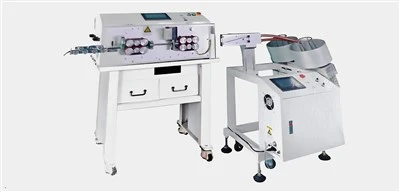
At the end of the day, the goal of an intelligent wire processing machine is to make your life easier, not to force you to adapt to its limitations. If your operation has unique requirements—whether it’s handling ultra-fine wires, meeting strict regulatory traceability, integrating with your factory software, or processing a wide range of custom wire gauges—customization isn’t a luxury, it’s a necessity. I’ve seen firsthand how the right customized IWPM can cut production time, reduce waste, and eliminate the headaches of trying to make a generic machine fit a custom job.
High Speed Auto Housing Inserting Machine If you’re tired of your wire processing machine falling short on your specific needs, it’s time to stop settling for one-size-fits-all. Reach out to discuss how we can build an intelligent wire processing machine tailored to your exact requirements, so you can focus on growing your business, not troubleshooting generic equipment.
References
- International Electrotechnical Commission. (2021). Industrial Automation Machinery: Customization Standards for Wire Processing Equipment. IEC 61508:2021.
- Society of Automotive Engineers. (2022). Best Practices for Customized Wire Processing in Automotive and Aerospace Manufacturing. SAE J1962:2022.
- National Institute for Occupational Safety and Health. (2020). Ergonomic Design Considerations for Customized Industrial Equipment. NIOSH Publication No. 2020-108.
- International Organization for Standardization. (2023). Traceability Requirements for Medical Device Wire Processing. ISO 13485:2023.
Suzhou Keweisi Electronic Technology Co., Ltd.
We are one of the most professional intelligent wire processing machine manufacturers and suppliers in China. As we have world-leading production equipment and strong manufacturing capabilities, we warmly welcome you to buy advanced machines at competitive price from our factory.
Address: Yunchuang road No.221, block C, Haibo tech park,Suzhou, P.R China.
E-mail: wenwei200982@126.com
WebSite: https://www.szkowas.com/
