If you’ve ever stood on a manufacturing floor, worked on heavy machinery, or helped assemble a wind turbine blade, you know one thing matters more than almost any other: nothing comes loose when it’s supposed to stay tight. Standard fasteners work for a lot of jobs, but when you’re dealing with high vibration, extreme temperature swings, or load that shifts under pressure, you need special fasteners—specifically, those with locking mechanisms built in, not just added on. For a long time, I’ve worked as a special fasteners supplier, and I’ve spent more hours than I can count walking through application halls, listening to engineers complain about fasteners that fail, and testing locking systems that don’t hold up. What I’ve learned is that locking mechanisms aren’t one-size-fits-all; each is designed for a specific stress, and picking the wrong one will cost you downtime, repairs, and even safety. Let’s break down the most common, reliable locking systems we use, how they work, and where they perform best. Special Fasteners
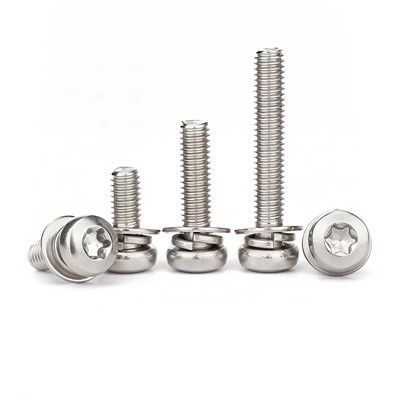
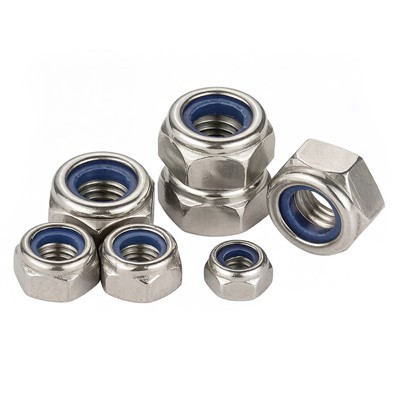
First, there’s the prevailing torque locking fastener, the workhorse of the lot. You’ve probably seen these at construction sites or inside engine compartments, even if you didn’t realize it. They work by creating friction that resists rotation, even when vibration would normally loosen a standard bolt or nut. The two main types here are nylon insert lock nuts and all-metal prevailing torque fasteners. Nylon insert ones are the most familiar: a ring of tough nylon, usually near the top of the nut, that’s slightly smaller than the bolt’s threads. When you thread the nut on, the bolt has to stretch the nylon a little to get past the insert, creating constant friction between the nylon and the bolt’s threads. That friction doesn’t rely on tension in the fastener, so even if the bolt loosens a tiny bit, the nylon pinches it right back. But here’s the catch I’ve told dozens of clients: nylon inserts break down in extreme heat. If you’re working on a furnace assembly where temperatures hit 300 degrees Celsius, that nylon will soften and lose its grip. For those jobs, we use all-metal prevailing torque fasteners. These have a twisted thread profile, a deformed thread section, or a top ring that’s crimped in place, so the bolt has to “fight” to turn it. The metal-on-metal friction is way more heat-resistant, and they handle higher loads too. I’ve had a client in agricultural equipment call us last year because their nylon insert nuts were falling off combine headers during harvest. We swapped them for all-metal lock nuts, and they haven’t had a problem since. That’s the thing about special fasteners: they solve a problem that standard parts can’t.
Next up, shear and breakaway locking systems, the kind you see in aerospace, wind energy, and heavy construction—places where safety is non-negotiable. These aren’t relying on friction; they rely on a physical component that sacrifices itself to hold the fastener tight. The most common here is the torque-controlled bolt, also called a breakaway bolt. It has a reduced shank section just under the head, and a nylon collar around the shank. When you tighten it, you use a calibrated torque wrench that stops at the exact torque needed to stretch the bolt to its designed tension. If you over-tighten, the breakaway section snaps, telling you you’ve gone too far. The nylon collar adds extra locking force by pinching the shank against the hole, and the reduced shank means you can’t over-tighten without breaking that section—no guesswork, no mistakes. I remember a wind turbine technician who told me once that a loose bolt on a turbine blade could cause a blade to wobble so bad it would tear itself apart. We supplied them with breakaway bolts made from high-strength alloy steel, and their maintenance team now checks the snapped shank stub sticking out of the head as part of every pre-wind season inspection. It’s a simple check, but it’s saved them thousands in repairs. Another shear-style locking fastener is the lock bolt (sometimes called a blind bolt, used in places you can’t reach from both sides). It has a sleeve that expands behind the material you’re fastening, creating a permanent clamp, and a shear mandrel that breaks off when you’ve pulled it tight enough. No one can loosen these without a special tool, which is exactly what you want in applications where vandalism or accidental loosening is a risk.
Then there’s the pinned locking mechanism, a system that’s as old as industrial manufacturing but still reliable in jobs where vibration is so extreme, even all-metal prevailing torque fasteners can come loose. Pinned fasteners have a small hole drilled through the bolt or nut, and a cotter pin (spring steel or stainless steel) inserted through that hole after assembly. The pin goes across the threads, so even if the nut or bolt tries to rotate, the pin hits the sides of the hole and stops it dead. This is the go-to for things like trailer hitches, railroad car assemblies, and heavy equipment axles—jobs where a loose fastener can lead to a major accident. The best part about pinned systems is they’re simple, easy to inspect, and you can reuse the cotter pin (though we usually recommend a new one each time, since they can bend from use). I’ve worked with railroad companies for years, and they swear by pinned lock nuts for their railcar couplers. The vibration from thousands of miles of track would shake standard nuts loose in weeks, but pinned ones stay tight for years. The only downside is you have to make sure the hole is properly aligned—if it’s off even a little, you can’t insert the pin, and you’ve got a fastener that won’t lock. That’s why we precision-drill the holes for all our pinned special fasteners, no exceptions.
A less common but highly specialized locking mechanism is the chemical locking fastener, also called thread-locking adhesive or anaerobic sealants. These are used in jobs where you can’t use mechanical locks—like inside electronic components, or in places where you can’t drill holes or install pins. The adhesive is a liquid that stays wet and workable when exposed to air, but cures into a hard plastic once trapped between metal threads. It fills every tiny gap between the bolt and nut threads, so even extreme vibration can’t make them rotate. Chemical locking is great for small fasteners, like the ones holding a smartphone battery or a medical device together, or for fasteners in hard-to-reach places where a cotter pin would be impossible. But here’s the thing to remember: chemical lockers are permanent. You can’t loosen the bolt with a standard wrench once the adhesive is cured—you have to heat it up to break the bond, or use a special solvent. That makes them perfect for jobs where you never want the fastener to come loose, but a nightmare if you might need to disassemble later. I had a client in medical device manufacturing who tried using a mild chemical lock on their assembly line, and it worked for a few months until their design team realized they needed to upgrade a component—they had to replace dozens of assemblies because the bolts wouldn’t come loose. Now they only use chemical locking for parts that never need to be serviced, and mechanical locking systems for everything else.
Over the years, I’ve learned that the biggest mistake people make when choosing a locking fastener is overcomplicating it. A lot of clients come to us asking for the most “high-tech” locking system, when all they need is a simple nylon insert lock nut. Conversely, some will try to save money by using a standard fastener in a high-vibration application, and end up paying more in downtime than the special fastener would have cost. That’s why as a special fasteners supplier, we don’t just sell parts—we spend time talking to you about your application. Is it indoors or outdoors? What’s the temperature range? How much vibration is there? Do you need to be able to disassemble it, or does it need to be permanent? Do you have to work in tight spaces where tools are limited? All those questions matter, and we don’t ship a fastener until we’re sure it’s the right one.
If you’re dealing with a job where standard fasteners aren’t holding, or you’re worried about fastener failure costing you time and money, don’t guess. The right locking mechanism isn’t just a part—it’s a solution. Reach out to our team to discuss your specific needs, and we’ll help you find the special fastener that will hold tight, no matter what your job throws at it.
Nut References
- Shigley, J. E., Mischke, C. R., & Budynas, R. G. (2004). Mechanical Engineering Design. McGraw-Hill.
- Bickford, J. H. (1997). Introduction to the Design and Behavior of Bolted Joints. CRC Press.
- NASA. (2018). Fastener Locking Mechanisms for Aerospace Applications. NASA Technical Publication.
- VDI/VDE 2230. (2019). Systematic Calculation of Load Capacity of Bolted Joints. Association of German Engineers.
- Machinery’s Handbook. (2020). Industrial Press Inc.
Shanghai Megood Metal Products Co., Ltd.
As one of the most experienced special fasteners manufacturers and suppliers in China, we have world-leading production equipment and strong manufacturing capabilities. Please rest assured to wholesale bulk special fasteners made in China here and get quotation from our factory. Customized orders are welcome.
Address: Building 8, No. 1500 Huiren Road, Waigang Town, Jiading District, Shanghai
E-mail: liujingshco@163.com
WebSite: https://www.mgx-hardware.com/
