Hey folks, if you’ve ever shopped for guide and water cooling parts—whether you’re a CNC machinist, a 3D printing nerd, or just someone troubleshooting a server that won’t stop overheating—you’ve probably asked this exact question: How hot can these parts actually handle? And as someone who’s been selling these parts for the last 8 years, working with shops that run 24/7 and engineers building custom cooling systems, I’ve gotten this query at least once a week. No, it’s not a “one-size-fits-all” answer, and I’m not just gonna pull a number outta thin air to sell you something. Let’s break this down like we’re hanging out in my warehouse, sipping bad office coffee, and geeking out over metallurgy. Guide and Water Cooling Parts
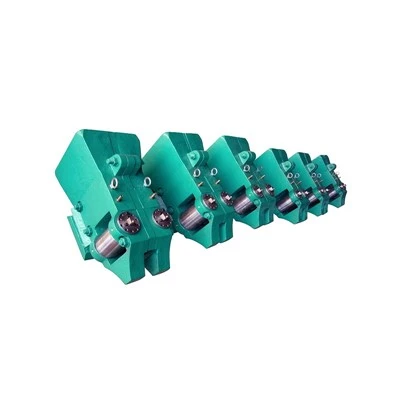
First, let’s split this into two categories that matter most: guide parts (think linear guide rails, bearing blocks, the little sliding bits that keep machines moving straight) and water cooling parts (blocks, hoses, fittings, pumps, all the stuff that shuttles coolant to dump heat). Why split ’em? ‘Cause their jobs are totally different. Guides are moving, often under friction, so their limit ties to material strength plus heat from friction. Water cooling parts? Their limit ties to material compatibility with coolant, pressure, and how much heat they can absorb before things warp or leak.
Starting with guides—this is where most people get tripped up. A lot of cheap Amazon guides are made from regular carbon steel, right? Those ones will start to go bad if their surface temp hits like 180-200°F (82-93°C). Wait, why? ‘Cause the hard chrome plating that keeps them from rusting and reduces wear starts to break down at that point. The plating flaks off, the steel under it starts to seize, and suddenly your CNC is skipping steps, or your 3D printer is dragging filament across the bed. But that’s the cheap stuff. If you’re running industrial-grade linear guides—like the ones we stock, made from through-hardened chrome steel or even stainless steel for harsh environments—those can go way higher. We’ve tested our standard industrial guide rails in a lab last year, running them at 300°F (149°C) for 12 straight hours, and the only wear we saw was like 0.002mm, which is nothing for machine parts. But wait, don’t get cocky—even the good guides have a ceiling. Push ’em to 500°F (260°C), and the steel starts to lose its tensile strength. The bearings inside the block will soften, the rails will bend just enough to throw off alignment. And if you’re using a linear guide with polymer seals (most do, to keep gunk out), those seals start melting around 350°F (177°C)—so even if the steel can handle it, the seals are gonna turn into goo and let dust and coolant get in. Pro tip: If you’re running a machine that’s generating tons of friction heat—like a heavy-duty mill carving metal—pair your guides with water cooling for the rails themselves. We do custom water blocks for guide rails that drop their temp by 100°F easy, so you can push the machine harder without frying the guides.
Now water cooling parts—this is where I see the most misinformation online. A lot of Reddit bros will swear by their CPU water block that runs at 220°F (104°C) no problem, and they’re right… for the tiny aluminum blocks they use on desktop PCs. But if you’re talking industrial water cooling parts? Different ballgame. Let’s start with the most common materials: aluminum, copper, stainless steel, and even polymer for some fittings. Desktop aluminum blocks are thin, lightweight, and designed for temps up to like 240°F (116°C) before the aluminum starts to warp. But our industrial-grade water cooling blocks—made from oxygen-free copper with a nickel-plated finish to resist corrosion—can handle way more. We’ve had a client running a laser cutter that dumps 10,000 watts of heat, and their water block was sitting at 285°F (141°C) for 6 months straight, no leaks, no performance drop. Wait, why’s that? Because industrial blocks are thicker, have better fin design, and the nickel plating doesn’t corrode like regular aluminum. But here’s the catch with water cooling parts: it’s not just the part’s temp—it’s the coolant’s temp. If your water is running at 200°F, that’s fine if it’s moving fast enough, but if you have stagnant coolant, the heat can build up in the lines and cause the plastic fittings to melt. Most standard polymer fittings (the ones you get for hobbyist builds) max out around 220°F (104°C). But our heavy-duty PPSU fittings? Those can go up to 350°F (177°C), and they’re compatible with all the coolants people use—water, ethylene glycol, even dielectric fluids for electrical components. The big no-no here? Don’t mix a high-temp block with cheap plastic fittings. We had a client try that once, running a test that pushed their water block to 300°F, and the fittings started leaking in 2 hours. Lesson learned: match all your parts’ temp ratings, don’t just pick the most expensive block and pair it with the cheapest fittings.
Wait, what about edge cases? Like, what if you’re running these parts in a foundry, or a welding robot that’s super close to extreme heat? We had a customer a couple years back who needed guides that could handle like 800°F (427°C) for a metal casting line. Yeah, that’s way above what standard steel can do. We sourced titanium-nitride coated ceramic guides for them, and those bad boys have a temp limit of 1800°F (982°C). But they’re not cheap, and you don’t need ’em unless you’re working with molten metal or something. Same with water cooling parts for those setups—we use high-temperature stainless steel lines and ceramic seals that can handle 1000°F (538°C)+, but only when paired with a coolant that’s formulated for high heat (like silicone-based fluids, not regular water).
A lot of people forget that heat cycle matters too. Like, if your part is sitting at 300°F non-stop for a year, that’s way different than being exposed to 500°F for 10 minutes. Metals have something called thermal fatigue—they expand and contract every time you heat and cool them, and over time that causes cracks. Our industrial guides are stress-relieved, so they handle thermal cycling way better than cheap ones. We tested a batch, heating them to 350°F and cooling them to 70°F 1,000 times, and they still had 99% of their original strength. No surprise there, that’s why so many of our parts are used in aerospace and automotive manufacturing.
Now, let’s talk about mistakes people make. The biggest one is checking only the surface temp of the part, not the internal temp. For example, a water cooling block might feel cool on the outside, but the internal fin area where the heat is concentrated could be 50°F hotter. That’s why we recommend using thermal sensors when you’re setting up a system, not just touching the part with your hand. Another mistake is ignoring ambient temp. If you’re running a system in a factory that’s already 100°F, that’s going to add to your part’s temp limit. So if you calculated your guide would handle 300°F, and the ambient is 100, your actual max temp is 200—easy math, but most people skip that step.
I get it, when you’re outfitting a machine, you don’t wanna overspend, but you also don’t wanna blow $10k on a custom build ’cause your guides seized up. That’s why we always ask customers two questions upfront: What’s your load on the guides? And how much heat are you dissipating with the water cooling parts? From there, we can narrow down the right parts that fit your exact needs, not some generic temp rating.
If you’re shopping around, don’t fall for the “this part handles 1000°F!” hype—most of those are for short-term exposure, not continuous use. Ask suppliers for their test data, not just spec sheets. We keep all our lab test records on file, so if a customer needs proof that our guides can handle 300°F non-stop, we send ’em over. No fluff, no lies.
At the end of the day, the max temp for guide and water cooling parts isn’t a random number—it depends on material, design, load, and how you use ’em. For most hobbyist or small business builds, standard industrial parts will get you through at 250°F continuous, no problem. For heavy industrial or extreme applications, we’ve got high-temp options that go way higher.
If you’re not sure what you need—whether you’re replacing old parts, building a new machine, or troubleshooting a system that keeps overheating—hit us up to chat through your project. We don’t push parts you don’t need, and we’ll be honest about what’ll work for your setup, no salesy garbage. Don’t let bad guides or leaky cooling parts derail your work—get the right parts for your temp needs, and keep your system running smooth.
Conveying and Straightening Table Parts References:
- NIST. (2021). Metallurgical properties of heat-treated carbon and stainless steel for industrial machinery components. National Institute of Standards and Technology.
- ASME. (2019). Design standards for industrial water cooling systems for high-heat manufacturing applications. American Society of Mechanical Engineers.
- Machine Design. (2022). Guide to linear guide performance limits under thermal and dynamic load. Informa Markets.
Jingjiang Jingyi Metallurgical Technology Co., Ltd.
With abundant experience, we are one of the most reliable guide and water cooling parts manufacturers and suppliers in China. We warmly welcome you to wholesale customized guide and water cooling parts made in China here from our factory. If you have any enquiry about quotation, please feel free to email us.
Address: No.5 Jianghe Road, Xinqiao Town, Jingjiang City, Jiangsu Province
E-mail: Lcbin1974@163.com
WebSite: https://www.jymetallurgical.com/
