If you’re a spec engineer, facility manager, or transformer buyer, you know that the dielectric strength of a distribution transformer isn’t just a checkbox on a spec sheet—it’s the line between consistent power delivery and catastrophic, costly failures that can bring down a whole substation, shut down a manufacturing line, or leave a neighborhood without heat in the middle of winter. As a distribution transformer supplier who’s spent 18 years walking our team through test labs and job sites, I can tell you: most people get this test wrong. They treat it like a one-size-fits-all lab chore, but skipping the nuance between factory acceptance, pre-installation, and in-service testing is how transformers die early. Distribution Transformer
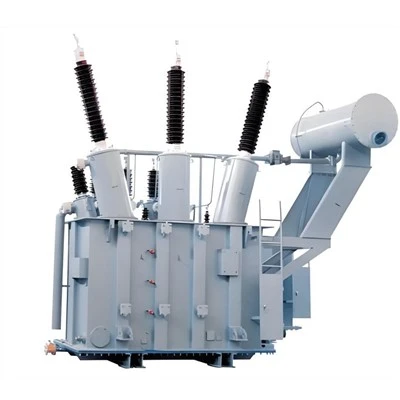
Let’s start with why this test matters, because if you’re skimming to the how-to, you’re missing the point. Dielectric strength is a transformer’s ability to resist electrical breakdown through its insulating materials—oil, paper, pressboard, and the gaskets that hold it all together. Distribution transformers don’t just sit in a pole yard underground; they swing between full load, no load, lightning surges, and temperature swings that warp insulation over time. A 2019 study from the Institute of Electrical and Electronics Engineers (IEEE) found that 32% of unplanned distribution transformer failures stem from dielectric breakdown, not core or winding defects. That’s not a stat—it’s money lost on repairs, downtime, and emergency replacements. For our team, that means every test we run isn’t just a quality check; it’s a promise to our customers that their $10k transformer will last 25 years, not 5.
Now, the common mistake I see: confusing dielectric strength testing with just a high-voltage test. No. Dielectric strength testing for distribution transformers is a two-part process, split between factory acceptance testing (FAT) when we build it, pre-installation testing when you receive it, and in-service maintenance testing. Each has different standards, different equipment, and different acceptance thresholds. Mix them up, and you’ll either reject a perfectly good transformer or install a dud that fails before it even leaves the loading dock.
Let’s break this down step by step, the way we train every new tech in our production facility and send out to job sites. First, prep work—this is non-negotiable, and it’s where 80% of test errors happen. Before you even hook up a single cable, you need to confirm three things: the transformer is at the correct temperature, the oil is dry, and all external connections are insulated. For FAT, we keep transformers at 25°C (77°F) for 48 hours after assembly, because temperature changes alter oil viscosity and breakdown voltage. For pre-installation, if the transformer was shipped in cold weather (-10°C or lower), you need to let it acclimate for at least 72 hours—rushing that test because a delivery deadline is tight is how you get a false pass on a test that should have failed. Also, moisture is the enemy. A transformer’s insulating paper is designed to hold less than 20 parts per million (ppm) of moisture. If the oil is at 30 ppm, even a test that passes is a ticking time bomb. We always run a moisture test first, even if it adds 30 minutes to the schedule; I’d rather wait than replace a transformer 18 months down the line.
Next, the main test: the AC dielectric strength test, sometimes called the hipot test, but don’t call it that to a test tech—we’re very particular about terminology. Wait, though—there’s also the DC hipot test, and that’s a whole separate beast for distribution transformers. Let’s clarify the standards first, because this isn’t guesswork. We follow IEC 60076-3 for power transformers, and IEEE C57.12.90 for distribution units, which are the two global gold standards. For a typical 15 kV distribution transformer (the most common size in North America), IEEE C57.12.90 specifies a factory test voltage of 38 kV applied across the high-voltage winding to ground, for 60 seconds. Pre-installation tests use a slightly lower voltage—30 kV for that same unit, because you’re testing for shipping damage, not assembly defects. In-service tests use even lower, around 25 kV, because aging insulation has already degraded some.
Now, how to actually run the test. First, disconnect the transformer from all external lines—you don’t want to test the integrity of the utility’s wiring, just the transformer itself. Connect the high-voltage test lead to the high-voltage (HV) bushing, the low-voltage (LV) bushing should be grounded, and the transformer’s tank (the metal casing) should also be a ground reference. Double-check all connections before turning on the test set—one of our techs once forgot to ground the tank and got a jolt that put him out for a week; that’s not a risk you take. Once connected, ramp up the voltage slowly, at a rate of 2 kV per second, until you hit the required test level. Hold it for the specified time—60 seconds for factory, 5 minutes for in-service, per IEEE guidelines. The red flag here is any sudden drop in voltage, any arcing sound, or a reading on the leakage current meter over 5 milliamps. If that happens, you stop immediately. A lot of people keep going to “see if it holds,” but that’s how you turn a minor defect into a total insulation failure.
Wait, there’s a second part that most small distribution transformer buyers miss: the induced overvoltage test, also called the voltage ratio test for dielectric purposes. For transformers, the HV side is the weak point, but the LV side has insulation too, especially for larger units (500 kVA and up). The induced test ramps up the voltage on the LV side, which induces proportionally higher voltage on the HV side, simulating a lightning surge or utility switching event. For a 15 kV, 500 kVA unit, we run this at 2x rated voltage for 30 seconds, after the main hipot test. Why? Because even if the HV side passes, a weak LV connection can cause a surge that breaks down insulation before the transformer even goes into service. Last year, we had a customer who skipped the induced test for a 100 kVA unit; three months after installation, a lightning surge took out the LV winding, and they had to replace the whole transformer—costing them 10x what the test would have cost.
Now, the common pitfalls I see every day, as a supplier who troubleshoots post-install issues. First, test equipment calibration. If your hipot tester hasn’t been calibrated in a year, its voltage reading could be off by 10%, making a pass look like a fail or vice versa. We send all our test equipment to a third-party calibration service every 6 months, and we require our field techs to bring a calibrated unit for pre-install checks. Second, not accounting for atmospheric conditions. If you’re testing outdoors at 3,000 feet above sea level, the air is thinner, which lowers dielectric strength. The test standard has a correction factor: at 3,000 feet, you add 5% to the test voltage. Skip that, and you’ll fail a perfectly good transformer because you didn’t adjust for altitude. Third, ignoring internal parts. The tap changers, the leads between windings, the paper wraps around conductors—all of these can shift during shipping. A quick visual inspection before the test is as important as the test itself. We always have a tech do a walkaround: check that the tap changer is set to the correct position, that there are no dents in the bushings, that the oil level is above the minimum mark.
What about in-service testing, for transformers already in the field? That’s a whole different scenario, because the transformer has already been through years of load cycles. For ongoing maintenance, we recommend testing dielectric strength every 5 years for transformers under 100 kVA, every 3 years for units over 500 kVA, and immediately after any event—like a storm, a surge, or a repair. In this case, you don’t do a full hipot test, because that can damage aging insulation. Instead, we use a partial discharge test, which detects tiny, invisible leaks in insulation before they turn into a full breakdown. Partial discharge testing is less destructive, which is why it’s the standard for in-service units. A friend who runs a municipal power grid told me they caught a partial discharge in a 10-year-old transformer last year, replaced it before it failed, and avoided a $200k outage. That’s the value of this test, not just the pass/fail.
Let’s talk about what a pass vs. fail actually means, because the numbers only tell part of the story. A factory test that hits 38 kV with no arcing and leakage current under 5 mA means your transformer’s insulation is good for the full 25-year lifespan. A pre-install test that hits 28 kV (well below the 30 kV threshold) means there’s shipping damage—either a dent in the bushing or moisture in the oil—and you should send it back before installing it. An in-service test that has 10 mA leakage current means insulation is degrading, and you should plan for a replacement within 2 years, not 5.
Now, from a supplier’s perspective, this is why we build our transformers to exceed test standards. We don’t just meet the minimum 38 kV for a 15 kV unit; we test at 42 kV for 60 seconds, as an extra layer. Why? Because we’ve seen field conditions where transformers have to handle higher surges, and we don’t want our customers dealing with failures that could have been prevented. We also include a full test report with every transformer we ship—so you don’t have to guess if it passed, you have the official data, calibrated equipment readings, and a sign-off from our test tech. That’s part of our value as a supplier, not just selling a unit, but giving you the documentation you need to comply with utility specs and insurance requirements.
I want to address one question I get all the time: why does this matter for smaller distribution transformers, the 25 kVA units on residential poles? I’ve had a home builder ask me once, “It’s just a small transformer, why test it beyond a visual check?” Let me tell you a story: 10 years ago, a developer in Ohio bought 20 25 kVA transformers from a cut-rate supplier, skipped dielectric testing to save $200 total. Within 12 months, 8 of them failed during a summer heatwave, taking out air conditioners for 120 homes. The cost of replacing those transformers, compensating homeowners, and fixing the damage was over $150,000—way more than the $200 they saved. Dielectric strength testing isn’t just for big industrial units; it’s for every distribution transformer, because even a small one can cause massive damage when it fails.
Now, if you’re at the stage where you’re choosing a transformer, or prepping for testing your incoming units, let’s cut to the chase. Getting this test right requires not just knowledge of standards, but experience—something that comes with years of building and troubleshooting distribution transformers. We’ve worked with municipal utilities, commercial construction firms, and industrial facilities across North America, and we know how to adapt testing to your specific needs, whether you need factory FAT documentation, pre-install test support, or ongoing in-service maintenance checks.
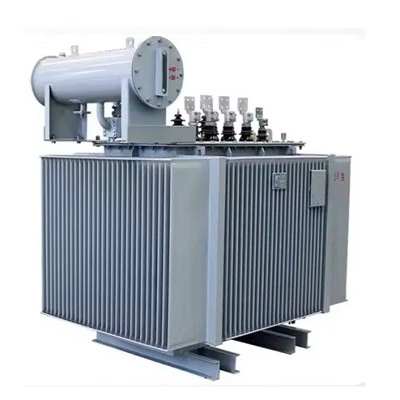
If you’re tired of dealing with unexpected transformer failures, or you’re not confident your current process for dielectric strength testing is up to code, reach out. We’ll walk you through exactly what your unit needs, provide calibrated test data, and answer every question you have about the process. No jargon, no fine print, just honest advice from a team that’s been in this business long enough to know that a good dielectric test is the best investment you can make for your power delivery.
Dry Type Transformer References:
- Institute of Electrical and Electronics Engineers (IEEE). (2019). Distribution Transformer Failure Mode and Effect Analysis (FMEA) Report. IEEE Transactions on Power Delivery, Vol. 34, No. 2, pp. 721-728.
- International Electrotechnical Commission (IEC). (2018). Power Transformers – Part 3: Insulation Levels, Dielectric Tests and External Clearances in Air. IEC 60076-3:2018.
- Institute of Electrical and Electronics Engineers (IEEE). (2020). Standard for Transformers, Regulators, and Reclosures for Overhead Distribution and Underground Applications. IEEE C57.12.90-2020.
- National Fire Protection Association (NFPA). (2021). Electrical Safety in the Workplace. NFPA 70E-2021.
Zhejiang Jiangshan Hengli Electrical Co., Ltd.
Zhejiang Jiangshan Hengli Electrical Co., Ltd. is one of the most professional distribution transformer manufacturers and suppliers in China, featured by quality products and low price. Please rest assured to wholesale cheap distribution transformer in stock here and get pricelist from our factory. Customized orders are welcome.
Address: 212 Fuzhu Street Sidu Town, Jiangshan, Zhejiang, China
E-mail: henglijs@foxmail.com
WebSite: https://www.henlypower.com/
