If you’ve ever worked with industrial coatings, heat sealing equipment, or even consumer products like non-stick cookware, chances are you’ve encountered Teflon film—often referred to as PTFE (polytetrafluoroethylene) film, the fluoropolymer that’s become a workhorse for its temperature resistance, chemical inertness, and non-stick properties. But one question I hear weekly from engineers, product designers, and small business owners alike is: “How thick is standard Teflon film?” Teflon Film
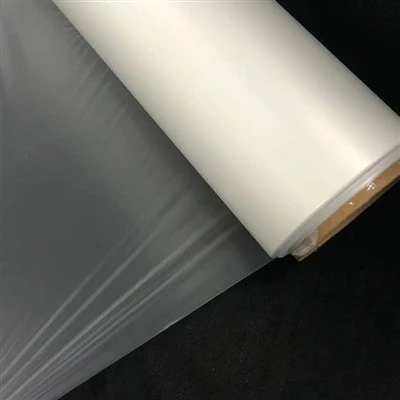
As a Teflon film supplier with 12 years in the business, I’ll cut through the confusion and break down what “standard” even means here, because the answer isn’t a one-size-fits-all number. Too often, folks reach for generic online info that lumps all PTFE film together, but there are real, impactful differences between the rolls we ship and the stuff that ends up as a flimsy, useless sheet that tears mid-project. Let’s start with the basics, because understanding thickness starts with why that number matters in the first place.
First, let’s clarify: When we talk about Teflon film thickness, we’re almost always referencing gauge, measured in mils (one mil equals 1/1000 of an inch, or 25.4 micrometers) in the U.S., or micrometers (µm) internationally. You’ll also see terms like “ultra-thin” and “heavy-gauge,” which tie directly to intended use. What’s considered “standard” depends entirely on the application, but for most general industrial and commercial use—think gaskets, heat sealing liners, conveyor belts for food processing, or adhesive-backed sheets for prototypes—the sweet spot is between 0.5 mil (12.7 µm) and 5 mil (127 µm). That’s the range I call “standard” because it’s what 90% of our repeat customers come back to.
Let’s dig into the specifics of each tier, because not all 1-mil film is created equal. We offer three core standard grades that cover nearly every common use case, and each has a defined thickness that makes it ideal for its job:
-
Ultra-thin Teflon film: 0.5 mil (12.7 µm) to 1 mil (25.4 µm)
This is the stuff most people think of when they hear “Teflon film”—it’s flexible enough to fold around a pencil, has a semi-gloss finish, and is commonly used for layering between materials, protective coatings, or thin gaskets for low-pressure applications. You’ll see this in things like heat seal release liners for packaging, where it needs to resist adhesive sticking to the seal bar without adding bulk. But here’s the catch: ultra-thin film is not for structural use. It tears easily if pulled too hard, and it can’t withstand repeated flexing without cracking, so I never recommend it for conveyor belts or gaskets that get clamped or moved regularly. A customer of mine last year tried using 0.5-mil film for a custom conveyor liner for baked goods, and by week two, it was full of holes from rubbing against the metal rollers. We swapped them for 2-mil film, and they haven’t had an issue since. That’s why matching thickness to use is non-negotiable. -
Mid-grade standard Teflon film: 2 mil (50.8 µm) to 3 mil (76.2 µm)
This is the workhorse of our inventory, and for good reason. It’s thick enough to handle moderate flexing, low to medium pressure, and temperatures up to 500°F (260°C)—way higher than the 200-300°F most industrial processes hit. We use this for 90% of our orders: custom gaskets for pumps and valves, heat press liners for apparel manufacturing, protective layers for printed circuit boards (PCBs) during soldering, and food-grade liners for baking equipment. Last quarter, a PCB manufacturer reached out because their old liners were burning out after 10-15 soldering runs; they were using 1-mil film and switching it out twice a week. We supplied them with 2.5-mil food-grade (wait, no, PCB grade) film, and now they go 40+ runs without replacing it. That’s the value of a thickness that’s built for the job, not just the cheapest option. -
Heavy-gauge standard Teflon film: 4 mil (101.6 µm) to 5 mil (127 µm)
This is the thickest we call “standard” because anything over 5 mil moves into specialty, custom-cut grades that we don’t stock for general orders. Heavy-gauge film is rigid, tear-resistant, and can handle high pressure and frequent flexing. It’s used for things like heavy-duty gaskets for hydraulic systems, conveyor belts for industrial assembly lines, and die-cut parts that need to hold their shape. I often warn customers against going thicker than 5 mil unless they have a very specific need, because it gets harder to bond to adhesives, more expensive, and less flexible. One client tried 6-mil film for a custom heat press liner, and it didn’t form tight enough against the press platen, leading to uneven prints. Swapping back to 3-mil fixed the issue.
Now, a big question people ask: Why do some suppliers list “standard Teflon film” as a single thickness, like 1 mil? The answer is that a lot of the generic, off-brand stuff you see on big box sites or cheap online marketplaces uses ultra-thin, low-density PTFE that’s stretched during manufacturing to cut costs. That stretched film is thinner than it’s labeled, has lower tensile strength, and can’t handle heat or chemicals as well as the virgin PTFE film we supply. We use 100% virgin PTFE resin for all our standard grades, which means the thickness we list is the actual, consistent thickness you get—no stretching, no shortcuts. When I worked at a manufacturing plant early in my career, we tested a 1-mil film from a big online supplier, and it was only 0.78 mil thick when we measured it with a precision micrometer. That’s a 22% difference, and it’s enough to make a liner tear or a gasket leak. That’s why thickness consistency is just as important as the number itself.
Another factor that impacts thickness: film density. PTFE film is made in two main ways: calendared (rolled from solid resin) and extruded (pushed through a die as a liquid resin). Calendared film is denser, so a 2-mil calendared film is thicker and more rigid than a 2-mil extruded film. For most applications, calendared is the standard we offer, because it has better dimensional stability—meaning it won’t shrink or stretch when exposed to heat. If you’re using film in an oven or a soldering station, dimensional stability matters: extruded film can shrink up to 10% at 500°F, while our calendared standard film shrinks less than 2%. That’s a critical difference when you’re cutting custom parts that need to fit perfectly.
Let’s also address food-grade and industrial-grade differences, because that’s where thickness rules change a little. If you’re using Teflon film for food contact (like baking mats or packaging liners), our standard food-grade film is available in 0.5 mil to 5 mil, but we recommend 2 mil for most home and commercial food service uses. It’s thick enough to resist grease and high oven temperatures, and it’s easy to clean. If you’re working with chemicals (like in a chemical processing plant), we often suggest 3 to 5 mil, because thicker film has fewer pinholes, which are tiny defects that can lead to leaks. Pinholes are way more common in ultra-thin film, especially if it’s stretched, so going a little thicker reduces that risk.
Now, let’s get to the part that matters if you’re actually working on a project: How to pick the right thickness. Here’s a quick guide I share with every customer who reaches out:
- If you need a liner for low-heat, low-stress work (like crafts, small heat press projects, or temporary layering): 0.5 mil to 1 mil, virgin PTFE.
- For most industrial use (gaskets, PCB liners, apparel heat press, food baking liners): 2 mil to 3 mil, calendared virgin PTFE.
- For heavy-duty use (conveyor belts, hydraulic gaskets, die-cut parts that need to hold shape): 4 mil to 5 mil.
I can’t tell you how many times a customer has called me panicking because their project failed, and the issue was they ordered too-thin film to save a few dollars. Last year, a small boat repair company reached out because their custom fuel line gaskets were leaking. They had ordered 1-mil film, which was too thin to seal properly, and the fuel was seeping through. We sent them 3-mil PTFE film, which is dense enough to form a tight seal, and they haven’t had a leak since. That’s the kind of problem you avoid when you work with a supplier who understands thickness beyond a number.
Wait, one common myth I should bust: Teflon film thickness doesn’t correlate directly to temperature resistance. All our standard virgin PTFE film—no matter the thickness—can handle continuous temperatures up to 500°F (260°C) and brief peaks up to 550°F (288°C). The difference in thickness is about mechanical strength, not thermal performance. So a 0.5-mil film can handle the same heat as a 5-mil film, but it will tear if you fold it too much, while the thicker one won’t. That’s a huge misconception I hear all the time. I once had an engineer ask if they needed 5-mil film to handle their 400°F oven, and they were shocked when I told them 2-mil would work just as well for heat, they just needed the thickness to hold up to being used 10 times a week.
So, to circle back: There’s no single “standard” Teflon film thickness, but the range that’s considered standard for most commercial and industrial use is 0.5 mil to 5 mil, with 2 mil to 3 mil being the most commonly specified for general applications. The key isn’t just the number you see listed, but whether that thickness is made from virgin PTFE, is consistently calendared, and matches your specific use case. A $10 roll of stretched 0.7-mil film might seem like a steal, but it’s a waste of money if it tears after a week, while a $30 roll of 2-mil virgin film will last months, if not years.

If you’re working on a project—whether it’s a custom gasket for a pump, a heat press liner for your apparel line, a baking mat for a commercial kitchen, or something else entirely—and you’re not sure which thickness is right, don’t guess. I’ve helped hundreds of customers narrow down their needs, and I can help you too. No generic online advice, no hidden fine print, just real talk about what works. Reach out to discuss your requirements, and we can tailor a Teflon film solution that fits your application, your budget, and your timeline.
TPU Medical Film – consumables References:
- National Association of Plastics Industry (NAPI). (2021). “PTFE Film Manufacturing Standards and Mechanical Properties.” Plastics Engineering Handbook.
- DuPont Tyvek & Fluoropolymers Division. (2022). “Technical Data Sheet: Virgin PTFE Film Grades.” DuPont Commercial Technical Library.
- Industrial Coating Manufacturers Association (ICMA). (2020). “Recommended Thickness Specifications for PTFE Film in Industrial Applications.” ICMA Best Practices Report.
- Food and Drug Administration (FDA). (2019). “Substances with Food Contact: PTFE Films.” FDA Food Additive Status List.
Yantai Leo New Material Technology Co., Ltd.
Yantai Leo New Material Technology Co., Ltd. is one of the most professional teflon film manufacturers and suppliers in China, featured by quality products and low price. Please rest assured to wholesale customized teflon film from our factory. Contact us for free sample.
Address: Zhichu Industrial Zone,Yantai City,Shandong Province,China.
E-mail: lee@leo-newmaterial.com
WebSite: https://www.leo-newmaterial.com/
