If you’ve ever crouched under the dashboard of a car mid-repair, or peered into the tight, high-heat cavity of a home appliance’s control module, you’ve probably interacted with FEP silver plated copper wire without even knowing it. As a supplier who’s been working with this material for over a decade, I can tell you it’s not just another wire—it’s the behind-the-scenes workhorse that keeps modern electronics and industrial machinery running, even when conditions get tough. Let me break down what it actually is, why it matters, and how it’s different from every other type of wire you might encounter. FEP Wire

First, let’s start with the two core parts of this wire: the conductor and the insulation. The conductor is 99.9% pure copper, a metal that’s been the go-to for electrical conductivity for more than a century because it’s efficient, relatively affordable, and easy to work with. But pure copper has one big flaw: it oxidizes, especially in high-moisture or high-temperature environments. Oxide buildup on copper can increase electrical resistance, cause signal loss, or even lead to full connection failure over time. That’s why we plate that copper with a thin layer of silver—usually just a few microns thick, so it doesn’t add unnecessary bulk or cost. Silver is an excellent conductor (even better than copper, by the way, though that benefit is often overkill for many applications) and it resists oxidation far better than copper alone, making the connection more stable over the long haul.
Then there’s the insulation, which is where FEP comes in. FEP stands for fluorinated ethylene propylene, a type of fluoropolymer that’s been a game-changer for wiring over the past 50 years. You might recognize FEP from non-stick cookware, but for wires, its properties are tailored for extreme use. Unlike rubber or PVC insulation, which start to break down when temperatures get too high (PVC, for example, can only reliably handle up to around 105°C before becoming brittle), FEP stays flexible and intact between -200°C and 200°C. That means it works in the freezing cold of an Arctic oil rig and the near-boiling heat of a commercial oven’s control system, no problem. It’s also highly resistant to chemicals, oils, and UV radiation—so it won’t degrade when exposed to gasoline, hydraulic fluid, or outdoor sunlight, which is a huge plus for automotive and outdoor equipment use.
A lot of people ask me why we don’t just use pure silver wire instead of plating copper with it. The answer comes down to cost. Silver is a precious metal, and pure silver wire would be exponentially more expensive than copper plated with a tiny layer of silver. For most applications, the thin silver plating is enough to get all the oxidation resistance and conductivity benefits without the premium price tag of solid silver. It’s a perfect balance of performance and value.
Now, let’s talk about where this wire is actually used, because that’s when you’ll start to see how versatile it is. In automotive manufacturing, it’s used for engine control systems, transmission wiring, and even electric vehicle (EV) battery packs. The engine bay is a brutal environment—temperatures spike when the car is running, there’s constant exposure to road salt and oil, and wiring has to hold up through millions of miles of vibration. FEP silver plated copper wire does all that without failing, which is why major automotive manufacturers have relied on it for years. For EVs, it’s even more critical: battery modules require wiring that can handle high current without overheating, and FEP’s heat resistance is a key safety feature there.
In industrial settings, this wire is used in robotics, factory automation, and control panels. Robotic arms move nonstop, putting wiring under constant stress and vibration; FEP insulation doesn’t crack or fray from that stress, and the silver plating ensures consistent signal transfer even in noisy industrial environments where other wires might pick up interference. It’s also common in aerospace and defense applications, where weight and reliability are non-negotiable. Planes and satellites need wiring that can survive extreme temperature swings, radiation, and high altitude, and FEP silver plated copper wire is one of the few materials that checks all those boxes.
I often get questions about how this wire is manufactured, because it’s not just a simple process of plating copper and wrapping it in plastic. First, we start with high-purity copper wire, which is drawn through dies to get the exact diameter needed for the application. Then, the silver plating is done using an electrolytic process—we submerge the copper wire in a silver solution and run an electric current, which deposits a uniform, thin layer of silver onto every surface of the copper. That uniformity is key: if the plating is too thin, you don’t get good oxidation resistance; if it’s too thick, you waste material and add unnecessary cost. After plating, the wire goes through a series of cleaning and drying steps to remove any leftover chemicals. Then comes the FEP extrusion: the FEP resin is melted and pressed through a die that wraps it evenly around the silver plated copper core. The insulation is then cured in an oven at high temperature to make sure it bonds properly to the wire and sets to the right thickness. The final step is testing—we check for insulation thickness, conductor resistance, and make sure there are no breaks or gaps in either the plating or the FEP layer. A small flaw in either part can lead to big problems down the line, so we take that testing very seriously.
One thing that people often confuse FEP silver plated copper wire with is tin plated copper wire. Tin plating is another common coating, but it’s not the same as silver. Tin is cheaper than silver, but it oxidizes when exposed to high heat or sulfur, which can lead to connection issues over time. FEP can be used with both, but when you combine FEP insulation with silver plating, you get a combination that’s far more durable in extreme conditions than FEP with tin. That’s why we don’t offer one-size-fits-all solutions—we work with our customers to figure out exactly what their application needs, whether that’s a more affordable tin plated option for indoor use or the premium silver plated FEP wire for harsh environments.
I’ve been in this industry long enough to see how much wiring technology has changed. When I first started, most automotive wiring used PVC insulation, and replacements were a common part of auto repair. Now, with FEP silver plated copper wire, those same wiring systems can last the life of the car. For our company, that’s not just a selling point—it’s what we pride ourselves on. We don’t just sell wire; we deliver solutions that our customers can rely on, no matter what they’re working on. Whether you’re a small business making custom robotics or a large automotive manufacturer scaling up EV production, we work with you to get the right gauge, plating thickness, and insulation to fit your exact needs.
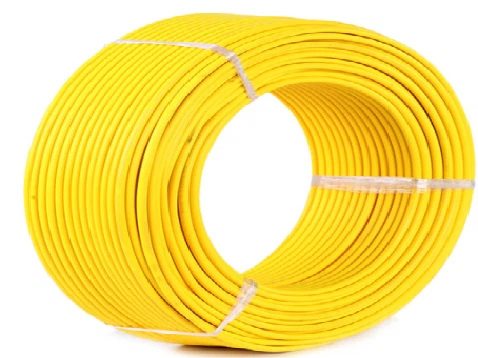
If you’re in the market for wiring that can handle extreme temperatures, harsh chemicals, and constant vibration, FEP silver plated copper wire is probably a great fit for your project. But I always recommend reaching out to a supplier who knows the material inside and out, because there are a lot of variables that go into choosing the right wire for the job. We’ve helped hundreds of customers over the years—some who had no idea what type of wire they needed, and some who were looking for a better, more reliable option than what they were using before. Our team can walk you through the specs, answer any questions you have, and help you find the right product without all the jargon and confusion.
Military Wire If you’re ready to discuss your project, don’t hesitate to reach out. We’re here to help you find the right wire that fits your needs, budget, and timeline. We work with customers of all sizes, from small startups to large industrial and automotive companies, and we’re committed to delivering high-quality FEP silver plated copper wire that stands the test of time.
References
- Engineering ToolBox. (2024). Electrical Conductivity of Metals. Retrieved from industry technical engineering resources
- DuPont. (2023). Fluoropolymers for Wire and Cable Applications. Retrieved from polymer material application guides
- Society of Automotive Engineers (SAE). (2022). Standards for Automotive Wiring Harness Materials. Retrieved from industry safety and performance standards
- National Electrical Manufacturers Association (NEMA). (2021). Specifications for Insulated Electrical Conductors. Retrieved from electrical manufacturing standards
3F Electronics Industry Corp., Ltd.
3F Electronics Industry Corp., Ltd. is well-known as one of the leading fep wire manufacturers and suppliers in China. Please feel free to buy or wholesale high quality fep wire in stock here from our factory. Contact us for quotation.
Address: No.6 Zhenxing Road, Liyu River Industrial Zone, Loucun Community, Xinhu Street, Guang Ming New District, 518107 Shen Zhen, Guang Dong Province, China.
E-mail: Allen@3f-electronics.com
WebSite: https://www.3f-electronics.com/
