Hey everyone, Flatbed Trailer

If you’ve ever been around horses, you know they’re more than just animals—they’re family, athletes, and part of your daily grind. Whether you’re a weekend trail rider, a professional trainer, or someone who boards a couple of horses at a stable 20 miles away, moving them safely is non-negotiable. And I get it—when it comes to transport, most people immediately think of those big, slant-load stock trailers with partitions and fancy vents. But here’s a question I get all the time at my flatbed trailer shop: Can you actually transport horses on a flatbed trailer without turning it into a total mess?
Short answer: Yes—but only if you do it right. And as someone who’s been selling and building flatbeds for over a decade, I’ve seen both the great, safe moves and the avoidable disasters that come from cutting corners here. Let’s break this down, no jargon, just real talk from someone who’s worked with horse owners every single day.
First, let’s clear up the biggest myths I hear. A lot of people assume flatbeds are too open, too bumpy, or just not made for something as skittish as a horse. I get the concern—horses spook at shadows, wind, sudden movement, right? But modern flatbed design has come a long way from the rickety old flatbeds you might have seen back in the day. We build our flatbeds with features specifically for livestock, especially horses, because there’s a huge demand for this. A lot of ranchers and equine owners prefer flatbeds for longer hauls, because they’re easier to load (no ramps to haul around if you’re short on space) and give the horses more room to shift their weight naturally, instead of being crammed into a 6-foot wide stock trailer where they can’t move an inch.
Wait, let’s talk about loading first, because that’s where most people mess up. If you’re using a regular flatbed meant for moving hay or tools, loading a horse straight onto the deck is a recipe for trouble. Horses hate footing that’s slippery—think wet concrete or bare steel. So the first rule: Add a non-slip surface. We recommend interlocking rubber mats specifically for livestock, not just the gym mats you find at a hardware store. These are thick enough to cushion their hooves and grip even if you’re driving through rain or dirt. Some clients even add a thin layer of sawdust or straw over the mats for extra grip, especially for shorter trips.
Then, you can’t just lead a horse onto a flatbed and let them stand anywhere. We build custom side rails on all our equine flatbeds—usually 4 feet high, heavy-duty steel, not flimsy aluminum. Why 4 feet? Because horses can’t rear over that (they typically stand 5.5 to 6 feet at the shoulder, so their head is way above the rail, but they won’t bother trying to jump over). For longer hauls, we add removable partitions that split the flatbed into separate stalls. Wait, stalls on a flatbed? Yeah, we design them to be adjustable, so you can fit 2 horses comfortably, or 3 if they’re smaller breeds like Shetlands. The partitions are hinged, too, so you can take them off if you need to move bigger things—like a cow, or a load of lumber—when you’re not hauling horses. That’s the beauty of a flatbed, right? It’s versatile.
Now, safety belts. I know what you’re thinking: Strapping a horse sounds cruel. But it’s not if you do it right. The key is to use two, not one—one around the girth, like a saddle strap, and one around the flank, but not too tight. We use heavy-duty nylon horse trailers straps, not ratchet straps meant for cars. Ratchet straps can snap too tight and injure a horse if you hit a pothole, but the straps we supply have a little give. The rule of thumb: You should be able to fit two fingers between the strap and the horse’s body. If it’s too loose, they’ll spin around; too tight, they’ll get uncomfortable. Also, never attach the straps to the side rails—we put custom tie-down points built into the flatbed’s frame, so the force is distributed evenly across the deck, not just on a thin rail.
Ventilation is another big one. A lot of old flatbeds had low sides or no sides, so horses would get overheated on long trips. Our equine flatbeds have open side panels (we call them “drop sides” but they stay up when hauling horses) that let air flow from front to back, no stagnant pockets. We also add a roof over the load area—wait, did I mention that? Yeah, for longer hauls over 2 hours, a roof is non-negotiable. Horses hate being in direct sun or rain, and dehydration is a real risk if they’re overheated. The roof is made of durable vinyl, so it doesn’t block airflow, and it slopes a little so water runs off. Some clients ask if we can add lights on the roof for night trips, and we do that too—small LED lights that don’t shine directly in the horse’s eyes.
Now, what about different types of trips? Let’s say you’re moving a horse 10 miles to a vet appointment. Do you need all the partitions and straps? Maybe not, but you still need the non-slip mats and a short lead rope tied to the front of the flatbed, not the sides. For trips over 50 miles, you absolutely need the partitions and both straps, plus we recommend adding a small water bucket that’s secured to the deck—horses can go without food for 24 hours, but dehydration hits fast, especially in hot weather. I’ve had clients tell me they tried going without partitions for a long haul, and their horse shifted all the way to the back of the flatbed when they hit a bump, spooked, and almost threw themselves over the side. That’s the mistake everyone makes when they skip the basic safety gear.
Wait, let’s talk about the other side: Why flatbeds are actually better than enclosed trailers for some people. Enclosed trailers can get stuffy, and if a horse spooks, there’s nowhere to go—they can panic and kick the walls, which leads to injuries. On a flatbed, if a horse does spook, they have space to move around, as long as you’ve got the side rails up. Also, loading is way easier if you have a big horse that’s hard to lead up a steep ramp. A flatbed is almost level with a pickup truck’s bed, so you just lead them up a few steps, no climbing. I’ve had clients with draft horses (like Percherons, which weigh over 2,000 pounds) tell me they switched to flatbeds because they couldn’t find a stock trailer big enough to fit a draft horse without cramming them.
But let’s be honest, there are times a flatbed isn’t the best choice. If you’re moving a very young foal or a horse with anxiety that hates open spaces, maybe an enclosed trailer is better. Some horses just feel vulnerable out in the open, so you have to read your horse first. That’s part of the process—this isn’t a one-size-fits-all thing. We always tell clients: Know your horse’s temperament before you commit to a flatbed for hauling. If your horse is calm, used to being around other animals, and doesn’t spook easily, a flatbed is totally safe. If your horse is skittish and gets stressed around loud noises, maybe start with a shorter trip to get them used to the flatbed, add a little cover (like a tarp on the side) to make them feel more secure, before going on longer hauls.
Another thing I see people get wrong: The pickup truck they pull the flatbed with. You can’t use a half-ton pickup for a 2,500-pound horse and a full flatbed—you need at least a 3/4 ton, preferably a one-ton, with a heavy-duty tow package. We always recommend clients check their truck’s towing capacity before buying a flatbed, because towing a horse isn’t like towing a load of mulch. The center of gravity is higher, so you need the extra power to stop and turn safely. I’ve seen a guy with a F-150 try to pull two horses on a flatbed, and he swerved to avoid a deer, almost flipped. Towing capacity isn’t something to cut corners on—you have to match your truck to the load.
Now, let’s talk about maintenance, because a flatbed is only as safe as its condition. We inspect every flatbed before we sell it, but you have to check it every time you haul a horse. Make sure the side rails aren’t bent, the tie-down points are tight, the mats are secured so they don’t slide. If you’re using straps, inspect them for fraying before each trip— a frayed strap can snap mid-haul. A lot of clients think their old flatbed is fine, but they don’t check for rust on the frame, which can weaken the tie-down points over time. We offer maintenance checks specifically for equine flatbeds, so you don’t have to guess if your setup is safe.
Wait, I should mention a recent story that sticks with me. A customer brought his quarter horse to us last year, said he’d been hauling him on his cousin’s old flatbed for 6 months, no issues. He wanted to buy his own, so we showed him our custom equine model. On his first trip with our flatbed, he called me panicking—said his horse was standing calmly, no spooking, he was way less stressed than in his old stock trailer. Turns out his cousin’s old flatbed had no partitions, just a strap, and he’d been driving 100 miles to the lake every weekend. He told me he never realized how much the stock trailer was spooking his horse with all the small, enclosed spaces. That’s when he switched, and now he uses the flatbed for everything. It’s not just about safety—it’s about the horse’s comfort, too.
So, to circle back to the original question: Can you transport horses on a flatbed trailer? Absolutely. But it’s not just hitching up and going. You need the right flatbed features (non-slip deck, adjustable partitions, side rails, proper tie-down points), the right straps, the right truck, and most importantly, knowledge of your horse. It’s not for everyone, but for most horse owners, it’s a safe, versatile option that works better than a standard stock trailer for many use cases.
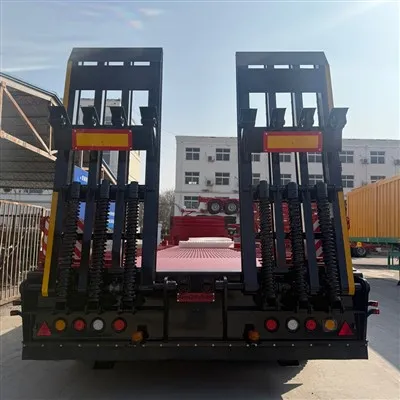
If you’re thinking about buying a flatbed to haul your horses—whether it’s for local trips, ranch work, or cross-country moves—we’re here to help. We build custom flatbeds tailored for equine transport, no one-size-fits-all junk. We can walk you through the features, help you figure out what size works for your horses, and even give you tips on loading and safety so you feel confident before your first trip. Don’t guess on your transport setup—reach out to start a conversation about what you need, no sales pitches, just real advice from someone who’s been in the game for years.
Curtain Side Trailer References
- Equine Transport Safety Association. (2022). Guidelines for Safe Livestock Transport.
- American Horse Council. (2021). Equine Transportation Best Practices.
- National Trailer Dealers Association. (2023). Flatbed Use Case Study: Equine Transport.
- University of California, Davis, School of Veterinary Medicine. (2020). Stress and Injury Risks in Equine Transport.
Shandong Huayuanda Automobile Manufacturing Co., Ltd.
As one of the most experienced flatbed trailer manufacturers and suppliers in China, our products have good reputation in the market. We warmly welcome you to buy high quality flatbed trailer at low price from our factory. If you have any enquiry about cooperation, please feel free to email us.
Address: Industrial Park, Quanpu Town, Liangshan County, Jining City, Shandong Province
E-mail: Huayuanda2024@163.com
WebSite: https://www.hydtrailer.com/
