Hey guys, if you’ve ever shopped for linear guide rails for industrial machines, warehouse automation, or even outdoor equipment, you’ve probably had the same question pop up: “Are these things actually waterproof?” I get it—half the time my customers reach out panicking because their assembly line’s in a damp factory, or their outdoor solar tracker’s getting rained on nonstop. I’m a linear guide rail supplier, been at this for over 10 years, and I’ve answered this question so many times I could probably do it in my sleep. Let’s break this down straight, no fancy jargon, no fluff. Linear Guide Rails
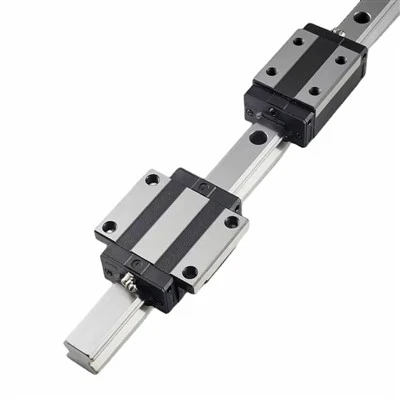
First off, let’s get one thing clear: linear guide rails aren’t all created equal. You can’t go buy a $20 set off Amazon for a CNC router and expect it to survive being submerged in a puddle for 8 hours. That’s just common sense. But before I dive into the nitty-gritty, let’s talk about why water is even a problem for linear guides in the first place. Linear guides work by having a carriage that glides along a rail, with ball bearings rolling between them for smooth movement. Those bearings, the inner raceway, and the rail’s surface—they’re all precision-machined, super tight tolerances, and they rely on a thin film of lubricant to keep everything from grinding together. Water (and moisture, even) messes that up big time.
If water gets in there, two things happen fast. First, it can wash away the lubricant. Lubricant is like the air for these things—no it, and the balls start wearing down the metal surfaces, leading to way more friction, way faster wear, and eventually a stuck or broken carriage. Second, if the water’s got even a tiny bit of dirt, grime, or chemicals (think saltwater from docks, or rain mixed with factory coolant), it’ll create rust or corrosion. Even minor corrosion on a rail’s smooth surface will make the carriage rock, wobble, and throw off the accuracy of whatever machine it’s in. For a CNC machine, that could mean a bad cut; for a conveyor system, that could mean misaligned products, downtime, and thousands in lost revenue.
Now, back to waterproofing. Let’s not use “waterproof” like it’s a universal grade—let’s talk about IP ratings, which are the standard for ingress protection. Most people know IP ratings, but let’s make that simple. The first number is solid protection, the second is water. So IP65 means totally dust-tight, and protected from low-pressure water jets from any direction. IP67 means dust-tight, and can handle being submerged up to 1 meter deep for 30 minutes. That’s the sweet spot for most industrial applications. A lot of standard linear guides we supply are IP54 or IP65 rated—those aren’t completely waterproof, but they’re sealed well enough to handle splashing water, rain, high humidity, even occasional cleaning with a hose. The IP67 ones? Those are for when your guide’s actually going to be outside in the elements, or maybe get submerged occasionally, like in a food processing line where you power wash equipment daily.
Wait, but let’s bust a common myth here. A lot of people think that just putting a rubber seal on the carriage is enough. Nope. The seal is important, but it’s not foolproof. Cheap seals wear out way faster—if you’re running 24/7 shifts, a thin rubber seal might only last 6 months before it cracks, lets water in, and causes problems. That’s why we use nitrile rubber seals on all our industrial guides—they’re tough, resistant to oil and moisture, and last way longer. But even with the best seals, if you’re operating in a super wet environment, you still have to consider things like lubrication type. We supply food-grade grease for guides that get hosed down, because regular grease would wash away in a day. And for saltwater applications, we use stainless steel rails instead of carbon steel—stainless is way more resistant to corrosion than plain carbon, so even if a tiny bit of salt gets past the seal, it doesn’t rust.
Let me give you examples of where this comes up, because it’s not just random factory stuff. Last year, a customer who makes outdoor playground equipment reached out to us. They had a linear guide for a sliding gate on a playset, and it kept seizing up after a few months of rain. They were using a cheap standard guide, no seal at all. We switched them to our IP65 sealed stainless steel guides, and added a small rubber boot cover over the rail to keep even splashes off the exposed part. They haven’t had a single issue in over a year. Another customer is a seafood processing plant—they power wash their conveyor systems every shift, so they needed guides that could handle high-pressure water. We supplied them with IP67 rated guides, plus food-grade lubricant, and they say the guides run smoother now than the old ones, even with all that daily washing.
But let’s be real: there’s no such thing as a “100% waterproof” linear guide. If you submerge any guide for weeks on end, water’s going to get in eventually. The key is matching the guide’s rating to your application. If you’re using it in a dry warehouse, no water issues at all—you can save money on a lower IP rating. If you’re outside, or in a food plant, go IP65 or IP67. If you’re dealing with saltwater or chemicals, stainless steel and extra protective seals are non-negotiable.
Wait, another thing a lot of people overlook: humidity. Even if there’s no standing water, high humidity (like a basement factory with poor ventilation) can cause condensation inside the carriage over time. That condensation leads to rust too, same as liquid water. A good seal will prevent most of that, but sometimes you might want to add a desiccant plug to the carriage, which absorbs moisture inside. It’s a small add-on, but it makes a huge difference in humid environments.
As a supplier, I can’t tell you how many times customers came to me after making a bad choice. They’d buy a cheap guide because it was cheaper, not realizing it would break down in 3 months because of water damage. Don’t get me wrong—we’ve got options for every budget, but you can’t skimp on the waterproofing part if your application needs it. The downtime from a broken guide costs way more than the extra few dollars for a higher-rated one.
Let me wrap this up straight for anyone who’s still on the fence. Linear guide rails are water-resistant to varying degrees, depending on their IP rating, seal quality, and material. Standard indoor guides will handle a little humidity, but not splashing water. Sealed IP65 guides handle rain and splashes for most industrial uses. IP67 guides handle power washing and occasional submersion. There’s no universal waterproof linear guide, but there’s definitely one that’s right for your needs.
If you’re unsure which one you need—whether it’s for a CNC machine, outdoor automation, food processing, whatever—just reach out. I don’t push the most expensive one; I’ll tell you exactly what’ll work for your setup, no salesy nonsense. We’ve got a range of linear guide rails for every budget and use case, all tested to hold up against water and moisture. Don’t let a bad guide ruin your project or cause expensive downtime. Hit us up to chat through your specific needs, and we’ll make sure you get the right one.
Metal Injection Molding Parts References
ISO 14816:2017, Automation systems and integration – Linear motion rolling bearings – Technical specifications and accuracy requirements
IP Code (Ingress Protection) Standard, IEC 60529:2017, International Electrotechnical Commission
ASTM A276/A276M-21, Standard Specification for Stainless Steel Bars and Shapes for General Application
Zhejiang Jiarun Hardware Co., Ltd.
As one of the most experienced linear guide rails manufacturers and suppliers in China, also support customized service. Please feel free to wholesale high quality linear guide rails made in China here from our factory. Welcome to contact us for quotation.
Address: Guolu Village, Shifan Subdistrict, Yueqing City, Wenzhou City, Zhejiang Province
E-mail: 18066359699@163.com
WebSite: https://www.steeltk.com/
