If you’ve ever held a wrench that’s tough enough to pry open a rusted truck panel, a drill bit that bores through concrete without bending, or a car axle that survives thousands of highway miles, you’ve used a part that was shaped in a quenching furnace. I’ve been selling industrial heating equipment for 12 years, and I can’t count how many times I’ve sat across from a shop foreman or a plant manager who only knows quenching as “that step that makes our parts stop breaking.” Most of the time, they don’t fully grasp what a quenching furnace actually does, or why a cheap, off-the-shelf unit might end up costing them more in scrapped parts and downtime. Let me break this down like I would over a coffee at a trade show booth—no stuffy jargon, just the real deal on a tool that’s foundational to so many industries. Quenching Furnace
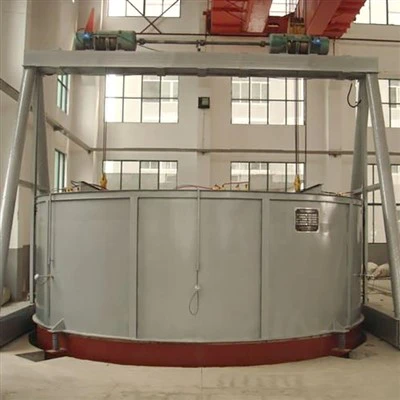
First, let’s start with the basics: what quenching is, in simple terms. When metals like steel, brass, or aluminum are heated to a specific high temperature, their internal crystal structure rearranges. For steel, that’s usually around 1,700 degrees Fahrenheit—hot enough to turn the metal malleable, but not so hot that it melts. Quenching is the fast cooling of that heated metal, usually by submerging it in water, oil, or polymer solution, or blasting it with high-pressure gas. That sudden cool-down locks the new, hard crystal structure in place, turning soft, flexible metal into something strong, wear-resistant, and tough enough for heavy use. A quenching furnace is the purpose-built machine that controls the heating and cooling of that metal, making sure every part gets the exact treatment it needs.
I’ve seen so many people mix up quenching furnaces with other types of industrial furnaces—like annealing furnaces, which heat metal slowly and cool it down even slower to make it soft, or tempering furnaces, which work after quenching to reduce brittleness. The difference is all in the speed and precision. Last year, a small tool and die maker came to me with a problem: they were using an old annealing oven to harden their drill bits. Every third batch would come out too soft, or worse, crack right in the middle. I looked at their setup, and sure enough, they were heating the bits right, but then they’d set them on a metal table to cool—taking nearly an hour to go from 1,700 degrees to room temperature. That slow cool turned the steel into the soft, brittle structure annealing is for, not the hard quenching they needed. We swapped them for a compact vertical quenching furnace, which heats the bits evenly and then drops them directly into a temperature-controlled oil quench in less than 10 seconds. Their scrap rate dropped from 12% to under 2%, and they were able to take on a big contract with a construction company that required consistent, hardened bits. That’s the power of getting a quenching furnace right, not just any furnace.
Now, not all quenching furnaces are the same. The best one for your operation depends on what kind of parts you’re making, the volume, and the level of precision you need. Let’s walk through the main types I work with every day, and who each is for.
First, there’s batch quenching furnaces. These are the workhorses for small to mid-sized shops, or shops that make a variety of parts instead of one large, uniform run. Batch furnaces load parts in baskets or trays, heat them to the set temperature, quench them, then unload them—all in batches, so you can run different part sizes or materials on the same machine. I sold a batch furnace last quarter to a motorcycle parts manufacturer that makes custom crankshafts, gears, and brake rotors. They used to run each part type separately, waiting for a dedicated line for each, but the batch furnace lets them mix small runs of different parts without wasting energy. It’s not as fast as a continuous furnace, but for their custom work, it’s perfect. I’ve had customers tell me batch furnaces are also easier to repair and adjust than larger units, which is a big plus for shops that don’t have a full-time industrial mechanic on staff.
Next, continuous quenching furnaces. These are for high-volume operations, like automotive plants or mass-produced fastener makers. Instead of loading and unloading batches, parts move steadily through the furnace on a conveyor belt—they get heated, quenched, and cooled in a continuous line, so there’s no downtime between batches. A car parts factory I work with uses a continuous furnace to harden 10,000 wheel studs a day. The studs move through the heating zone in 10 minutes, then drop into a water quench as they exit, all without stopping. The speed is unbeatable, and because it’s a steady process, the quality is consistent—no variation from batch to batch. The downside? They’re a big investment, and they’re not flexible if you need to switch to a new part size or material. If you’re only making one or two part types, they’re worth every penny, but if you’re small or make custom parts, a continuous furnace is overkill.
Then there are specialized quenching furnaces, which are tailored for specific needs. For example, vacuum quenching furnaces are used for parts that can’t tolerate contamination—like aerospace components or medical device parts, where even a tiny speck of oil on the surface can cause a part to fail. These furnaces heat and quench in a sealed, airless chamber, so there’s no oxidation or discoloration on the metal. Last year, a medical implant manufacturer came to me because their old furnace was leaving tiny, uneven discoloration on titanium hip stems, which made the parts fail inspection. We installed a medium-sized vacuum quenching furnace, and their inspection failure rate dropped to zero. They still use it today, even though it’s more expensive upfront than a standard batch furnace. There are also salt-bath quenching furnaces, which use a molten salt solution as the quench medium, great for small, intricate parts like watch gears or small engine valves—they cool evenly, so delicate parts don’t warp.
Now, here’s the part I don’t usually tell people on first contact: a quenching furnace is only as good as its control system. I’ve had customers buy cheap, used furnaces off an online marketplace, only to find out the temperature sensors are off by 50 degrees, or the quench timer doesn’t shut off when it’s supposed to. One customer bought a $10,000 used furnace instead of a $25,000 new one, and ended up scrapping $40,000 worth of transmission parts in the first month because the temperature was too low. Modern quenching furnaces have digital control systems that let you set exact heating temperatures, cool-down rates, and even track every cycle—so you can prove to your quality team that every part got the right treatment. They also have safety features, like emergency shutoffs for the quench tank and ventilation systems to keep fumes from oil or salt baths from building up. For high-production shops, that control isn’t a nice-to-have—it’s non-negotiable.
I also want to talk about common mistakes people make when choosing a quenching furnace. First, sizing it wrong. If you buy a furnace that’s too small, you’ll either have to run parts in multiple small batches, which wastes energy and time, or you’ll overload it, leading to uneven heating and bad parts. If it’s too big, you’re wasting energy heating empty space every time you run a load. Last year, I had a job shop owner who bought a furnace that could hold twice as many parts as he needed, because he thought “bigger is better.” He was paying $300 a month more in electricity just to heat extra space, and he told me a month later he wished he’d sized it right the first time. Second, picking the wrong quench medium. Water cools fast, which is great for hardening steel, but can cause warping in thin parts. Oil cools slower, which is better for delicate parts, but needs regular maintenance to keep it clean. Polymer solutions are flexible, letting you adjust the cooling speed for different parts—they’re my go-to for most customers because they’re low-maintenance and consistent. Third, skipping regular maintenance. A quenching furnace isn’t a “set it and forget it” machine. You have to clean the quench tank regularly, check the heating elements, and calibrate the temperature sensors every 6 months. I send a technician to service every furnace I sell once a year, and most customers who skip that end up with a breakdown at the worst possible time—like a big order deadline.
So, why does this matter to you, whether you’re a small shop or a large plant? Quenching is one of the oldest metalworking processes, used for thousands of years—even ancient blacksmiths quenched swords in water to make them hard. But today, with tighter quality standards and faster production, a quenching furnace isn’t just a tool to harden metal. It’s a way to cut costs, reduce scrap, and meet the demands of your customers. A good quenching furnace will pay for itself in 12 to 18 months, usually from the scrap it saves and the extra parts you can produce without downtime. A bad one will cost you money, time, and even reputational damage if your parts fail in the field.
If you’re in the market for a quenching furnace, don’t just look for the cheapest price. Look for a supplier who can walk you through your options, explain the difference between batch and continuous, vacuum and salt-bath, and help you pick something that fits your current needs and leaves room for growth if your business expands. I’ve been doing this for 12 years, and I don’t push the biggest or most expensive furnace to every customer—if a small batch furnace is all they need, that’s what I sell them. My job isn’t just to sell equipment; it’s to make sure their parts come out right, every time.
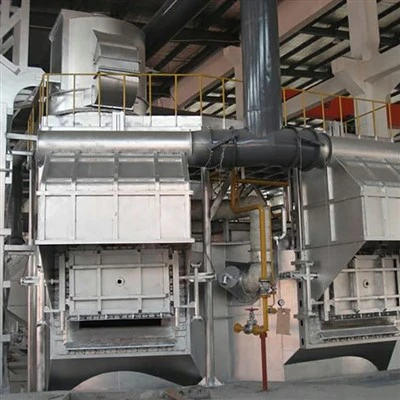
If you’re tired of scrapped parts, tired of downtime from old furnaces, or just want to upgrade your process to get consistent, high-quality hardened parts, don’t hesitate to reach out. I’m here to answer questions, walk you through your options, and make sure you get a quenching furnace that works for you, not against you.
Gas-Fired Furnace References:
- ASM International. (2019). Heat Treater’s Guide: Practices and Procedures for Irons and Steels. ASM International.
- Boyer, H. E., & Gall, T. L. (1985). Metals Handbook: Volume 4, Heat Treating. American Society for Metals.
- Davis, J. R. (Ed.). (1993). Heat Treating of Carbon and Low-Alloy Steels. ASM International.
- Tuttle, R. B. (2006). Structural Steel Design: A Practice-Oriented Approach. Pearson Education.
- Groover, M. P. (2020). Fundamentals of Modern Manufacturing: Materials, Processes, and Systems. John Wiley & Sons.
Jiangsu Fangwei Furnace Industry Co., Ltd.
Jiangsu Fangwei Furnace Industry Co., Ltd. is one of the most professional quenching furnace manufacturers and suppliers in China. With abundant experience, we are committed to providing high quality customized products with competitive price. Please feel free to buy advanced quenching furnace made in China here from our factory.
Address: No.168, HuangNian Bridge, DaoShu Town, Danyang City, JiangSu Province, China
E-mail: fangwei@fwfurnaces.com
WebSite: https://www.fwfurnaces.com/
