Alright, let’s cut to the chase—if you’ve ever ordered ingredients for agriculture, manufacturing, or even lab work, you’ve probably stumbled on “inorganic salts” and “organic salts” and thought, “wait, are these basically the same, or am I wasting money?” As someone who’s been an inorganic salts supplier for over a decade, I get this confusion all the time. I’ve had customers ask if I can swap our sodium chloride (table salt, but industrial-grade) for some “organic salt” they saw cheaper somewhere, or if our magnesium sulfate is the same as that stuff marketed for “organic” lawns. Let’s break this down straight, no stuffy jargon, and no fluff. Inorganic Salts
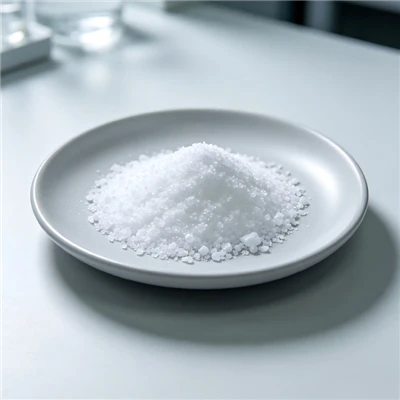
First, let’s start with the basics everyone can wrap their head around: what makes a salt, anyway? If you remember high school chem, it’s when an acid and a base react, right? The acid gives up a hydrogen ion, the base gives up a hydroxide, and they mix to make water plus… the salt. But not all salts are made equal—this split between inorganic and organic is all about the carbon backbone. Organic salts, I learned early on, have carbon-hydrogen (C-H) bonds in their core structure. Inorganic salts? They don’t. That’s the biggest, simplest difference. Let me repeat that because it’s the foundation: if the salt has a carbon chain or carbon ring with hydrogen atoms attached, it’s organic. If it’s just metal ions paired with non-metal ions, no C-H bonds? That’s inorganic.
Let’s use examples, because examples stick way better than definitions. Take sodium chloride—you know this, it’s the salt you put on food, but industrial-grade is what I supply for water treatment, road de-icing, and food processing. That’s 100% inorganic: it’s sodium (a metal) and chloride (a non-metal, no carbon in sight). Now an organic salt example: sodium acetate. That’s the stuff that makes those glowing hand warmers work, right? It has a carbon chain (two carbon atoms, plus hydrogen) attached to the acetate ion, paired with sodium. See? C-H bonds there—organic. Another organic one: potassium citrate, which is super popular for gardeners (it’s supposed to boost fruit production) and even some food preservatives. Yep, it has those carbon chains, so organic.
Now, let’s talk about what this difference actually means for you, because who cares about chem equations if it doesn’t affect your project? Let’s go through the key areas people actually use these salts for. First, reactivity and stability. Inorganic salts are way more stable, no question. Sodium chloride won’t break down on its own if you leave it in a pile, or mix it with other inorganic chemicals. In fact, that’s why we use it for de-icing roads—even in freezing temperatures, it stays in its salt form, melts ice, and doesn’t lose its effectiveness quickly. Organic salts? They break down easier, which is good for some things (like if you need a nutrient that gets released slowly in soil) but bad for others. I once had a customer who tried using organic potassium citrate for water treatment, and it stopped working after a week because it decomposed in the tank—total waste of their money, and they switched back to our inorganic potassium chloride right after.
Next, purity and consistency. As an inorganic salts supplier, I can tell you this is a huge one. Inorganic salts have super consistent chemical formulas. Sodium chloride is always NaCl, every batch, every time. Organic salts? Their formulas can vary a lot, because they come from natural sources a lot of the time, or have that carbon backbone that can get modified easier. For example, magnesium sulfate (Epsom salt, which I supply in industrial grades) is always MgSO4, pure every batch. Organic magnesium citrate, on the other hand, might have trace amounts of other plant material if it’s sourced from citrus peels, which can mess up sensitive experiments or manufacturing processes. That’s a big deal for labs or food companies that need exact ingredient levels.
Then there’s solubility and application. Wait, both are soluble in water, right? But different levels. Inorganic salts usually dissolve faster, and give you a more “straight” solution—just ions floating around, no extra stuff. That’s why we sell them for things like concrete curing, where you need a quick, consistent mix. Organic salts dissolve slower, and some of them leave behind organic residue when they break down. That’s why gardeners love them—if you add organic potassium citrate to soil, the residue feeds microbes, which is great for plant health. But if you’re using a salt to clean industrial equipment, that residue is the last thing you want—your parts would get gunked up, not cleaned.
Now, let’s bust a common myth: “organic salts are better for you/the environment.” Not always. Don’t get me wrong, organic salts have their place—they’re huge in organic farming, for example, because they don’t leave behind harsh inorganic residues that hang around in soil. But inorganic salts aren’t “bad” for everything. Our sodium chloride is used to treat municipal water supplies to remove contaminants, and it’s way more efficient for that than any organic salt. Also, there’s a lot of mislabeling out there—some suppliers call natural-sourced inorganic salts “organic” when they’re not, because they come from rock salt deposits. That’s a scam I see all the time, and it’s why I always tell customers to check the actual molecular structure, not just the label.
Wait, let’s talk about another big difference: production. I make my inorganic salts from mined minerals or chemical reactions that don’t involve living organisms. For example, our calcium chloride (used for dust control on dirt roads) is made from limestone and hydrochloric acid, simple inorganic chemistry. Organic salts are usually made from plant or animal sources, or fermented—like sodium acetate is often made from fermented sugar, which adds to that carbon backbone. That’s also why organic salts tend to be more expensive—they take more steps to make, and the source material is more variable. I’ve had customers ask if I can source organic salts because they’re cheaper, but nope, my products are bulk-processed with consistent costs, no extra fermentation or extraction steps, which keeps prices lower for large orders.
Let’s throw in a real customer story to make this concrete. Last year, a guy from a local greenhouse reached out, said he’d been buying “organic magnesium salt” from a big online retailer, but his tomato plants were stunted. He brought me a sample, and it turned out the “organic magnesium salt” was actually just our regular inorganic magnesium sulfate, repackaged and marked up 3x the price. He switched to our industrial-grade magnesium sulfate, mixed it at the right rate, and his tomatoes grew twice as big by the end of the season. That’s the kind of confusion that makes me want to write this post—people paying way too much for something that’s not even what they need.
Now, let’s cover when to use which, because that’s the point of all this. If you’re de-icing roads, treating water, curing concrete, cleaning industrial parts, or need a consistent, fast-dissolving, low-residue salt? Go inorganic. That’s my bread and butter, and for good reason. If you’re a gardener doing organic farming, making compost, or need a slow-release nutrient that feeds soil microbes? Organic salt is your guy. If you’re a lab researcher working on sensitive experiments? Stick to inorganic salts for purity—they won’t have the trace organic contaminants that can throw off your results.
Wait, one more technical point to clear up: don’t mix up organic salts with “organic compounds.” A lot of people think if something is “organic” it’s natural, but in chem terms, organic just means C-H bonds. So some organic salts are natural, some are made in labs, same as inorganic. And inorganic salts aren’t necessarily toxic—sodium chloride is inorganic, and you eat it every day. Lead nitrate is inorganic and toxic, but so is some organic mercury compound. The toxicity has nothing to do with whether it’s organic or inorganic, it’s about the specific elements and structure. That’s another myth I hear all the time, especially from people new to sourcing these chemicals.
So wrapping this up, the core difference is simple: inorganic salts have no C-H bonds, are consistent, stable, cheap for bulk use, and work great for industrial, agricultural (conventional), and lab applications. Organic salts have C-H carbon backbones, break down slower/are more variable, are more expensive, and are best for organic gardening and microbial-based projects.
Now, if you’re someone who’s sorting through salt orders, not sure which you need—whether you’re a factory manager, greenhouse owner, or lab tech—hit me up. I’ve been supplying inorganic salts for years, I can walk you through what you actually need, no sales pitch, no overpriced repackaged junk, just honest advice and bulk quantities that fit your project. Don’t waste time and money on mislabeled products—reach out if you have questions.
Inorganic Powders & Inorganic Compounds References
- Brown, T. L., et al. Chemistry: The Central Science. Pearson, 2020.
- Kirk-Othmer Encyclopedia of Chemical Technology. 5th ed., Wiley, 2007.
- Davis, J. S. Inorganic Salts: Properties, Production, and Applications. CRC Press, 2018.
- USDA Organic Materials Review Institute. “Input Review Guidelines for Fertilizers and Soil Amendments.” 2022.
Shanghai Dingwujin Chemical Co., Ltd.
Shanghai Dingwujin Chemical Co., Ltd. is one of the most professional inorganic salts suppliers in China. We cooperate with qualified Chinese manufacturers and provide high quality customized service. With over a decade of experience in local chemical trade, we have long been deeply engaged in the markets of EU Central & Eastern Europe, the Western Balkans, Ukraine and Moldova. Welcome to buy bulk high quality inorganic salts made in China here from our company.
Address: No. 12, Lane 199, Yefan Road, Yexie Town, Songjiang District, Shanghai, P.R.China
E-mail: dwjchem@dwjchem.com
WebSite: https://www.7dchem.com/
