If you’ve ever worked with UPE (Ultra-High Molecular Weight Polyethylene) hoses—whether you’re in chemical processing, food and beverage, mining, or wastewater treatment—you already know these hoses are game-changers. They’re lightweight, resistant to abrasion that would eat through rubber or PVC in months, and handle a wild range of fluids, from harsh acids to delicate food syrups, with zero leaching or degradation. But here’s the thing I hear every week from new customers: “The hose worked great out of the box, but after a few connections, it started leaking, or the fittings won’t seat right, or it burst under pressure.” Nine times out of 10, it’s not a flaw in the UPE hose itself—it’s that they didn’t follow the special requirements for connecting UPE hoses specifically. I’ve been supplying UPE hoses for 12 years now, and I’ve seen every mistake in the book. Today, I’m breaking down exactly what you need to know to connect UPE hoses correctly, no guesswork required. UPE Hose
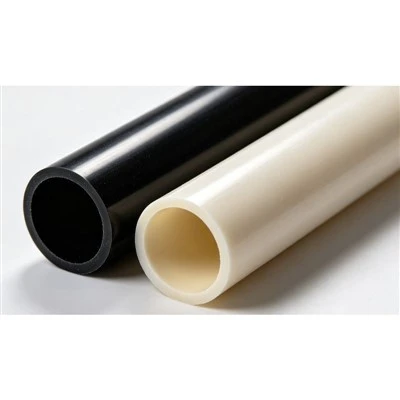
First, let’s get one critical fact straight: UPE is not the same as any other plastic or rubber hose. It’s the toughest polyethylene there is, with a molecular weight up to 10 times that of standard HDPE, which gives it that legendary abrasion resistance. But that ultra-high molecular weight also makes it unique when it comes to connecting fittings. Most flexible hoses—rubber, PVC, even standard HDPE—can be connected with generic clamps, quick connects, or threading tools. UPE? It demands a tailored approach, because it’s both rigid when cool and prone to creep (that’s when material slowly deforms under constant pressure or heat) if mistreated during installation.
The first special requirement I always emphasize is choosing the right type of fitting, not just any fitting that “fits” the hose’s outer diameter. I can’t tell you how many customers call me saying they bought a 2-inch UPE hose and a 2-inch stainless steel clamp, only to have the clamp crack the hose after a week. Here’s why: UPE has a smooth, low-friction outer surface, but it’s also slightly more malleable than HDPE when you’re working with it at room temp—too much pressure from a clamp or a fitting with sharp edges will create stress points that turn into leaks or ruptures.
For 90% of standard UPE hose applications (transferring mild chemicals, water, food-grade syrups), the best fitting choice is a compression-style fitting designed for thermoplastics, not rubber hoses. Unlike barbed fittings (which have sharp ridges that bite into rubber to create a seal), compression fittings for UPE have a smooth, tapered inner ring that seats around the hose’s inner wall, not into it. That’s a key difference. A barbed fitting will puncture the UPE hose’s inner liner over time, especially when the hose flexes during use—like if it’s routed around machinery or dragged across a worksite. I tested this myself early on: I installed a barbed fitting on a 1-inch UPE hose and cycled it 100 times through bending, and it sprung a leak at the barb on the 87th cycle. The compression fitting version? No leak after 500 cycles.
For higher-pressure applications—like mining slurry transfer or heavy-duty chemical pumping—you’ll need a reinforced UPE hose, and that requires a different fitting: a swivel flange or a threading adapter with a PTFE or UPE insert. Standard metal threading adapters will react with the UPE’s surface, creating friction that wears down the hose’s connection site. The insert acts as a buffer, and the swivel flange prevents twisting when the hose is under pressure, which eliminates stress that would break the seal. I once had a mining client who was using a generic threaded adapter on a 4-inch high-pressure UPE hose; after two weeks, the connection blew off during a slurry transfer, spilling 500 gallons of abrasive material and shutting down their operation for 12 hours. We switched them to the swivel flange with a UPE insert, and they haven’t had an issue in three years.
Next, size matching isn’t just about outer diameter—it’s about wall thickness. UPE hoses come in multiple wall thicknesses for the same nominal diameter: for example, a 2-inch UPE hose can have a 3/16-inch wall (light-duty) or a 1/2-inch wall (heavy-duty). If you get a compression fitting rated for a 3/16-inch wall hose and try to force it on a 1/2-inch wall version, it won’t seat properly, and you’ll have a leak immediately. I make a point of marking every hose I ship with the exact wall thickness, matching it to the correct fitting, because I’ve seen customers grab fittings out of a generic bin and mix them up. Last year, a food processing plant ordered 500 feet of 2-inch wall-thick UPE hose for transferring maple syrup, and their maintenance team used fittings for the thinner wall; every connection leaked during their peak harvest season, costing them $20,000 in lost product and downtime. That’s the kind of avoidable mistake that comes from ignoring this simple size requirement.
Once you’ve got the right fittings, the installation process has its own special rules, starting with preparing the hose end. You can’t just cut the UPE hose with a regular utility knife and call it a day. UPE’s smooth, low-friction surface means a rough cut will leave burrs that catch on the fitting or create gaps in the seal. The correct way to cut UPE hose is with a sharp, fine-toothed hacksaw, a dedicated plastic hose cutter, or a miter saw set to a low speed (to avoid melting the hose edge—melting leaves a brittle, uneven surface that won’t seal). After cutting, you have to deburr the inner and outer edges of the hose end with a fine-grit sandpaper or a deburring tool. This step is non-negotiable, even if you think your cut looks smooth. I’ve had customers send back hoses with leaks and find no burrs on the cut edge—until I tell them to check the inner edge. A tiny burr less than a millimeter high can prevent the compression ring from seating fully, leading to a slow leak that will worsen over time.
Another installation step that trips people up is not lubricating the hose end before inserting it into the fitting. Wait—you don’t want to use just any lubricant, either. Oil-based lubricants will degrade UPE over time, especially if the hose is used for food or chemical applications. The only safe lubricants for UPE hose connections are water-based silicone lubricants or food-grade glycerin, depending on your application. For non-food, non-critical applications, you can use a tiny amount of dish soap, but make sure it’s phosphate-free to avoid leaving residue. Lubrication makes inserting the hose into the fitting much easier, and it also ensures a tight, even seal—no forcing, no stretching the hose, which would create permanent stress that leads to failure. I always include a small tube of food-grade silicone lubricant with every bulk UPE hose order, just to make this step easy for customers.
Then there’s tightening clamps or compression rings—this is where most people go way too far, or not far enough. For compression fittings, the general rule is to tighten the compression nut by hand first, then use a wrench to turn it an additional 1/4 to 1/2 turn. Tightening it more than that will crush the UPE’s inner liner, causing it to bulge outside the fitting, which creates a weak spot and can even split the hose. I once watched a contractor use a pipe wrench to tighten a compression fitting on a 1-inch UPE hose, and 10 minutes later, the hose split along the connection line. They were convinced the hose was defective, but the photos showed the crushed liner from over-tightening. For clamps (used on lightweight UPE hose), use a torque wrench set to 10 to 15 inch-pounds—any higher, and the clamp will leave a dent in the hose that weakens it.
Wait a second—what about temperature? UPE has a maximum continuous use temperature of around 176°F (80°C), and it softens at higher temps. If you’re connecting a UPE hose that’s been heated (like to thaw a frozen line) or that’s carrying hot fluids, you can’t use the same tightening rule. Hot UPE is more malleable, so you need to tighten fittings only enough to create a seal, then wait for the hose to cool before checking the tightness. If you tighten a hot UPE fitting fully, as the hose cools and shrinks, the clamp or compression ring will cut into the hose, creating a leak. That’s a specific requirement I don’t see mentioned in a lot of generic UPE guides, but it’s one I’ve learned from working with clients in high-temperature chemical processing plants.
Finally, there’s the post-installation check that’s unique to UPE hose. Most people test hose connections by turning on the fluid and checking for leaks, but UPE’s low permeability means leaks often don’t show up right away—they can seep slowly through the material or around the connection over days or weeks. That’s why I always recommend a pressure test after installation, set to 1.5 times the maximum operating pressure of the system. Let it hold for 10 minutes, then check all connections. If there’s a drop in pressure or a leak, you can correct it before putting the hose into service, instead of dealing with downtime later. One water treatment client installed 10 UPE hoses for their reverse osmosis system, skipped the pressure test, and three weeks later, a connection leaked, requiring them to shut down the entire RO system for 8 hours to fix it. They called me apologetic, saying they never would have skipped the pressure test if they knew it was needed for UPE.
Let me wrap this up with a quick recap, because I know it’s a lot: connecting UPE hose isn’t as simple as grabbing any fitting and tightening it down. The special requirements are: use compression or thermoplastic-specific fittings (not barbed or generic rubber fittings), match fittings to the hose’s wall thickness, cut the hose smoothly and deburr thoroughly, lubricate with UPE-safe lubricant, tighten compression fittings/clamps to the correct torque (no over-tightening), adjust for high-temperature installations, and always do a post-install pressure test.
If you’re new to using UPE hoses, or you’ve had issues in the past, these steps will make a world of difference. I’ve supplied thousands of UPE hoses across dozens of industries, and when customers follow these requirements, they have zero connection failures—period. I’ve built my business on reliability, so if you’re looking for the right UPE hose for your application, or you have questions about connections that I didn’t cover here, don’t hesitate to reach out and connect to discuss your specific needs. We can help you select the right hose and fittings, and even walk you through installation step-by-step if you need it.
UPE Hose References
- U.S. Food and Drug Administration. (2022). Food-contact materials: Ultra-high molecular weight polyethylene (UPE). CFR Title 21, Part 177.1520.
- Society of Plastics Engineers (SPE). (2021). Thermoplastic hose design and installation guide. SPE Publications.
- Mineral Industry Safety and Health Administration (MSHA). (2020). Abrasion-resistant hose specifications for mineral processing operations. MSHA Technical Report 2020-01.
- Polyethylene Institute. (2019). Ultra-high molecular weight polyethylene properties and handling guidelines. Polyethylene Institute Handbook.
BESTYIELD Technology (Huizhou) Co., Ltd.
BESTYIELD Technology (Huizhou) Co., Ltd. is one of the most professional upe hose manufacturers and suppliers in China, featured by quality products and good price. Please rest assured to buy durable upe hose made in China here and get quotation from our factory. Customized orders are welcome.
Address: Yinshan Industrial Zone, Liangjing Town, Huiyang District, Huizhou City, Guangdong Province
E-mail: rick@bestyield.net
WebSite: https://www.bestyield.org/
