If you’re in the market for scenario fans—whether you’re outfitting a commercial kitchen, a manufacturing facility, a data center, or a large warehouse—you’ve probably asked yourself one big question: How much does a quality scenario fan actually cost? As a supplier who’s worked directly with installers, facility managers, and small business owners for the last 12 years, I’ve heard that question hundreds of times. And I’ll be honest: There’s no one-size-fits-all answer. Scenario fans aren’t like box fans you grab from a big-box store; they’re engineered for specific environments, so their costs depend on a handful of key factors that most people don’t research deeply before requesting a quote. Let’s break this down, cut through the hype, and give you the real, science-backed numbers you need to make an informed choice. Scenario Fans
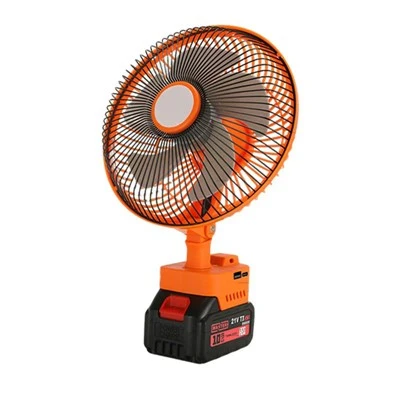
First, let’s clarify what a scenario fan is, because that term gets thrown around loosely. Unlike standard axial or centrifugal fans, scenario fans are designed to operate in specific, often harsh or unique conditions: think kitchen hood exhaust fans that need to handle grease and high temperatures, industrial process fans that move fine dust or corrosive fumes, or confined-space fans that work in tight, hazardous locations. Each type is built with materials, motors, and blade designs tailored to its intended scenario, and that customization is the first driver of cost.
When I start a conversation with a potential customer, I always ask three core questions to nail down a realistic price range: What’s the airflow requirement (measured in CFM, or cubic feet per minute)? What’s the static pressure (how much resistance the fan has to overcome, like pushing air through ducts or filters)? And what’s the operating environment (temperature, moisture, corrosive materials, explosion hazard, etc.)? Let’s walk through how each of these impacts cost, with real examples from projects I’ve supplied.
Let’s start with the most common scenario: Commercial kitchen exhaust fans. These have to handle hot, grease-laden air, so they’re not just metal boxes—they’re made of coated steel or stainless steel, with easy-to-clean blade designs and motors rated for high temperatures. A small 1,500 CFM kitchen scenario fan (enough for a 10-seat café or small restaurant) will typically cost between $800 and $1,500. Wait, that’s a big range, right? The difference is in build quality: A basic coated steel fan for low-heat, low-use kitchens will be on the lower end, while a 304 stainless steel fan with a direct-drive motor (more durable, less maintenance) for a busy 50-seat restaurant with 400°F hood temperatures will run closer to $1,400. For mid-sized restaurants or small food processing plants, a 5,000 CFM kitchen scenario fan costs between $2,200 and $3,800, and large-scale kitchen or bakery fans (10,000 CFM and up) can hit $6,000 to $10,000, depending on whether you add features like grease filters, fire suppression links, or variable speed drives to adjust airflow when cooking loads are low.
Next, industrial process scenario fans, which are used for everything from moving dust in a woodworking shop to exhausting chemical fumes in a lab or manufacturing line. These are where prices get more variable, because the operating environment is far harsher. A basic 2,000 CFM general-purpose process fan for a dry, non-corrosive space costs around $1,200 to $2,000. But if you need a fan that handles fine wood dust (which is explosive, so it requires spark-resistant blades and intrinsically safe motors), that price jumps to $2,500 to $4,000. For corrosive environments, like a chemical plant or wastewater treatment facility, fans are built with fiberglass reinforced plastic (FRP) or Hastelloy steel to resist degradation. A 3,000 CFM FRP process fan for mild chemical fumes costs $3,000 to $5,000, while a 7,000 CFM fan built for strong acids or caustic vapors can run $8,000 to $15,000. And don’t forget static pressure: If your fan has to push air through a 100-foot duct system with multiple filters and bends, you’ll need a higher static pressure model, which adds $500 to $2,000 to the price compared to a low-static fan.
Then there are specialized scenario fans for spaces like data centers, server rooms, or confined spaces in construction sites. These have different requirements: Data center scenario fans need to run 24/7, be energy-efficient, and have low noise levels (so they don’t disrupt office space). A small 1,000 CFM data center scenario fan costs $900 to $1,800, while a 5,000 CFM model for large server farms runs $3,000 to $6,500, with premium models (equipped with EC motors, which use 30% less energy than standard AC motors) at the higher end. Confined-space exhaust or supply fans, used for construction tunnels, manholes, or tank entry, have to be lightweight, portable, and often explosion-proof. A basic 12-inch portable confined-space fan costs $500 to $1,000, while a heavy-duty, spark-proof model for mining or chemical tank work runs $1,500 to $3,000.
Now, here’s the part no one tells you up front: The upfront cost is only half the story. A scenario fan’s long-term cost is way more important than the sticker price, and that’s where many buyers go wrong. Let’s take two similar 5,000 CFM kitchen scenario fans: One is a $2,000 standard coated steel fan with a belt-driven motor that needs oiling every 3 months, and has a 5-year lifespan under heavy use. The other is a $3,200 direct-drive stainless steel fan, which requires almost no maintenance, has a 10-year lifespan, and uses 25% less electricity. Over 10 years, the first fan will cost you $2,000 upfront + $1,200 in maintenance + $8,000 in electricity bills = $11,200. The second fan will cost you $3,200 upfront + $200 in maintenance + $6,000 in electricity bills = $9,400. That’s a $1,800 savings over a decade, just because you spent a little more upfront. I see this mistake all the time: Small business owners go for the cheapest fan, then end up replacing it every 5 years, dealing with costly downtime when the fan breaks during a busy season, and paying way more in energy and repairs.
Another hidden cost is installation. Most scenario fans aren’t plug-and-play; they require ductwork, electrical wiring, mounting, and sometimes permits. Installation costs can add anywhere from $500 for a small portable fan to $10,000 or more for a large industrial fan with custom ductwork and electrical upgrades. I always tell customers to factor installation into their total budget, not just the fan’s price tag. For example, a $1,500 1,500 CFM kitchen fan might cost $2,500 total when installed, depending on how far the unit is from the electrical panel and how complex the duct setup is.
Wait, but what about used or refurbished scenario fans? I get asked about this a lot, especially by small businesses on tight budgets. A refurbished scenario fan can cost 30% to 50% less than a new one, but you have to be careful. Many used fans are pulled from old facilities, have hidden wear and tear (like rusted blades or worn motors), and don’t come with a warranty. I once had a customer buy a used industrial fan for $1,000 that broke 2 weeks later, costing him $1,500 in emergency repairs and lost production time. If you go the refurbished route, make sure the seller tests the fan fully, offers at least a 90-day warranty, and can confirm it’s rated for your specific scenario. For critical applications like kitchen exhaust or data centers, I always recommend new, because downtime isn’t worth the savings.
Now, let’s talk about what’s not included in the base price. Add-ons are where costs can creep up fast, so it’s important to know what you need before requesting a quote. Common add-ons include: variable speed drives (which adjust airflow to match your needs, saving energy—$300 to $1,500), motorized dampers (to close off ducts when the fan isn’t running, preventing energy loss—$200 to $800), explosion-proof motor ratings (for hazardous environments—$500 to $2,000), noise reduction features (like sound dampening enclosures for data centers—$400 to $1,200), and compliance certifications (like UL 705 for kitchen fans or NFPA 70 for industrial fans—some standard, but specialty certifications add cost). For example, if you need a kitchen fan that’s UL Listed for commercial use, that’s usually included in the price, but if you need it to meet a specific local building code that requires extra testing, that can add $200 to $500.
So, let’s sum up the realistic price ranges for new, quality scenario fans, as of 2024 (I update these numbers every year because material and labor costs go up, so these are accurate for today’s market):
- Small scenario fans (under 2,000 CFM, for small kitchens, home workshops, or server rooms): $500 to $2,000
- Mid-sized scenario fans (2,000 to 7,000 CFM, for mid-sized restaurants, industrial process, or warehouse ventilation): $2,000 to $8,000
- Large scenario fans (over 7,000 CFM, for large food processing plants, manufacturing facilities, or commercial kitchen complexes): $8,000 to $18,000+
Again, these are base prices. Add in add-ons, installation, and custom specifications, and you can expect to pay 15% to 30% more for a fully functional, ready-to-use unit.
Now, I know what some of you are thinking: Is it possible to get a good scenario fan on a budget? The answer is yes, but you have to prioritize your needs. If you’re a small café with a 10-seat kitchen that only runs during breakfast and lunch, a mid-range coated steel fan will work great—you don’t need a $3,000 stainless steel unit with all the bells and whistles. But if you’re a busy restaurant that operates 12 hours a day, 6 days a week, a higher-quality fan will save you money in the long run. Don’t overbuy features you don’t need, but don’t underbuy either—scenario fans are an investment in safety (proper ventilation prevents grease fires, fume exposure, and overheating equipment) and efficiency, so cutting corners can end up costing you way more than the fan itself.
One last thing I want to emphasize: Always work with a supplier that can tailor the fan to your specific scenario, not just push a one-size-fits-all model. I’ve had customers come to me with a quote for a generic fan that was too small for their space, or not rated for the environment they’re using it in. For example, a generic axial fan for a garage will never work in a commercial kitchen, because it can’t handle the heat and grease. A good supplier will ask you about your exact needs, help you calculate the right CFM and static pressure, and explain the difference between materials and features so you can make an informed choice.

If you’re ready to get a custom quote for a scenario fan, or have questions about which model is right for your space, don’t hesitate to reach out for procurement discussions. Whether you’re outfitting a single café or a large industrial complex, I can help you find a solution that fits your budget, your needs, and keeps your space safe and efficient.
Scenario Fans References:
- ASHRAE Handbook—HVAC Applications, American Society of Heating, Refrigerating and Air-Conditioning Engineers, 2023
- National Fire Protection Association (NFPA) 96: Standard for Ventilation Control and Fire Protection of Commercial Cooking Operations, 2024 Edition
- AMCA Standard 99-07: Laboratory Methods of Testing Fans for Certified Aerodynamic Performance Rating, Air Movement and Control Association International, 2022
- U.S. Energy Information Administration: Commercial Building Energy Consumption Survey, 2021
Yongkang Agudo Industry & Trade Co., Ltd.
As one of the most professional scenario fans manufacturers in China, we’re featured by high quality customized products. Welcome to wholesale bulk advanced scenario fans in stock here from our factory. If you have any enquiry about pricelist and free sample, please feel free to email us.
Address: 2nd Floor, Unit 2, Building 5, No.46 Xicheng Huacheng West Road, Xicheng Subdistrict, Yongkang City, Zhejiang Province
E-mail: 15888900905@163.com
WebSite: https://www.cnagudo.com/
