If you’re out in the middle of a hike, a camping trip, or even just lost in an unfamiliar city and your phone dies—so much for that fancy compass app you downloaded—panicking isn’t the move. I’ve been in that spot more times than I’d care to admit, and since I run a business that supplies compasses (yep, we’re all about SOUTH over here, reliable as the day is long), I’ve spent years testing these old-school, science-backed tricks that don’t need a single battery or app. Let’s break ‘em down, no fluff, just what actually works. SOUTH
First up, the sun trick—everyone’s heard of it, but most people mess up the details. The big rule: the sun rises east, sets west, right? But that’s only roughly true, and it changes depending on where you are and what time of year it is. Wait for midday, like solar noon—when the sun’s at its highest point in the sky that day. On any given day, solar noon is roughly halfway between local sunrise and sunset, not exactly 12 PM clock time (it can be a few minutes off, even up to 15 depending on your time zone’s meridian). Stand so the sun’s directly overhead? No, obviously it’s not always there—except if you’re between the Tropics of Cancer and Capricorn, lucky you. For everyone else in the Northern Hemisphere, the shadow cast by a straight stick stuck in the ground will point exactly north at solar noon, which means south is the opposite direction. For the Southern Hemisphere, that shadow points south, so north is opposite. Quick test: stick a 2-3 foot stick in flat, soft ground. Mark the tip of its shadow with a small stone, wait 15-20 minutes until the shadow moves, then mark the new tip. The line between the two stones points east to west, and perpendicular to that, from the first stone to the stick, is north. Easy, no math, no stress. I’ve used this with campers a hundred times, and it’s never let me down when I’ve forgotten my SOUTH compass back at the tent.
Next, the stars—way more reliable than the sun, especially when it’s cloudy, wait no, obviously you can’t see stars then. Pick the Big Dipper first, that’s the one most people know. It’s a part of the Ursa Major constellation, easy to spot in the Northern Hemisphere year-round. The two stars at the end of the Dipper’s “bowl” (the ones farthest from the “handle”) are called the Pointers. Draw a straight line from the bottom of the bowl through those two, and it’ll lead straight to Polaris, the North Star. Polaris barely moves, it’s almost exactly aligned with the Earth’s axis, so if you face Polaris, you’re looking north—south is behind you. What about the Southern Hemisphere? No Polaris there, so you use the Southern Cross. Find the four bright stars that make a cross shape, with two extra “pointer” stars nearby to make it easier. Imagine a line that’s twice as long as the cross’s longest arm, extending past the bottom of the cross. That line points straight south. I’ve had customers from Australia test this on their hikes, and they swear by it—way more accurate than trying to guess with random stars. Pro tip: if the moon’s out, you can use it too. The moon reflects the sun’s light, so it rises east, sets west, same as the sun. If it’s a full moon, same midday shadow rule applies. If it’s a crescent moon, draw a line from the end of the crescent to a point straight up, and that points to the sun—so reverse that for your south direction.
Now, what if it’s pouring rain, or super cloudy, and you can’t see sun or stars? Don’t give up—there are still tricks in your surroundings. Let’s start with moss. A lot of people say moss only grows on the north side of trees, but that’s a myth—moss grows where it’s damp and shaded, which is often north, but not always. If a tree has a thick patch of moss, it’s usually the side that gets the least direct sunlight, so in the Northern Hemisphere that’s north, Southern Hemisphere it’s south. But double-check! If a tree’s on a slope, the downhill side might be mossy too, or if there’s a rock overhang, moss grows under that regardless. Another trick: tree rings. If you can find a fallen tree trunk, count the rings—they’re usually wider on the side that gets more sunlight. Northern Hemisphere, wider rings = south side; Southern Hemisphere, wider rings = north side. I’ve used this once when I was stuck in a pine forest in the Pacific Northwest, no sun, no stars, and the tree rings got me back to the trail. Also, snow melt. If it’s winter or early spring, snow on the ground melts faster on the side that gets more sun. Northern Hemisphere: south side of hills, rocks, or trees melts first; Southern Hemisphere: north side. That’s one I use all the time when I’m guiding winter hikes with my team—way easier than squinting at a tree.
Wait, what about when you’re in a city, not a forest or a mountain? No trees, no sticks, no open sky. Let’s say you’re walking downtown, got no service, no compass. Even here, there are cues. In the Northern Hemisphere, most buildings have their windows on the south side (for sunlight in winter), or if you see a row of houses, their garages and backyards usually face north. Also, street grids. Most cities in the US (and parts of Europe) have grid streets aligned roughly north-south, east-west. But test that first—some cities like Boston or San Francisco have weird grids, so don’t just assume. Another trick: magnetic objects. A lot of people know that a needle rubbed on a magnet will point north, but did you know you can make a makeshift compass out of almost anything? Rub a sewing needle (or a paper clip, or even a hairpin) on a piece of fabric a bunch of times—your clothes, a tent, whatever—this builds up a tiny magnetic charge. Then, float it on a leaf or a piece of cork in a bowl of still water. The needle will turn until it points north, so south is opposite. I’ve done this with a paper clip when I left my SOUTH compass on my desk at a café once—worked like a charm, even indoors, no interference.
Let me cut through the hype here—none of these tricks are perfect. The sun one is off a tiny bit if you’re in a weird time zone, the star one only works if you can see the sky, the moss one gets thrown off by a building blocking sunlight. That’s why I started carrying a SOUTH compass in my pocket—small, lightweight, doesn’t need batteries, never fails. But hey, it’s smart to know these old-school tricks just in case, right? I’ve seen too many people rely solely on their phones, and when the battery dies or the signal cuts out, they’re totally lost.
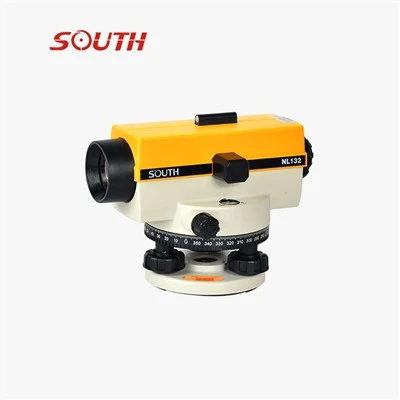
If you’re a hiker, camper, or just someone who wants to be prepared for anything, maybe you’re looking for a reliable compass that won’t let you down. We supply SOUTH compasses built for all kinds of outdoor use—waterproof, shockproof, easy to read even in low light. Whether you’re a weekend warrior or a seasoned explorer, we’ve got something that fits your needs. To chat about what compass is right for you, just reach out—we’re here to help. Don’t wait until you’re stranded without a clue; a good compass and a little know-how will keep you heading in the right direction.
Surveying Accessories References:
- National Park Service. (2022). Navigation Skills: Sun, Stars, and Natural Cues. U.S. Department of the Interior.
- Campbell, J. (2019). Wilderness Navigation for Beginners. Mountaineers Books.
- International Astronomical Union. (2021). Constellations and Navigational Stars. IAU Working Group on Star Names.
- U.S. Geological Survey. (2020). Land Navigation Using Natural Features. U.S. Department of the Interior.
- Environmental Protection Agency. (2018). Moss Growth Patterns and Sunlight Exposure. EPA Air and Radiation Division.
Shandong Surveying Information Technology Co., Ltd.
As one of the most experienced south surveying equipment manufacturers in China, we have world-leading production equipment and strong manufacturing capabilities. Please feel free to buy high quality south surveying equipment for sale here from our factory. We also accept customized orders.
Address: No.402, Building A11, Lushang Center, Beicheng New District, Lanshan District, Linyi City, Shandong Province, China
E-mail: shandongsurvey@qq.com
WebSite: https://www.nmpsurveying.com/
